Archive for the ‘Climate’ Category

Carbon Cycle: Emissions from forest clearance underestimated, land absorption underestimated

May 23, 2014

Two new papers just published show that the carbon cycle is far from being certain. We still have large uncertainties regarding the sources of carbon dioxide emissions and their magnitude and the sinks where, and mechanisms by which, carbon dioxide is absorbed. One in Global Change Biology. shows that emissions due to forest clearance have been underestimated by some 40% while the second in Nature suggests that there are large land sinks for carbon dioxide in the Southern Hemisphere (paywalled but reported here) which have largely been ignored by climate models.

  1. The amount of carbon lost from tropical forests is being significantly underestimated, a new study reports. In addition to loss of trees, the degradation of tropical forests by selective logging and fires causes large amounts of “hidden” emissions. 
  2. they find that land sinks for CO2 are keeping up with the increase in CO2 emissions, thus modeled projections of exponential increases of CO2 in the future are likely exaggerated. 

The “settled science of climate” is a an edifice tottering on two unproven hypotheses:

  1. That carbon dioxide concentration in the atmosphere is a key driver of global temperature, and
  2. That man-made emissions of carbon dioxide (primarily fossil fuel combustion) are the key contributor to concentration in the atmosphere.

If either of these two assumptions are incorrect, the entire edifice of climate science and climate policy comes tumbling down.

The first now looks decidedly weak. For almost 20 years now global temperatures have stagnated (and show a slight negative trend) while carbon dioxide emissions from combustion have increased sharply. Carbon dioxide concentration has also continued to increase but at a much lower rate than the rate of man-made emissions. No doubt carbon concentration has some impact but it is clearly far from being a key driver of global temperature.

The second assumes that “natural emissions” and absorption are roughly in balance and therefore it must be fossil fuel combustion which is responsible for the increase of carbon dioxide concentration. But the Carbon balance of the earth is far from certain. Volcanic de-gassng of CO2 has been grossly underestimated. The mass of CO2 absorbing bio-mass in the oceans has also been underestimated and remains still highly uncertain.

The error bands surrounding “natural” emissions are of the same magnitude as man-made emissions. Absorption of Carbon dioxide by the oceans and the biological life (algae) in the oceans are, at best, relatively uncertain estimations.

ktwop: Even though the combustion of fossil fuels only contributes less than 4% of total carbon dioxide production (about 26Gt/year of 800+GT/year), it is usually assumed that the sinks available balance the natural sources and that the carbon dioxide concentration – without the effects of man – would be largely in equilibrium. 

…… Carbon dioxide emission sources (GT CO2/year)

  • Transpiration 440
  • Release from oceans 330
  • Fossil fuel combustion 26
  • Changing land use 6
  • Volcanoes and weathering 1

Carbon dioxide is accumulating in the atmosphere by about 15 GT CO2/ year. The accuracy of the amounts of carbon dioxide emitted by transpiration and by the oceans is no better than about 2 – 3% and that error band (+/- 20GT/year)  is itself almost as large as the total amount of emissions from fossil fuels. ….. 

The demonisation of fossil fuel combustion is based on belief and not on evidence. The carbon dioxide assumptions which are the foundations of the climate orthodoxy are unsound.

Alarmists wail – “Collapse” of Antarctic ice is nigh (but it could take 1000 years)

May 13, 2014

There is much wailing and gnashing of teeth.

The headlines would suggest an impending catastrophe. The Western Atlantic ice sheet is “collapsing”. Sea level could rise 1.2m.

The end of the world is nigh. And it is all due to global warming!!

Yes indeed – except that the melting has been going on for centuries. The so called “collapse” may take upto 1,000 years! Measurements over 9 years are projected over a millenium. Computer models have forecast that the loss of the glaciers is unstoppable and will occur sometime in the next 1,000 years.

The Guardian: Western Antarctic ice sheet collapse has already begun, scientists warn

BBC: ‘Nothing can stop retreat’ of West Antarctic glaciers

A collapse in very slow motion!

The alarmist headlines are are based on two papers. Note that one is based on 9 years of measurement and the other is a computer forecast about a “collapse” that is potentially underway.

1. E. Rignot, J. Mouginot, M. Morlighem, H. Seroussi and B. Scheuchl, Widespread, rapid grounding line retreat of Pine Island, Thwaites, Smith and Kohler glaciers, West Antarctica from 1992 to 2011, Geophysical Research LettersDOI: 10.1002/2014GL060140

AbstractWe measure the grounding line retreat of glaciers draining the Amundsen Sea Embayment of West Antarctica using Earth Remote Sensing (ERS-1/2) satellite radar interferometry from 1992 to 2011. Pine Island Glacier retreated 31 km at its center, with most retreat in 2005–2009 when the glacier un-grounded from its ice plain. Thwaites Glacier retreated 14 km along its fast-flow core and 1 to 9 km along the sides. Haynes Glacier retreated 10 km along its flanks. Smith/Kohler glaciers retreated the most, 35 km along its ice plain, and its ice shelf pinning points are vanishing. These rapid retreats proceed along regions of retrograde bed elevation mapped at a high spatial resolution using a mass conservation technique (MC) that removes residual ambiguities from prior mappings. Upstream of the 2011 grounding line positions, we find no major bed obstacle that would prevent the glaciers from further retreat and draw down the entire basin.

2. Ian Joughin, Benjamin E. Smith and Brooke Medley,  Marine Ice Sheet Collapse Potentially Underway for the Thwaites Glacier Basin, West AntarcticaScience,     DOI: 10.1126/science.1249055

Abstract: Resting atop a deep marine basin, the West Antarctic Ice Sheet has long been considered prone to instability. Using a numerical model, we investigate the sensitivity of Thwaites Glacier to ocean melt and whether unstable retreat is already underway. Our model reproduces observed losses when forced with ocean melt comparable to estimates. Simulated losses are moderate (<0.25 mm per year sea level) over the 21st Century, but generally increase thereafter. Except possibly for the lowest-melt scenario, the simulations indicate early-stage collapse has begun. Less certain is the timescale, with onset of rapid (> 1 mm per year of sea-level rise) collapse for the different simulations within the range of two to nine centuries.


The Antarctic glaciers may well be retreating (as glaciers are often wont to do), but Antarctic ice cover is at an all time high and the processes being forecast are being projected over millenia. And there is absolutely no evidence that these processes have anything whatever to do with any man-made effects. That connection is inferred  or assumed.

Related: The Guardian’s Suzanne Goldenberg jumps the shark again – gets called out by NYT


When it comes to climate change, “hot” = “cold”!

May 9, 2014

Why climate change is “bad” when nobody really knows what static climate is to be desired, and where climate stagnation would mean that the earth was dead, escapes me.

Taking pot shots at The Guardian on climate change is not very intellectually challenging, but sometimes the temptation cannot be resisted.

June 2011: Britain’s hot spring could be result of shrinking Arctic

March 2013: Scientists link frozen spring to dramatic Arctic sea ice loss

The first article was written by Robin Mckie, “Science Editor” and the second by John Vidal, “Environment Editor”. Which leads to the inevitable conclusion that for The Guardian, “hot” may be synonymous with “cold” but “environment” and “science” have entirely different values.

arctic ice guardian 2


arctic ice guardian 1


(h/t NOT A LOT OF PEOPLE KNOW THAT)

Japan to help Eastern Europe to shift from gas to coal

April 29, 2014

A return to coal as reality bites. It is now a “good thing” to help Eastern Europe to shift from Russian gas to their own coal.

Perhaps it is beginning to sink in that while carbon dioxide emissions have increased substantially in the last 20 years there has been no impact on global temperature. There is just no direct evidence that man-made carbon dioxide emissions have any significant impact on global temperature or on climate. The entire edifice of climate politics is built on this one unproven – and now broken – assumption. Take away this single assumption and all of climate politics collapses in a sorry heap.

Yomiuri Shimbun:

The government plans to support Ukraine and other Eastern European nations in the construction of next-generation coal-fired power plants that can generate power with less fuel, according to informed sources.

Under the initiative, Japan would stand behind the nations’ efforts to use coal—abundant in Eastern Europe—instead of natural gas, the supply of which makes them dependent on Russia. The government is expected to announce the initiative at the meeting of energy ministers from Japan and other Group of Seven industrialized nations to be held in Rome from May 5.

Japan’s support will involve the construction of coal-fired power plants using technologies known as supercritical steam pressure and ultra supercritical pressure to spin the turbines, enabling these nations to obtain electricity while using less fuel and emitting less carbon dioxide.

With a power generation efficiency of 40 percent to 43 percent, Japan has the world’s most advanced technologies in this field. About one-fourth of the coal-fired power plants in the nation use these technologies.

In comparison, Germany has a power generation efficiency of about 38 percent, while the corresponding figures for Ukraine and other Eastern European nations apparently remain at the 30 percent levels. 

If an agreement is reached with Ukraine, Japan will support a feasibility study to rebuild power plants during the current fiscal year. Under the initiative, Japan will provide yen loans to cover several tens of billions of yen in construction costs in addition to its energy-saving technologies, while Ukraine will provide emission quotas for greenhouse gases to Japan under their bilateral framework.

The G-7 meeting of energy ministers will discuss policies to raise the energy self-sufficiency rates of Ukraine and other European nations, as well as diversifying their energy supplies with one goal in mind: lowering their dependency on natural gas and oil from Russia.

 Ukraine imports 60 percent of the natural gas it uses from Russia, while the three Baltic nations and Eastern European nations buy from 60 percent to 100 percent of their natural gas from that country—a situation that makes it difficult to shift away from their reliance on Russia.

Though they have a dearth of natural gas, Eastern European nations have rich reserves of coal, with Ukraine being almost self-sufficient in that resource. Introduction of the next-generation coal-fired power plants is likely to improve their energy self-sufficiency rates, the sources said.

No sign of global warming in Great Lakes ice cover

April 25, 2014

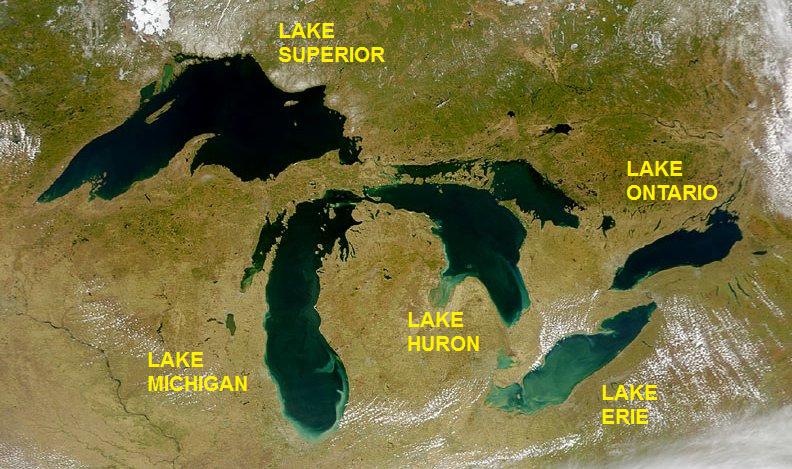
Great lakes (Wikipedia)

An exceptionally cold winter has seen the ice coverage over the Great Lakes being extremely high. Lake Superior has experienced the latest ever recorded start to shipping.

The total accumulated ice cover since 1980/81 and till 2013/14 shows no sign of any global warming. The season 2011/12 with its low ice cover was often “produced” as proof of global warming. By that standard of proof, 2013/14 clearly demonstrates that global cooling is upon us and a new ice age is on the way.

From Canadian Ice Service:

Historical Great Lakes Ice Cover 1980 - 2014

“Climate policy” has degenerated into ritualistic actions with no measurable objectives

April 5, 2014

I met some old friends yesterday and we were discussing development in SE Asia and  the diversion of resources from real actions with real objectives into “faith-based” actions where there were no objectives or where the objectives were not measurable.

There was no disagreement that any government policy to be characterised as policy needed proposed actions to be first tied to results and second to results which could be measured. There was no dissension from the proposition that any policy where the results could not be measured was a fundamental waste of resources.

The discussion got a little more heated when I challenged the gathering to name a single  “climate policy” action – whether proposed by any government or any environmental group or any UN organisation – which had a result on climate which was measurable. Carbon taxes, carbon footprint, renewable energy, shifting from fossil fuels and carbon emissions were all mentioned. But in not a single case could anybody find any measurable climate objective. The only measurements that were possible – and which were often quoted – were of the actions themselves – but never were any of the objectives measurable or even definable.

It soon became apparent that many governments set targets for how much energy would be generated by renewables, for example, and that this could be measured but in not a single case could a climatic effect to be achieved even defined – let alone measured.  It was the same in every case. The input could be measured but the output – the effect of the action on climate – could not be defined or measured. It was always taking actions for the sake of taking actions in the belief that there was a climate benefit. But the climate benefit was always undefinable and unmeasurable. Measuring inputs with no measurable objectives do not a policy make.

Every policy was based on the “faith”  that it would be good for climate but the benefit was unknowable and unmeasurable.

There is not a single climate policy proposed by the IPCC or by any government in the world  which has a definable and measurable climate benefit.

Hopes and faith are insufficient to convert religious rituals into rational policy.

IPCC is still living in its world of “IF” and is stuck in denial

March 31, 2014

Institutionalised alarmism is difficult to stop. It has a momentum of its own.

There has been no global warming for almost 20 years.

The link between carbon dioxide as a significant cause of the non existent global warming is broken.

Yet, the IPCC has come out with part 2 of its wildly alarmist report.

Everything is based on IF.

Lead authors have resigned because the report is too alarmist.

The wolf is dead and they are still crying “Wolf”.

IF global warming continues we COULD be in trouble sometime after 2050.

BUT Global Warming has stalled and the IPCC is in denial

I just have to keep my head when others are losing theirs and dealing in lies-

If you can keep your head when all about you   
    Are losing theirs and blaming it on you,   
If you can trust yourself when all men doubt you,
    But make allowance for their doubting too;   
If you can wait and not be tired by waiting,
    Or being lied about, don’t deal in lies,
Or being hated, don’t give way to hating,
    And yet don’t look too good, nor talk too wise:
(Rudyard Kipling – IF)

Washington mud-slide tragedy – a catalogue of stupidities?

March 26, 2014

The landslide tragedy in Washington State has killed at least 16 and perhaps up to 24 people. I had first thought that it was another natural disaster to be compared to volcano eruptions or earthquakes or hurricanes. In fact it was a minor earthquake (magnitude 1.1) on 10th March which may have contributed to this landslide but which was probably not the trigger.

But then I came across this article yesterday in The Seattle Times. The area devastated has seen many landslides in the past. Just in modern times, landslides occurred in 1949, in 1951, in 1967 and most recently in 2006. Yet people continued living and building new homes on a hill known as “Slide Hill”.  How did such building get permitted? And I wonder why we so readily abandon common sense; on the one hand in ignoring real and present and immediate dangers as in this case; or on the other in wasting billions on theoretical and imagined dangers in the far distant future as with “global warming.

And if all that the Seattle Times reports is correct, then this was not a natural disaster but one caused by plain stupidity. It reads like a catalogue of stupidities – but that does not make the tragedy of lives lost any the less:

  • The hill that collapsed last weekend is referred to by geologists with different names, including Hazel Landslide and Steelhead Haven Landslide, a reference to the hillside’s constant movement. Some residents, according to a 1967 Seattle Times story, referred to it simply as “Slide Hill.” …….. the two creeks in the area are known as “Slide Creek” and “Mud Flow Creek.
  • Since the 1950s, geological reports on the hill that buckled during the weekend in Snohomish County have included pessimistic analyses and the occasional dire prediction. But no language seems more prescient than what appears in a 1999 report filed with the U.S. Army Corps of Engineers, warning of “the potential for a large catastrophic failure.”
  • Daniel Miller, a geomorph­ologist, also documented the hill’s landslide conditions in a report written in 1997 for the Washington Department of Ecology and the Tulalip Tribes. He knows the hill’s history, having collected reports and memos from the 1950s, 1960s, 1980s and 1990s. That’s why he could not believe what he saw in 2006, when he returned to the hill within weeks of a landslide that crashed into and plugged the North Fork of the Stillaguamish River, creating a new channel that threatened homes on a street called Steelhead Drive. Instead of seeing homes being vacated, he saw carpenters building new ones. “Frankly, I was shocked that the county permitted any building across from the river,” he said.
  • …. John Pennington, head of Snohomish County’s Department of Emergency Management, said at a news conference Monday. “It was considered very safe,” Pennington said. “This was a completely unforeseen slide. This came out of nowhere.”
  • At least five homes were built in 2006 on Steelhead Drive, according to Snohomish County records. The houses were granted “flood hazard permits” that required them to be jacked up 1 to 2 feet above “base flood elevation,” according to county building-permit records. Another home was built in the neighborhood in 2009. Snohomish County Executive John Lovick and Public Works Director Steve Thomsen said Monday night they were not aware of the 1999 report. 
  • In 1969, a geologist with the state Department of Natural Resources, Gerald Thorsen, submitted a memorandum after visiting the site of the slide. He explained that “aerial photographs taken as far back as 1932 show the river has cut at this clay bank for many years.”
  • In 1962, the state installed a “revetment” — a sort of rock barrier — to try to protect and support the riverbank. But oozing mud “overtopped” the barrier two years later. In 1967 the barrier was buried when a massive slide hit, damaging dozens of homes.
  • An investigation done in the 1980s said the landslide activity had expanded from 10 acres in 1942 to 35 acres in 1970.

It would seem to be a natural consequence of allowing alarmism to flourish unchecked that common sense is abandoned. Real dangers in the immediate future are ignored and imaginary ones in the far distant future are inflated.

Extra ice-breakers to the Great Lakes and the St. Lawrence Seaway

March 26, 2014

There is more ice cover in the Great Lakes than there has been for twenty years. For this week the ice cover is just under 80% compared to the long-term average of just under 20%. That hardly provides any evidence of “global warming”. It is nothing particularly extreme either — after all it happened twenty years ago. The only conclusion that is supported is that there has been little – if any – change in the climate over the Great Lakes over the last twenty years.

CTV News: 

19th March:The Canadian Coast Guard says it is sending more icebreakers to help clear shipping channels in the frozen Great Lakes and St. Lawrence Seaway.

“What we have committed to do given the extreme conditions is to bring two more assets (icebreakers), as well as a hovercraft, to facilitate the opening of the seaway,” Mario Pelletier, the coast guard’s assistant commissioner, said from Ottawa Wednesday.

Faced with the worst ice conditions in 20 years, Pelletier said it is too early to say when freighters filled with grain and other commodities will be able to move normally through the trade corridor. ….. A section of the seaway between Lake Ontario and Montreal is frozen but it set to open March 31. Shipping channels west of that area are choked with thick ice. 

“The conditions at Thunder Bay and the Sault Ste. Marie system is very extreme and the eastern portion of Lake Erie,” Pelletier said. There are already two coast guard icebreakers in the Great Lakes. One additional icebreaker is to be in the seaway system by Friday, Pelletier said. It is to be joined by another icebreaker and a hovercraft early next week. More coast guard ships could follow.

The Canadian Ice Service graph below shows the historical extent of ice cover on the Great Lakes for this week of the year – currently more than four times greater than “normal” at just under 80%.

Great lakes Ice Cover week of March 26th

Great lakes Ice Cover week of March 26th

Little Ice Age was due to low solar irradiance

March 10, 2014

The Sun is the only real source of energy available at the surface of the earth (and any heat from nuclear reactions at the earth’s core is extremely small if not completely negligible). That the oceans have a much higher heat capacity than the atmosphere at the surface of the earth is obvious. It seems also fairly clear to me that it is the dynamics of ocean – atmosphere interactions which control climate and weather. And it is the oceans and long time scales which dominate climate while it is the atmospheric variations and short time scales which determine weather.

But the driver is always the Sun.

A new paper in Nature GeoScience “used seafloor sediments taken from south of Iceland to study changes in the warm surface ocean current. This was done by analysing the chemical composition of fossilised microorganisms that had once lived in the surface of the ocean. These measurements were then used to reconstruct the seawater temperature and the salinity of this key ocean current over the past 1000 years.”

The researchers found that ” low solar irradiance promotes the development of frequent and persistent atmospheric blocking events, in which a quasi-stationary high-pressure system in the eastern North Atlantic modifies the flow of the westerly winds. We conclude that this process could have contributed to the consecutive cold winters documented in Europe during the Little Ice Age.”

Paola Moffa-Sánchez, Andreas Born, Ian R. Hall, David J. R. Thornalley, Stephen Barker. Solar forcing of North Atlantic surface temperature and salinity over the past millenniumNature Geoscience, 2014; DOI: 10.1038/ngeo2094

AbstractThere were several centennial-scale fluctuations in the climate and oceanography of the North Atlantic region over the past 1,000 years, including a period of relative cooling from about AD 1450 to 1850 known as the Little Ice Age. These variations may be linked to changes in solar irradiance, amplified through feedbacks including the Atlantic meridional overturning circulation. Changes in the return limb of the Atlantic meridional overturning circulation are reflected in water properties at the base of the mixed layer south of Iceland. Here we reconstruct thermocline temperature and salinity in this region from AD 818 to 1780 using paired δ18O and Mg/Ca ratio measurements of foraminifer shells from a subdecadally resolved marine sediment core. The reconstructed centennial-scale variations in hydrography correlate with variability in total solar irradiance. We find a similar correlation in a simulation of climate over the past 1,000 years. We infer that the hydrographic changes probably reflect variability in the strength of the subpolar gyre associated with changes in atmospheric circulation. Specifically, in the simulation, low solar irradiance promotes the development of frequent and persistent atmospheric blocking events, in which a quasi-stationary high-pressure system in the eastern North Atlantic modifies the flow of the westerly winds. We conclude that this process could have contributed to the consecutive cold winters documented in Europe during the Little Ice Age.

Cardiff University Press Release:

Changes in the sun’s energy output may have led to marked natural climate change in Europe over the last 1000 years, according to researchers at Cardiff University. The study found that changes in the Sun’s activity can have a considerable impact on the ocean-atmospheric dynamics in the North Atlantic, with potential effects on regional climate.

Scientists studied seafloor sediments to determine how the temperature of the North Atlantic and its localised atmospheric circulation had altered. Warm surface waters flowing across the North Atlantic, an extension of the Gulf Stream, and warm westerly winds are responsible for the relatively mild climate of Europe, especially in winter. Slight changes in the transport of heat associated with these systems can lead to regional climate variability, and the study findings matched historic accounts of climate change, including the notoriously severe winters of the 16th and 18th centuries which pre-date global industrialisation.

The study found that changes in the Sun’s activity can have a considerable impact on the ocean-atmospheric dynamics in the North Atlantic, with potential effects on regional climate.

Predictions suggest a prolonged period of low sun activity over the next few decades ……..

Though their study has nothing whatever to do with global warming and any man-made effects they still feel it necessary to add this caveat (presumably because the reviewers, and the Journal, or both, insisted).

Predictions suggest a prolonged period of low sun activity over the next few decades, but any associated natural temperature changes will be much smaller than those created by human carbon dioxide emissions, say researchers.