Archive for the ‘Science’ Category

“Not inconsistent with man-made global warming” !!

January 15, 2011

Climate Science – if there is such a thing – had long ago abandoned science to become a lobby for “global warming theory”. But the “scientists” are plumbing new depths.

It has not taken long for “climate scientists” to claim that all extreme weather events (heat wave in Russia, floods in Pakistan, coldest December in 100 years , droughts in Australia and now floods in Brazil and Australia)  are all “not inconsistent with global warming” implying by some strange, convoluted logic that all these weather events (which are also consistent with history repeating itself) somehow add to the body of “evidence” which “proves” that man-made global warming is happening. There have even been crack-pot scientists with such a vested interest in the “man-made global warming” ideology  who have found it possible to blame volcanic activity and even the earthquake in Haiti on “global warming”!!!

The current strength of the La Ninã conditions are perfectly consistent with other theories based on ocean variation and the frigid winters are quite consistent with the quiet Sun (which went spotless again yesterday). All current weather is also consistent with man-made effects being totally negligible and instead being dominated by the sun’s cycles and with the oceans as the primary vehicle for transporting heat around the globe. Weather is not climate and in fact none of the “extreme” weather events  are outside the range of weather variations that have been experienced over the last 1000 years.

The floods in Brazil have claimed over 500 lives and in Australia – which is far better prepared – the death toll will likely be between 20 – 30. In Australia where a higher flood occurred in 1974 in Brisbane voices are beginning to be raised that the “global warming” lobby have actually prevented the use of dams and implementation of proposed water management policies which could have been able to better manage these regular and recurring flood conditions.

The history of floods in Brisbane is telling:

Highest annual flood peaks for Brisbane

Highest annual flood peaks for Brisbane

The floods this year in Queensland are nothing new. Why would this flood be evidence of man-made global warming but not the floods of the 1800s? In fact the history of these weather conditions in Brisbane is not inconsistent with global cooling, the coming of an ice-age or an apocalyptic end to the earth in 2012!

thepunch.com.au

Any scientist who is concerned with science and not with religion, politics or defending his past conclusions would know that being “not inconsistent” with some theory carries no weight in a scientific proof – but it does sound so credible in a TV sound-bite.

But we can expect that over the next few years that every natural disaster or extreme weather event will be taken by the members of a dying religion as being “not inconsistent with” and therefore as proof of man-made global warming.


Penguin rings of death in the name of research

January 13, 2011

A new paper on-line in Nature today reports a 10 year study which shows that when researchers’ put flipper bands on the birds they can seriously dent penguin survival, and also skew the results of research.

Saraux, C. et al. Nature 469, 203-206 (2011)

Nature News:

banded penguins

Flipper banding has been found to hurt penguins: image Benoît Gineste

Attaching bands to penguins’ flippers makes them easier for scientists to study, but may also up the birds’ death rates and lower their chances of reproducing. A team studying king penguins (Aptenodytes patagonicus) has rekindled this debate, which has been running for more than 30 years, and thrown up an additional concern. Not only do bands placed around the birds’ flippers make life more difficult for penguins, their effects also undermine the conclusions drawn from such studies.

Yvon Le Maho at the University of Strasbourg in France, an author of the current study, published in Nature, says that the time has come for ecologists to embrace new technologies and abandon flipper bands, “certainly as a precautionary principle”.

His group’s paper also highlights a wider issue: studies on penguins can and are being used to look at the effects of climate change on ecosystems. Le Maho and colleagues have previously used electronic tagging of king penguins to show that just 0.26 ºC of warming in sea-surface temperatures could trigger a 9% decline in adult survival. If banding were used in such studies, its consequences on a population could cripple attempts to extrapolate a climate-linked trend from the data.

“It’s very difficult to anticipate what the consequences are,” Le Maho says. He says there is a problem with warming affecting ecosystems, but “the numbers have to be reconsidered” where they have been derived from banded studies…..

As long ago as the 1970s, zookeepers noticed that bands could cause wounds on penguins, especially when the birds were moulting……. Despite these findings, bands are still widely used. Le Maho and his colleagues have now added to the debate with their 10-year study. They banded 50 king penguins selected from a population on Possession Island in the southern Indian Ocean that had already been implanted with minute, subcutaneous electronic tags.

When compared with 50 unbanded birds, those fitted with bands had around 40% fewer chicks and a 16% lower survival rate over the study period.

ScienceNews also reports on the study:

And in another worrisome development, the flipper-banded penguins averaged 12.7 days away from home on foraging trips instead of 11.6. “One day or two days is a huge difference,” says ecologist and study coauthor Claire Saraux of the University of Strasbourg and France’s CNRS research network. Chicks back at the breeding site eat only when a parent swims home with food collected hundreds of kilometers, sometimes thousands of kilometers, away. And young chicks have to build up reserves to survive their first winter, when parental food delivery drops off to only a few times during the whole season.

Slower foraging fits with worries that flipper bands may be increasing drag on penguins during swimming, Saraux says. In a swimming test in a tank, an Adélie penguin wearing a band expended 24 percent more energy than an unbanded penguin.

“From an ethical point of view, I think we can’t continue to band,” Saraux says.


A metallic glass tougher than steel

January 11, 2011

An exciting new paper in materials technology

A damage-tolerant glass by Marios D. Demetriou, Maximilien E. Launey, Glenn Garrett, Joseph P. Schramm, Douglas C. Hofmann, William L. Johnson & Robert O. Ritchie

Nature Materials (2011) doi:10.1038/nmat2930
From EurekAlert:

A new type of damage-tolerant metallic glass, demonstrating a strength and toughness beyond that of any known material, has been developed and tested by a collaboration of researchers with the U.S. Department of Energy (DOE)’s Lawrence Berkeley National Laboratory (Berkeley Lab)and the California Institute of Technology. What’s more, even better versions of this new glass may be on the way. The new metallic glass is a microalloy featuring palladium, a metal with a high “bulk-to-shear” stiffness ratio that counteracts the intrinsic brittleness of glassy materials.

Glassy materials have a non-crystalline, amorphous structure that make them inherently strong but invariably brittle. Whereas the crystalline structure of metals can provide microstructural obstacles (inclusions, grain boundaries, etc.,) that inhibit cracks from propagating, there’s nothing in the amorphous structure of a glass to stop crack propagation. The problem is especially acute in metallic glasses, where single shear bands can form and extend throughout the material leading to catastrophic failures at vanishingly small strains.

In earlier work, the Berkeley-Cal Tech collaboration fabricated a metallic glass, dubbed “DH3,” in which the propagation of cracks was blocked by the introduction of a second, crystalline phase of the metal. This crystalline phase, which took the form of dendritic patterns permeating the amorphous structure of the glass, erected microstructural barriers to prevent an opened crack from spreading. In this new work, the collaboration has produced a pure glass material whose unique chemical composition acts to promote extensive plasticity through the formation of multiple shear bands before the bands turn into cracks.

“Our game now is to try and extend this approach of inducing extensive plasticity prior to fracture to other metallic glasses through changes in composition,” Ritchie says. “The addition of the palladium provides our amorphous material with an unusual capacity for extensive plastic shielding ahead of an opening crack. This promotes a fracture toughness comparable to those of the toughest materials known. The rare combination of toughness and strength, or damage tolerance, extends beyond the benchmark ranges established by the toughest and strongest materials known.”

The initial samples of the new metallic glass were microalloys of palladium with phosphorous, silicon and germanium that yielded glass rods approximately one millimeter in diameter. Adding silver to the mix enabled the Cal Tech researchers to expand the thickness of the glass rods to six millimeters. The size of the metallic glass is limited by the need to rapidly cool or “quench” the liquid metals for the final amorphous structure.

“The rule of thumb is that to make a metallic glass we need to have at least five elements so that when we quench the material, it doesn’t know what crystal structure to form and defaults to amorphous,” Ritchie says.

The new metallic glass was fabricated by co-author Demetriou at Cal Tech in the laboratory of co-author Johnson. Characterization and testing was done at Berkeley Lab by Ritchie’s group.

And yet another irreproducible, irrefutable result!!

January 10, 2011

From EurekAlert:

New paper in Nature Geoscience examines inertia of carbon dioxide emissions

New research indicates the impact of rising CO2 levels in the Earth’s atmosphere will cause unstoppable effects to the climate for at least the next 1000 years, causing researchers to estimate a collapse of the West Antarctic ice sheet by the year 3000, and an eventual rise in the global sea level of at least four metres.

The study, to be published in the Jan. 9 Advanced Online Publication of the journal Nature Geoscience, is the first full climate model simulation to make predictions out to 1000 years from now. It is based on best-case, ‘zero-emissions’ scenarios constructed by a team of researchers from the Canadian Centre for Climate Modelling and Analysis (an Environment Canada research lab at the University of Victoria) and the University of Calgary.

The Daily Mail headline proclaims

(and perhaps – following Nostradamus – we should only use quatrains !)

Sea levels will rise by at least 13ft in next 1,000 years, claim scientists

Global sea levels will rise

By at least 13ft in the next 1,000 years

As a result of carbon dioxide emissions,

Scientists have warned.


The ‘unstoppable’ impact of global warming

Will cause a catastrophic collapse

Of the West Antarctic ice sheet

By the year 3000.


“Ongoing climate change following a complete cessation of carbon dioxide emissions” by Nathan P. Gillett, Vivek K. Arora, Kirsten Zickfeld, Shawn J. Marshall and William J. Merryfield will be available online at http://www.nature.com/ngeo/index.html

Or perhaps it should have been published here:

The Journal of Irreproducible Results


Drawing the line between science and faith

January 9, 2011

Steve McIntyre takes up another case of  somebody publishing a paper but refusing access to the data the paper is said to be based on at http://climateaudit.org/2011/01/06/more-data-refusal-nothing-changes/.

I have always found my simple and absolutely reliable demarcator between science and faith as being the words ” I believe that….”. The moment any statement is a matter of  “belief” rather than ” a conclusion drawn from the evidence” it becomes a matter of faith rather than of  “science”.

The moment an author cannot – for whatever reason – provide the data he has used then he is asking the reader to rely on “faith” or “trust” that the data does exist and is not faked or imagined or invented. For the reader the matter immediately descends to becoming a question of “belief” in the author if nothing else. And the author is surely not God to command an unquestioning belief.

  • Whenever an author refuses access to his data he reduces his own conclusions from being matters of science to becoming matters of “faith”.
  • When such a paper is said to be peer-reviewed then it reduces the group of peers to be little more than the acolytes to a faith.
  • When a journal publishes a paper without insisting that the data be archived and accessible then it reduces the journal in which the paper is being published to being no more than the parish magazine for a cult.

Ethics of Journals: When plagiarism is not plagiarism

December 31, 2010

When is plagiarism not plagiarism?

Apparently when the editor of the journal BMC Medical Ethics finds that a paper published in his own journal has copied large chunks from a different (competing?) Journal – in this case Bioethics.

As Retraction Watch points out the retraction notice issued by BMC Medical Ethics is less than satisfying:

BMC Medical Ethics has retracted a November 2010 paper by two authors from Mayo Clinic whose manuscript — “End-of-life discontinuation of destination therapy with cardiac and ventilatory support medical devices: physician-assisted death or allowing the patient to die?” — contained passages that closely echoed those in another article, “Moral fictions and medical ethics,” published online in July 2009 in the journal Bioethics.

Retraction Watch continues:

We find the retraction notice more than a little opaque and confusing. It’s unclear how “similar” the article was to the Bioethics paper it offended. But why not use the word “plagiarism” to describe the similarities? Also, how convincing is that “no intention” disclaimer? (Not very, as it happens, as you’ll soon learn.) And why is the article still available?

We’ve emailed the editor of BMC Medical Ethics for an answer to these questions and will update this post when we learn more.

Retraction Watch spoke to Franklin G. Miller, a bioethicist at the National Institutes of Health and first author of the plagiarized Bioethics paper

Miller, to whom the retraction notice specifically apologizes, said he discovered the offending material this fall when he chanced upon the BMC Medical Ethics article.

I first saw a citation to a piece of mine in Bioethics, but then I had the feeling some of this language sounded a little familiar to me. I looked side by side at the two articles and I found extensive passages that were lifted—some were verbatim, some had a couple of minor word changes. There was a citation, but only one, and no quotation marks. They had essentially appropriated our language, our arguments, and our analysis as their own.”

Miller said he contacted the journal, which conducted an investigation.

At first they said they were going to issue a correction, which I said was not satisfactory. Finally the legal dept of the publisher of Bioethics got into the act, and that led to the retraction.

Miller said he is “very dissatisfied” with the retraction notice for its failure to use the word plagiarism and its claim that the misappropriation was inadvertent.

To say that it wasn’t intentional is mind-boggling. You cannot systematically lift someone else’s text without intending to do it. It seems not possible. A sentence or two, maybe, but not paragraphs.

It seems to me that at best the retraction notice is mealy-mouthed and at worst it represents a certain hypocrisy by the editor of BMC Medical Ethics.

Or perhaps it is only plagiarism when other Journals copy material published in yours but not when others are copied and published in your Journal?

Solar Cycle 24 is unusually quiet but not unprecedented

December 29, 2010

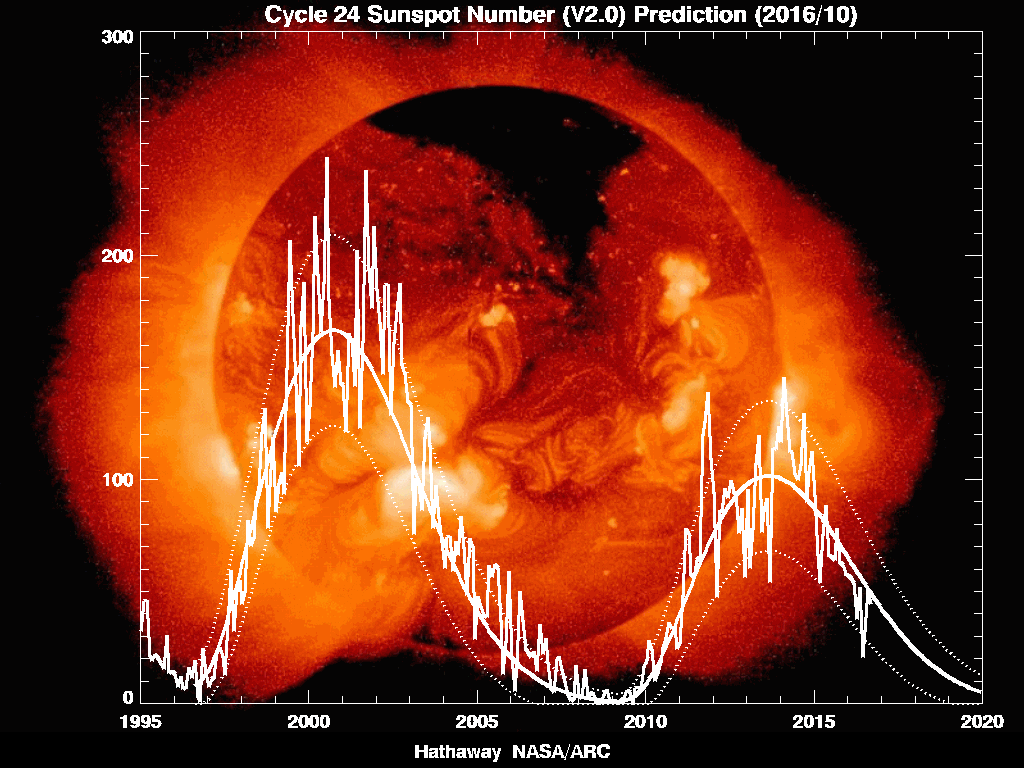
NASA has made a new reduced forecast for the peak sunspot number and the time of occurrence of the peak of Solar Cycle 24. The peak number has been reduced from 90 to 64 and the time of the peak is unchanged at June 2013.

I have superimposed the development of the forecast peak and time of the peak on the base forecast. This is not any criticism of the forecast. It only emphasises that the forecasts are about something which is not very well understood. So far the forecast development is only in the direction of reducing sunspot numbers and delays in the time of attaining the peak. As the peak actually approaches the forecasts should stabilise but there is still some room for further reduction. It is not inconceivable that the SC24 will not peak till early 2014 and will only achieve peak sunspot numbers around 55. Solar cycle 24 could well have a length of 150+ months instead of the nominal 132 months.


SC24 forecast development superimposed on NASA forecast (http://solarscience.msfc.nasa.gov/images/ssn_predict_l.gif)

That SC24 represents a very quiet sun and that taken together with SC23 this Landscheidt minimum represents a behaviour similar to the period leading up to the Dalton minimum is quite clear insofar as sunspot number is concerned. But the length of Solar Cycle 23 and its extended quiet period also has precedence.

Further similarities to SC4 and 5 were reported in

Agee, Ernest M., Emily Cornett, Kandace Gleason, 2010: An Extended Solar Cycle 23 with Deep Minimum Transition to Cycle 24: Assessments and Climatic Ramifications. J. Climate, 23, 6110–6114.
doi: 10.1175/2010JCLI3831.1

The extended length of solar cycle 23 and the associated deep quiet period (QP) between cycles 23 and 24 have been examined using the international sunspot record from 1755 to 2010. This study has also introduced a QP definition based on a (beginning and ending) mean monthly threshold value of less than 10 for the sunspot number. Features addressed are the length and intensity of cycle 23, the length of the QP and the associated number of spotless days, and the respective relationships between cycle intensity, length, and QP. The length of cycle 23 (153 months) is second only to cycle 4 (164 months), with an average of 132.5 months for the 11-yr cycle. The length of the QP between cycles 23 and 24 ranks eighth, extending from October 2005 through November 2009 (but subject to continued weakness in cycle 24). The number of spotless days achieved within this QP was 751 (and for all days within the transition from cycle 23 to cycle24, a record number of 801 spotless days had been observed through May 2010). Shortcomings of solar-convection-model predictions of sunspot activity and intensity are also noted, including the failure in the initial predictions of cycle-24 onset.

It would not be too surprising if SC24 only reached levels which were  lower than the Dalton minimum and perhaps even approaching the lows of the Maunder minimum.


Why body temperature is what it is – perhaps

December 28, 2010

American Society For MicrobiologyA new on-line paper in mBio hypothesises that mammalian body temperature is the result of an optimisation between a high enough temperature to ward of fungal species invading the body on the one hand and a low enough temperature on the other to minimise the quantity of fuel needed to support metabolism.

Mammalian Endothermy Optimally Restricts Fungi and Metabolic Costs

by Aviv Bergman and Arturo Casadevall

Albert Einstein College of Medicine

In this study the researchers hypothesis was tested by modeling the fitness increase with temperature versus its metabolic costs.  They analysed the tradeoff involved between the costs of the excess metabolic rates required to maintain a body temperature and the benefit gained by creating a thermal exclusion zone that protects against environmental microbes such as fungi. Their result yielded an optimum at 36.7°C, which closely approximates mammalian body temperatures. The commonly accepted average core body temperature (taken internally) is 37.0 °C (98.6 °F).

Authors Abstract: Endothermy and homeothermy are mammalian characteristics whose evolutionary origins are poorly understood. Given that fungal species rapidly lose their capacity for growth above ambient temperatures, we have proposed that mammalian endothermy enhances fitness by creating exclusionary thermal zones that protect against fungal disease. According to this view, the relative paucity of invasive fungal diseases in immunologically intact mammals relative to other infectious diseases would reflect an inability of most fungal species to establish themselves in a mammalian host. In this study, that hypothesis was tested by modeling the fitness increase with temperature versus its metabolic costs. We analyzed the tradeoff involved between the costs of the excess metabolic rates required to maintain a body temperature and the benefit gained by creating a thermal exclusion zone that protects against environmental microbes such as fungi. The result yields an optimum at 36.7°C, which closely approximates mammalian body temperatures. This calculation is consistent with and supportive of the notion that an intrinsic thermally based resistance against fungal diseases could have contributed to the success of mammals in the Tertiary relative to that of other vertebrates.

Mammals are characterized by both maintaining and closely regulating high body temperatures, processes that are known as endothermy and homeothermy, respectively. The mammalian lifestyle is energy intensive and costly. The evolutionary mechanisms responsible for the emergence and success of these mammalian characteristics are not understood. This work suggests that high mammalian temperatures represent optima in the tradeoff between metabolic costs and the increased fitness that comes with resistance to fungal diseases.

Green hijack of the UK Met Office

December 26, 2010

Christopher Booker has an interesting article in The Sunday Telegraph describing how a supposedly science-based institution can be perverted by political dogma; in this case global warming dogma perverting the forecasts of the UK Met Office.

By far the biggest story of recent days, of course, has been the astonishing chaos inflicted, to a greater or lesser extent, on all of our lives by the fact that we are not only enjoying what is predicted to be the coldest December since records began in 1659, but also the harshest of three freezing winters in a row….. But central to all this – as the cry goes up: “Why wasn’t Britain better prepared?” – has been the bizarre role of the Met Office…… in these past three years the Met Office’s forecasting record has become a national joke. Ever since it predicted a summer warmer and drier than average in 2007 – followed by some of the worst floods in living memory – its forecasts have been so unerringly wrong that even the chief adviser to our Transport Secretary might have noticed.

The real question, however, is why has the Met Office become so astonishingly bad at doing the job for which it is paid nearly £200 million a year – in a way which has become so stupendously damaging to our country?

The answer is that in the past 20 years, as can be seen from its website, the Met Office has been hijacked from its proper role to become wholly subservient to its obsession with global warming. (At one time it even changed its name to the Met Office “for Weather and Climate Change”.) This all began when its then-director John Houghton became one of the world’s most influential promoters of the warmist gospel. He, more than anyone else, was responsible for setting up the UN’s Intergovernmental Panel on Climate Change and remained at the top of it for 13 years. It was he who, in 1990, launched the Met Office’s Hadley Centre for Climate Change, closely linked to the Climatic Research Unit in East Anglia (CRU), at the centre of last year’s Climategate row, which showed how the little group of scientists at the heart of the IPCC had been prepared to bend their data and to suppress any dissent from warming orthodoxy.

The full article is here.

Using cerium oxide to mimic absorption of solar energy by plants

December 24, 2010

A new paper in Science:

Science 24 December 2010: Vol. 330 no. 6012 pp. 1797-1801 DOI: 10.1126/science.1197834

High-Flux Solar-Driven Thermochemical Dissociation of CO2 and H2O Using Nonstoichiometric Ceria by William C. Chueh, Christoph Falter, Mandy Abbott, Danien Scipio, Philipp Furler, Sossina M. Haile, and Aldo Steinfeld

In the prototype, sunlight heats a ceria cylinder which breaks down water or carbon dioxide

In the prototype, sunlight heats a ceria cylinder which breaks down water or carbon dioxide

Abstract:

Because solar energy is available in large excess relative to current rates of energy consumption, effective conversion of this renewable yet intermittent resource into a transportable and dispatchable chemical fuel may ensure the goal of a sustainable energy future. However, low conversion efficiencies, particularly with CO2 reduction, as well as utilization of precious materials have limited the practical generation of solar fuels. By using a solar cavity-receiver reactor, we combined the oxygen uptake and release capacity of cerium oxide and facile catalysis at elevated temperatures to thermochemically dissociate CO2 and H2O, yielding CO and H2, respectively. Stable and rapid generation of fuel was demonstrated over 500 cycles. Solar-to-fuel efficiencies of 0.7 to 0.8% were achieved and shown to be largely limited by the system scale and design rather than by chemistry.

The BBC says:

A prototype solar device has been unveiled which mimics plant life, turning the Sun’s energy into fuel. The machine uses the Sun’s rays and a metal oxide called ceria to break down carbon dioxide or water into fuels which can be stored and transported.

Conventional photovoltaic panels must use the electricity they generate in situ, and cannot deliver power at night. Details are published in the journal Science. The prototype, which was devised by researchers in the US and Switzerland, uses a quartz window and cavity to concentrate sunlight into a cylinder lined with cerium oxide, also known as ceria.

Ceria has a natural propensity to exhale oxygen as it heats up and inhale it as it cools down.

If as in the prototype, carbon dioxide and/or water are pumped into the vessel, the ceria will rapidly strip the oxygen from them as it cools, creating hydrogen and/or carbon monoxide. Hydrogen produced could be used to fuel hydrogen fuel cells in cars, for example, while a combination of hydrogen and carbon monoxide can be used to create “syngas” for fuel. It is this harnessing of ceria’s properties in the solar reactor which represents the major breakthrough, say the inventors of the device. They also say the metal is readily available, being the most abundant of the “rare-earth” metals. Methane can be produced using the same machine, they say.

The prototype is grossly inefficient, the fuel created harnessing only between 0.7% and 0.8% of the solar energy taken into the vessel. Most of the energy is lost through heat loss through the reactor’s wall or through the re-radiation of sunlight back through the device’s aperture.

But the researchers are confident that efficiency rates of up to 19% can be achieved through better insulation and smaller apertures. Such efficiency rates, they say, could make for a viable commercial device.

“The chemistry of the material is really well suited to this process,” says Professor Sossina Haile of the California Institute of Technology (Caltech). “This is the first demonstration of doing the full shebang, running it under (light) photons in a reactor.”

It has been suggested that the device mimics plants, which also use carbon dioxide, water and sunlight to create energy as part of the process of photosynthesis. But Professor Haile thinks the analogy is over-simplistic. “Yes, the reactor takes in sunlight, we take in carbon dioxide and water and we produce a chemical compound, so in the most generic sense there are these similarities, but I think that’s pretty much where the analogy ends.”

While cerium is quite abundant in the earth’s crust it is one of the “rare earths” and current production is dominated by China.  Cerium oxide, which is used to finish semiconductors and obtained from the rare earth element cerium, rose in price from $ 4.70 per kg on April 20 to 36 U.S. dollars a kilo on Tuesday, October 19. An increase of 665 percent.