Archive for the ‘Science’ Category

Global warming arrogance takes “credit” for the white-out in Europe and the White Christmas in Australia

December 21, 2010

It used to be that the Global Warming zealots warned about the possible disappearance of snow and the mild and wet winters to come in Europe. But their arrogance knows no bounds. They have changed their tune and irrespective of what weather may prevail they mange to put it down to Global Warming. They now put the coldest December in a hundred years and the current white-out across Northern Europe down to Global Warming.

That snow outside is what global warming looks like

James Delingpole at The Telegraph is lauging his socks off.


Not to be outdone, the SMH thinks the possibility of having a White Christmas during the height of Australia’s summer is also due to Global Warming!!!!

The Alarmists cannot live with the thought that man made effects are puny and inconsequential compared to the effects of the sun.

Mild winters, warm winters, early winters, coldest winters in 100 years are all quoted in defence of global warming dogma.  They are all merely grist to the mill of Global Warming arrogance.

Science has been left behind in some far and distant galaxy.


Landscheidt minimum is here — a new Dalton is indicated

December 21, 2010
SDO Sunspot

Spotless Sun

All the indicators are that the Landscheidt minimum is here and that this is going to be close to a Dalton minimum.

2010/12/20 8:00  Five Days in a row spotless is achieved 12 months after solar cycle 24 began it’s ramp up.

A Dalton Minimum Repeat is Shaping Up

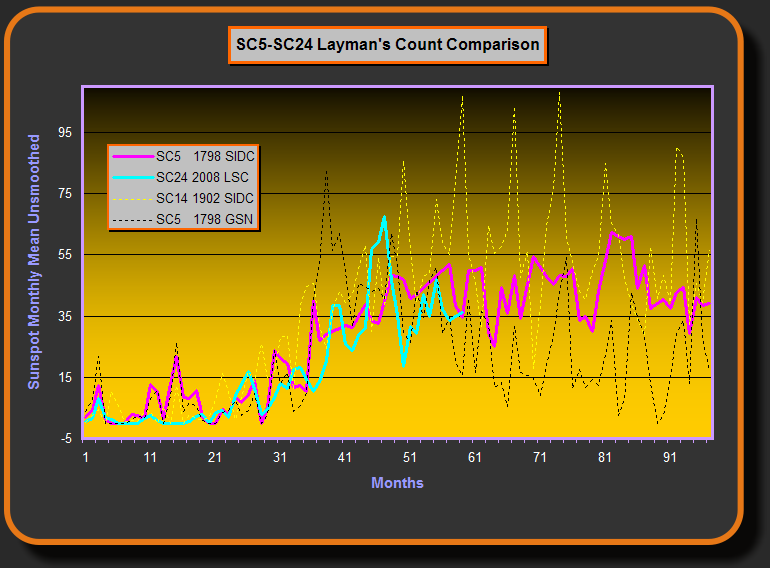
The Dalton Minimum was a period of low solar activity, named after the English meteorologist John Dalton, lasting from about 1790 to 1830. Like the Maunder Minimum and Spörer Minimum, the Dalton Minimum coincided with a period of lower-than-average global temperatures. The Oberlach Station in Germany, for example, experienced a 2.0°C decline over 20 years. The Year Without a Summer, in 1816, also occurred during the Dalton Minimum. Solar cycles 5 and 6, as shown below, were greatly reduced in amplitude.

http://solarcycle24.com/sunspots.htm

Sunspot number till December 7th


http://www.landscheidt.info/images/sc5_sc24.png

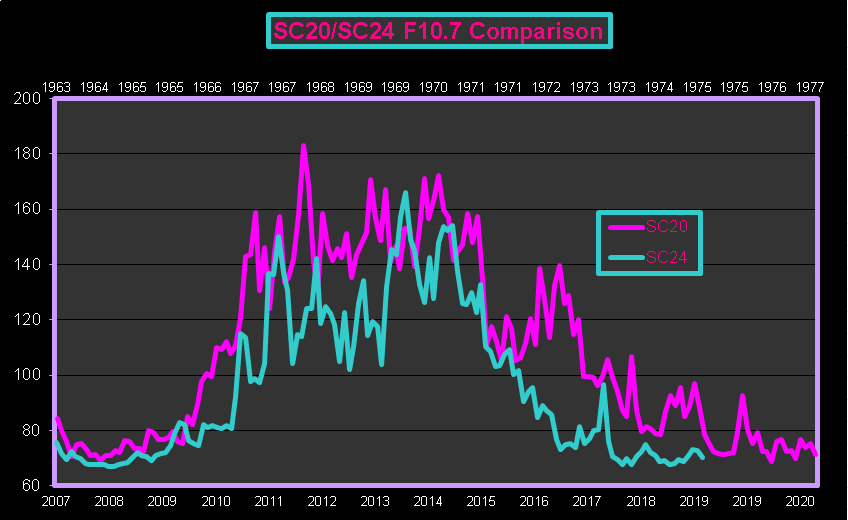
To compare solar cycles we can also use the F10.7 radio flux values that have been recorded since 1947 in Canada. Solar cycle 20 was a weak cycle which is currently looking strong against solar cycle 24. Data is taken from the AU adjusted monthly average values.

Chemistry unsettled

December 16, 2010
International Year of Chemistry Logo

Image via Wikipedia

Atomic weights of 10 elements on periodic table about to make an historic change

For the first time in history, a change will be made to the atomic weights of some elements listed on the Periodic table of the chemical elements posted on walls of chemistry classrooms and on the inside covers of chemistry textbooks worldwide.

The new table, outlined in a report released this month, will express atomic weights of 10 elements – hydrogen, lithium, boron, carbon, nitrogen, oxygen, silicon, sulfur, chlorine and thallium – in a new manner that will reflect more accurately how these elements are found in nature.

“For more than a century and a half, many were taught to use standard atomic weights — a single value — found on the inside cover of chemistry textbooks and on the periodic table of the elements. As technology improved, we have discovered that the numbers on our chart are not as static as we have previously believed,” says Dr. Michael Wieser, an associate professor at the University of Calgary, who serves as secretary of the International Union of Pure and Applied Chemistry‘s (IUPAC) Commission on Isotopic Abundances and Atomic Weights. This organization oversees the evaluation and dissemination of atomic-weight values.

Modern analytical techniques can measure the atomic weight of many elements precisely, and these small variations in an element’s atomic weight are important in research and industry. For example, precise measurements of the abundances of isotopes of carbon can be used to determine purity and source of food, such as vanilla and honey. Isotopic measurements of nitrogen, chlorine and other elements are used for tracing pollutants in streams and groundwater. In sports doping investigations, performance-enhancing testosterone can be identified in the human body because the atomic weight of carbon in natural human testosterone is higher than that in pharmaceutical testosterone.

The atomic weights of these 10 elements now will be expressed as intervals, having upper and lower bounds, reflected to more accurately convey this variation in atomic weight. The changes to be made to the Table of Standard Atomic Weights have been published in Pure and Applied Chemistry and a companion article in Chemistry International.

For example, sulfur is commonly known to have a standard atomic weight of 32.065. However, its actual atomic weight can be anywhere between 32.059 and 32.076, depending on where the element is found. “In other words, knowing the atomic weight can be used to decode the origins and the history of a particular element in nature,” says Wieser who co-authored the report.

Elements with only one stable isotope do not exhibit variations in their atomic weights. For example, the standard atomic weights for fluorine, aluminum, sodium and gold are constant, and their values are known to better than six decimal places.

“Though this change offers significant benefits in the understanding of chemistry, one can imagine the challenge now to educators and students who will have to select a single value out of an interval when doing chemistry calculations,” says Dr. Fabienne Meyers, associate director of IUPAC.

http://www.eurekalert.org/pub_releases/2010-12/uoc-awo121510.php

Capitation fees: The stench of corruption in the Indian body academic

December 10, 2010
Varkala in Kerala. India.

Image via Wikipedia

This past week I have been travelling in the southern Indian states of Tamil Nadu and Karnataka.

The growth is palpable and vibrant. But it is chaotic and uncontrolled – and probably uncontrollable, The best that can be hoped for is that movement is in the general direction desired but it is futile to to try and exercise any micro-control. The speed is such that there is no time for consolidation, for reflection, for developing values or standards or for any feedback. Feed forward is the only thing that can keep up.

But in every field of operation – whether construction or government or industry or financial institutions or academia – the stench of corruption is contained under a thin veneer of apparent sophistication. The overpowering fundamental value which gets free reign is greed.

What has become apparent to me is that in spite of many good intentions by government, the shortage of supply in the face of an ever-increasing demand for education has allowed the unfettered growth of  private colleges and universities. But the demand is only used as a vehicle for satisfying greed not for satisfying educational needs.

All degrees and especially post graduate degrees in medicine, engineering and IT related subjects from private colleges in India are granted solely for the payment of a capitation fee.

http://en.wikipedia.org/wiki/Capitation_fee

Capitation fee refers to the unlawful collection of payment by educational bodies in exchange for a seat in the institution. It is also known as donations. This practice is popular in private colleges and universities in India, especially those that grant baccalaureate degrees in Engineering, IT and the sciences. This is an example of institutionalized corruption prevalent in India.The practice goes mostly unnoticed because the board/owners of these institutions hold political/financial powers and also the parents who pay the donations are more than happy to do so.

The Concise Oxford Dictionary defines capitation as follows:

The payment of a fee or a grant to a doctor, school, etc., the amount being determined by the number of patients, pupils etc. Origin (denoting the counting of heads)

The Kerala Self Financing Professional Colleges (Prohibition of Capitation Fees and Procedure for Admission and Fixation of Fees) Act 2004 defines capitation fees as follows.

“capitation fees” means any amount by whatever name called, whether in cash or in kind paid or collected or received directly or indirectly in addition to the fees determined under section 4.

The Supreme Court Judgement in 1993 in the Unni Krishnan Case declared that charging capitation fees was illegal.

But capitation fees are now the only way of  getting a seat in a private college. It guarantees a degree will be awarded. Academic staff  have no say in the selection of students. That selection is reserved for the owners and they usually auction the seats to the highest bidder. Capitation fees are unrecorded, undeclared and paid in cash. Academic standards are irrelevant.

This is not to say that competent engineers and doctors do not exist. But a degree from a private college is an empty thing. It only proves that a capitation fee was paid and is totally silent regarding the capability or competence of the person receiving a degree.

Settled Science? Smoking declines, lung cancer cases increase

December 1, 2010


I am afraid I find that whenever I hear the claim of “science being settled” – whether in medicine or astronomy or climate or physics – I am immediately suspicious that a political agenda is being pursued. Recent examples only convince me that there are few “scientific conclusions” free of a political agenda any more.
A new survey in the Upsala-  Örebro healthcare region of Sweden has found that though smoking has been declining since the 1970’s, the number of cases of lung cancer have increased by 41% since the mid 90’s.
Svenska Dagbladet reports (free translation):
To some extent this survey reflects smoking behaviour of a few decades ago since lung cancer typically develops only after several decades of intense smoking. But Associate Professor Gunnar Wagenius, chief physician at the University Hospital cancer clinic in Uppsala, is still surprised, given that smoking among men has fallen since the 1970s, while lung cancer cases have stopped falling and even started to rise again.
“It suggests that there are one or more additional factors other than smoking, which slowed this decline. What these factors might be is as yet very mysterious”, he told the Upsala Nya Tidning.
Lung cancer increased among women most as a consequence of changes in smoking habits. In the study, the researchers analyzed statistics from the regional registry for lung cancer, which started in 1995. The 598 registered cases in the seven counties in the healthcare region had risen to845 cases last year.
The study will be reported later today at the National Medical conference in Gothenburg.


Nasa/University of Colorado establish Sun-Climate Research Center

November 30, 2010

The “settled science” of climate change seems to be opening up to real science  – at last. Nasa and the University of Colorado are establishing a new research centre dedicated to studying the effect of the sun on climate.

And about time too.

Perhaps they could let the 15,000 gathered in Cancun know about the importance the Sun may have!

Today the University of Colorado Laboratory for Atmospheric and Space Physics (LASP) and NASA’s Goddard Space Flight Center announced the formation of a new collaborative research center dedicated to the study of the Sun’s effect on Earth’s climate. The Press release goes on to say:

Solar Image

The newly announced Sun-Climate Research Center, a collaboration between LASP and Goddard, will focus on research areas such as how solar variations shape Earth’s atmosphere and climate. This image of the sun is from the LASP-built NSF Precision Solar Photometric Telescope (PSPT). (Courtesy NASA/GSFC Scientific Visualization Studio; source data courtesy of HAO and LASP PSPT project team)

The center, called the Sun-Climate Research Center (SCRC), will be directed by Peter Pilewskie, a LASP research scientist and CU professor, Robert Cahalan, Head of Goddard’s Climate and Radiation Branch, and Douglas Rabin, Head of Goddard’s Solar Physics Laboratory.

Pilewskie said, “The exciting thing about this collaboration is that we believe it will promote studies to help answer a key question about the climate system: how does Earth’s atmosphere respond to the sun’s variability, and how does that affect climate? This question is particularly important now, as we seek to quantify the human-induced impact on Earth’s climate.”

The SCRC, which has been made possible by a Federal Space Act Agreement, will foster collaboration between Earth-atmosphere and solar sciences at the two institutions. Opportunities will include a scientist exchange program between the organizations, the ability for post-doctoral scientists and graduate students in science, engineering, and mission operations to move between LASP and Goddard, annual international Sun-Climate research symposia, and the ability for the two institutions to collaborate more fluidly on future research opportunities.

Robert Cahalan, SCRC co-director and Goddard scientist, said, “In recent years Goddard and LASP have worked together on several Earth and Sun missions. Now we look forward to continuing to drive growth in this key interdisciplinary field of Sun-Earth research, bringing new focus to the study of multiyear changes in the Sun and their influence on Earth’s climate.”

With a limited number of such agreements between U.S. universities and any of NASA’s ten field centers, the SCRC represents a rare and innovative step, underscoring LASP’s ability to develop high-caliber research and programmatic opportunities with Goddard.

Daniel Baker, LASP Director, said, “LASP has developed some remarkable areas of expertise that are key to studying the sun and its effect on climate and on human activities. By working with our colleagues at Goddard, we can leverage our skills—and help take an important step toward greater cooperation between NASA centers and leading university research teams.”

Reindeer grazing not global warming is shifting the tree line in Torneträsk

November 29, 2010
Strolling reindeer (Rangifer tarandus) in the ...

Strolling reindeer: iImage via Wikipedia

New research shows that the advance of the tree line upwards in the Swedish mountains was due to reduced reindeer grazing and not due to any global warming.

Swedish Radio P1 reports today: (freely translated)

It is not primarily a warmer climate which causes the tree line to crawl
up in many places in the Swedish mountains. A new study from the Torneträsk area shows that there are several other factors that affect tree spread rather than just higher temperatures. Climate change plays a very minor role. It is mainly grazing reindeer, insect infestation, and several other factors that affect mountain forest coverage, rather than changing temperature conditions.
“That the tree line can go up or down or remain stationary within the same climate period has not been shown before “, says Professor Terry Callaghan, one of the researchers who carried out the study.

The tree line advanced up the mountains most during the cold period at the end of the 1960s and 1970s. It was primarily because it was a time with fewer reindeer. A warmer climate may actually have an indirect effect (to reduce the advance northwards) by adding to the number of  insects and insect infestations that can damage trees.

Many climate models expect that the forest in the tundra and other Arctic areas will expand considerably northwards in the next one hundred years because of higher temperatures. But the new research suggests that these simple assumptions can be grossly inaccurate. One must reckon with how to account for the impact of insects and grazing reindeer and moose. “It now requires that much more detailed information be added into the models”, says Professor Terry Callaghan, director of the Abisko research station.

The article is published in the Journal of Biogeography

Prematurely induced ageing reversed in mice

November 29, 2010

It is not quite the reversal of the normal ageing process but fascinating nevertheless. Mice deprived of telomerase suffered premature ageing and the reintroduction of the enzyme reversed it. But mice lacking telomerase are not necessarily a valid stand-in for the normal ageing process. Increasing the level of telomerase in humans could potentially encourage the growth of tumours.

A new paper in Nature:

Telomerase reactivation reverses tissue degeneration in aged telomerase-deficient mice

Nature advance online publication 28 November 2010 | doi:10.1038/nature09603; Received 8 May 2010; Accepted 26 October 2010; Published online 28 November 2010

Mariela Jaskelioff, Florian L. Muller, Ji-Hye Paik, Emily Thomas, Shan Jiang, Andrew C. Adams, Ergun Sahin, Maria Kost-Alimova, Alexei Protopopov, Juan Cadiñanos, James W. Horner, Eleftheria Maratos-Flier & Ronald A. DePinho

Nature News:

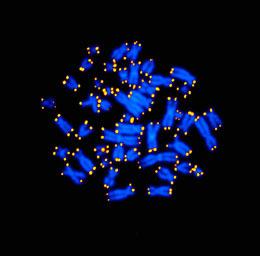
telomeres

Telomeres: Peter Lansdorp/Visuals Unlimited/Corbis

Premature ageing can be reversed by reactivating an enzyme that protects the tips of chromosomes, a study in mice suggests.

Mice engineered to lack the enzyme, called telomerase, become prematurely decrepit. But they bounced back to health when the enzyme was replaced. The finding, published online today in Nature, hints that some disorders characterized by early ageing could be treated by boosting telomerase activity.

It also offers the possibility that normal human ageing could be slowed by reawakening the enzyme in cells where it has stopped working, says Ronald DePinho, a cancer geneticist at the Dana-Farber Cancer Institute and Harvard Medical School in Boston, Massachusetts, who led the new study. “This has implications for thinking about telomerase as a serious anti-ageing intervention.”

After its discovery in the 1980s, telomerase gained a reputation as a fountain of youth. Chromosomes have caps of repetitive DNA called telomeres at their ends. Every time cells divide, their telomeres shorten, which eventually prompts them to stop dividing and die. Telomerase prevents this decline in some kinds of cells, including stem cells, by lengthening telomeres, and the hope was that activating the enzyme could slow cellular ageing.

Two decades on, researchers are realizing that telomerase’s role in ageing is far more nuanced than first thought. Some studies have uncovered an association between short telomeres and early death, whereas others have failed to back up this link. People with rare diseases characterized by shortened telomeres or telomerase mutations seem to age prematurely, although some tissues are more affected than others.

When mice are engineered to lack telomerase completely, their telomeres progressively shorten over several generations. These animals age much faster than normal mice — they are barely fertile and suffer from age-related conditions such as osteoporosis, diabetes and neurodegeneration. They also die young. “If you look at all those data together, you walk away with the idea that the loss of telomerase could be a very important instigator of the ageing process,” says DePinho.

To find out if these dramatic effects are reversible, DePinho’s team engineered mice such that the inactivated telomerase could be switched back on by feeding the mice a chemical called 4-OHT. The researchers allowed the mice to grow to adulthood without the enzyme, then reactivated it for a month. They assessed the health of the mice another month later.

Shrivelled testes grew back to normal and the animals regained their fertility. Other organs, such as the spleen, liver and intestines, recuperated from their degenerated state. The one-month pulse of telomerase also reversed effects of ageing in the brain. Mice with restored telomerase activity had noticeably larger brains than animals still lacking the enzyme, and neural progenitor cells, which produce new neurons and supporting brain cells, started working again.

The downside is that telomerase is often mutated in human cancers, and seems to help existing tumours grow faster. “Telomere rejuvenation is potentially very dangerous unless you make sure that it does not stimulate cancer,” says David Harrison, who researches ageing at the Jackson Laboratory in Bar Harbor, Maine.

Harrison also questions whether mice lacking telomerase are a good model for human ageing. “They are not studying normal ageing, but ageing in mice made grossly abnormal,” he says.


Why cannot a concept of tort or “product liability”apply to scientists?

November 28, 2010

Cases of scientific misconduct do not seem to lead to any significant sanctions. Scientists are not subject to the codes of ethics that other professions have (even if they are not always complied with). Lawyers and doctors and engineers can be “disbarred” or otherwise forbidden from practising their professions when found guilty of incompetence or fraud.  Why then can a physicist or a chemist or a biochemist not be subject to the same professional sanctions for misconduct? Learned Institutes of Physics or Chemistry or Mathematics rarely get involved in the ethics breaches of their members. Scientists also need to be held responsible (liable) for their work and in cases of fraudulent science or misconduct, the sanctions applied need to be seen to be in balance with the extent of the offence.

There have been many cases of scientific misconduct where the offender seems to get little more than a slap on the wrist or a mild reprimand. In some cases they leave one institution and merely move to another. Their degrees are rarely revoked and they usually continue “working” or faking work in some other institution.

Retraction Watch addresses the details of the case of the fraud committed by Dr Jatinder Ahluwalia at University College London which led to the retraction of a paper in Nature.

Earlier this month, we posted an item about the retraction of a 2004Nature paper, “The large-conductance Ca2+-activated K+ channel is essential for innate immunity.” (That post was followed up with provocative comments from a researcher not affiliated with the authors, about what should happen to papers whose results can’t be replicated.)

One of the paper’s authors, Jatinder Ahluwalia, hadn’t signed the retraction, and the notice referred to “Supplementary Information” that hadn’t yet been made available. Today, University College London (UCL) posted that supplementary information, which was the report of a panel that investigated charges of research misconduct against Ahluwalia. That report fills in a lot of details about what preceded the retraction.

UCL’s investigation found that Ahluwalia:

  • falsified the results of experiments conducted by him, on UCL premises, thereby committing research fraud, as defined by paragraph 1.1.iv of the UCL Procedure for Investigating and Resolving Allegations of Misconduct in Academic Research. It was alleged that Dr Ahluwalia altered the numbering of files of research results so as to misrepresent the results of experiments conducted by him;
  • further falsified and misrepresented the results of experiments conducted by him, on UCL premises, by the use of materials other than those specified in the reports of the results of those experiments, thereby committing research fraud, as defined by paragraph 1.1.iv of the UCL Procedure for Investigating and Resolving Allegations of Misconduct in Academic Research;
  • interfered with the experiments of others so as to distort their results, thus falsifying the results of research experiments conducted by others employed by UCL on UCL premises, thereby committing research fraud, as defined in paragraph 1.1.iv of the UCL Procedure for Investigating and Resolving Allegations of Misconduct in Academic Research. It was alleged that Dr Ahluwalia deliberately contaminated chemicals used by other researchers in their experiments so as to falsify the results of those experiments, in order to conceal the falsification by him of the results of his own experiments.

Dr Ahluwalia is currently employed as a Senior Lecturer & Programme leader in BSc & MSc Pharmacology at the School of Health and Biosciences, University of East London,  Stratford Campus, Romford Road, London E15 4LZ, United Kingdom. For having committed fraud and engaged in sabotage and even though he is no longer employed by UCL, it does not seem that his behaviour has led to any significant sanctions.

Recently a Harvard University investigation found its high-profile Professor Marc Hauser guilty of 8 counts of misconduct and sent him on a year’s “book leave” and he will resume his activities next year. He does not lose tenure and his degrees are not revoked and the sanction seems relatively mild in relation to his behaviour.

The product that researchers and scientists produce is publications – mainly as papers published in scientific journals and as books. Scientific misconduct (whether plagiarism or faking data or inventing data or cherry picking data) leads occasionally to dismissals (but not always) and generally very little else. It seems to me that the concept of tort or “product liability” should be applicable to the work of scientists and researchers where their work is the result of faking data, fraud or other misconduct since it would be work that “had not been done in good faith”. Tort would apply because the ramifications of their misconduct would extend far beyond their employment contracts with their employers.

Tort  (from Wikipedia) is a wrong:

that involves a breach of a civil duty owed to someone else. It is differentiated from criminal wrongdoing which involves a breach of a duty owed to society, and also does not include breach of contract. Tort cases may comprise such topics as auto accidents, false imprisonment, slander and libel, product liability (such as defectively designed consumer products), and environmental pollution (toxic torts).

Clearly a researcher has a civic duty to his co-workers, his department, his institution, his publishers and to the global community working in the same field. Scientific misconduct is a clear breach of these duties and any such researcher must then be both accountable and liable. Sanctions in such cases must be commensurate and seen to be commensurate with the offence. A year’s sabbatical from Harvard or merely moving across town to be employed at another university does not seem to be in balance with the weight of the misconduct.

The employment contract of a researcher with any institution no doubt has the appropriate language which allows sanctions (including dismissal) for breach of contract. However the liability of a fraudulent researcher – especially with published papers and books – goes beyond a simple breach of contract with his employer and extends to the entire community of workers in the field and even to all readers who may be influenced by the fraudulent work. For commensurate sanctions to be possible it becomes necessary for the concept of tort to be introduced and for  “product liability” to reside with the researcher whereby he can be held accountable by the entire audience his “product” is addressed to.

Authors of scientific papers and books need to be responsible and liable for their products.

Oxygen – carbon dioxide atmosphere found on Saturn’s moon Rhea

November 27, 2010

From The New Scientist:

On its journey around Saturn and its moons, the Cassini mission – jointly run by NASA and the European Space Agency – has made another breathtaking discovery. The findings, published in Science (DOI: 10.1126/science.1198366), show that Rhea, the second biggest moon of the giant planet, has an atmosphere that is 70 per cent oxygen and 30 per cent carbon dioxide. This adds to the picture of Rhea that Cassini has already provided by imaging its craters anddiscovering its rings.

“This really is the first time that we’ve seen oxygen directly in the atmosphere of another world”, Andrew Coates, from University College London’s Mullard Space Science Laboratory, told The Guardian. Layers containing oxygen had already been detected around the Jovian moons Europa and Ganymede in the 1990s, but only from a distance using NASA’s Hubble Space Telescope.

This time, Cassini’s instrument had the chance to “smell” that oxygen, as it flew through it over Rhea’s north pole, just 97 kilometres above the surface, according to the details given on Space.com. This layer – with an oxygen density probably about 5 trillion times less than on Earth – was “too thin to be remotely detected”, said Ben Teolis of the Southwest Research Institute in San Antonio.

These three views of Saturn's moon Rhea from NASA's Cassini spacecraft are enhanced to show colorful splotches and bands on the icy moon's surface. New observations have shown Rhea has an oxygen-rich atmosphere. Credit: NASA/JPL/SSI/LPI

Cassini Finds an Oxygen–Carbon Dioxide Atmosphere at Saturn’s Icy Moon Rhea B. D. Teolis, G. H. Jones, P. F. Miles, R. L. Tokar, B. A. Magee, J. H. Waite, E. Roussos, D. T. Young, F. J. Crary, A. J. Coates, R. E. Johnson, W.-L. Tseng and R. A. Baragiola

Science DOI: 10.1126/science.1198366, Published Online 25 November 2010

Abstract: The flyby measurements of the Cassini spacecraft at Saturn’s moon Rhea reveal a tenuous oxygen–carbon dioxide atmosphere. The atmosphere appears to be sustained by chemical decomposition of the surface water ice under irradiation from Saturn’s magnetospheric plasma. This in situ detection of an oxidizing atmosphere is consistent with remote observations of other icy bodies such as Jupiter’s moons Europa and Ganymede, and suggestive of a reservoir of radiolytic O2 locked within Rhea’s ice. The presence of CO2suggests radiolysis reactions between surface oxidants and organics, or sputtering and/or outgassing of CO2endogenic to Rhea’s ice. Observations of outflowing positive and negative ions give evidence for pickup ionization as a major atmospheric loss mechanism.