New Global warming “event”! All 50 US states record temperatures below freezing

January 8, 2014

I note that the global warming priesthood are busy contorting themselves to show that the current icy blast across the US is no proof that global warming has stopped and may even be proof that it is entirely due to global warming and ice melting in the Arctic!!! Every single US State – including Hawaii – recorded temperatures below freezing yesterday. Never mind that no climate model ever predicted record cold waves. The contortions can get quite amusing but it is a little frightening that “global warming ideology” has become the new catholicism of this age. (Note that Eric Holthaus was prepared to get a vasectomy for his faith and to save the world from global warming)

Ultimately reality must prevail – even when it conflicts with what computer models may say. This from  The Guardian ( which is still smarting from the Ship of Fools fiasco).

The Guardian: 

Polar vortex – temperatures drop below freezing in all 50 US states

Temperatures in all 50 US states dipped below freezing on Tuesday in a rare nationwide chill that will keep a grip on much of the country for at least another day, with cutting winds and blizzards posing the most danger.

Florida, a state that normally basks in its reputation as a warm winter escape, experienced unusually low temperatures. In the midwest, northeast and eastern Canada, it was dangerous to venture outside. At some point on Tuesday, at least one location in each of the 50 US states recorded temperatures below freezing, with the highest point on Hawaii, Mauna Kea, recording a temperature of 21F (-6C).

The morphing of the science

Global warming >> Climate change >> Extreme Events >>>>>>>> Global Cooling

Supervolcanos can erupt sponataneously without an external trigger

January 7, 2014

New research suggests that supervolcanos do not need an external trigger to erupt. Bouyancy effects and the magma volume could be sufficient for spontaneous eruption.

Wim J. Malfait, Rita Seifert, Sylvain Petitgirard, Jean-Philippe Perrillat, Mohamed Mezouar, Tsutomu Ota, Eizo Nakamura, Philippe Lerch, Carmen Sanchez-Valle. Supervolcano eruptions driven by melt buoyancy in large silicic magma chambers. Nature Geoscience, 2014; DOI:10.1038/ngeo2042

From the Press Release:

Scientists have reproduced the conditions inside the magma chamber of a supervolcano to understand what it takes to trigger its explosion. These rare events represent the biggest natural catastrophes on Earth except for the impact of giant meteorites. Using synchrotron X-rays, the scientists established that supervolcano eruptions may occur spontaneously, driven only by magma pressure without the need for an external trigger. The results are published in Nature Geosciences.

A well-known supervolcano eruption occurred 600,000 years ago in Wyoming in the United States, creating a huge crater called a caldera, in the centre of what today is Yellowstone National Park. When the volcano exploded, it ejected more than 1000 km3 of ash and lava into the atmosphere, 100 times more than Mt Pinatubo in the Philippines did in 1992. Big volcanic eruptions have a major impact on the global climate. The Mt Pinatubo eruption decreased the global temperature by 0.4 degrees C for a few months. The predictions for a super volcano are a fall in temperatures by 10 degrees C for 10 years.

Abstract: Super-eruptions that dwarf all historical volcanic episodes in erupted volume and environmental impact are abundant in the geological record. Such eruptions of silica-rich magmas form large calderas. The mechanisms that trigger these super-eruptions are elusive because the processes occurring in conventional volcanic systems cannot simply be scaled up to the much larger magma chambers beneath supervolcanoes. Over-pressurization of the magma reservoir, caused by magma recharge, is a common trigger for smaller eruptions, but is insufficient to generate eruptions from large supervolcano magma chambers. Magma buoyancy can potentially create sufficient overpressure, but the efficiency of this trigger mechanism has not been tested. Here we use synchrotron measurements of X-ray absorption to determine the density of silica-rich magmas at pressures and temperatures of up to 3.6 GPa and 1,950 K, respectively. We combine our results with existing measurements of silica-rich magma density at ambient pressures to show that magma buoyancy can generate an overpressure on the roof of a large supervolcano magma chamber that exceeds the critical overpressure of 10–40 MPa required to induce dyke propagation, even when the magma is undersaturated in volatiles. We conclude that magma buoyancy alone is a viable mechanism to trigger a super-eruption, although magma recharge and mush rejuvenation, volatile saturation or tectonic stress may have been important during specific eruptions.

Supervolcanos do not occur all that often – perhaps one every 50,000 to 100,000 years. When they do occur they devastate a large geographical area and affect the climate for a decade or so. How much destruction of organic life occurs depends on the geographical area affected and the life that is extant there.

New Zealand’s Taupo Volcano was the most recent and erupted about 26,500 years ago. With a VEI of 8, just over 1,000 km3 of ash were ejected. Though modern man had reached Australia by then, the effects of this eruption do not seem to have significantly delayed the march of humans. The Toba eruption 74,000 years ago occurred when the total population of all human species (Modern Humans, Neanderthals, Denisovans …..) was between 1 and 10 million. This eruption is also classified as a VEI of 8 and 2,800 km³ of material was ejected. Life was virtually extinguished from India to South East Asia. The effects were devastating not only in the fall out-zone but also – it seems – in hampering the expansion of modern humans out of Africarabia. This eruption may thus have caused one of the critical bottlenecks which has determined the subsequent evolution and expansion of humans. 

Image

Toba Fallout (Smithsonian Institute)

While a supervolcano could erupt at any time, it is much more probable to occur than a major asteroid collision with the earth (one in 100,000 years as opposed to once in tens of millions of years). But the volume of magma involved suggests that some early detection (perhaps 5 -10 years) may be possible. For the pressure to build up sufficiently in such a volume a significant bulging of the earth’s crust is likely and should be detectable. But while science fiction can imagine a battery of nuclear warheads to divert an oncoming asteroid in its trajectory, it is difficult to conceive of any way to prevent a supervolcano from erupting. Geo-engineering on a  scale massive enough to relieve some of the pressure in the magma is just conceivable at the edge of fantasy but even that could not prevent the eruption.

Akademik Shokalskiy and Xue Long break free from Antarctic ice

January 7, 2014

Four days after Turney’s tourists abandoned ship, the Akademik Shokalskiy and Chinese icebreaker Xue Long have broken free from the ice they were trapped in.

BBC:The Russian research ship Akademik Shokalskiy and Chinese icebreaker Xue Long have broken free from Antarctic ice where they had been stranded for several days.

The Russian ship’s captain said a crack had appeared in the ice after a change in wind direction. The Akademik Shokalskiy got stuck on 25 December. It has a Russian crew of 22. On Thursday, the Xue Long’s helicopter ferried 52 passengers from the stranded Russian ship to an Australian vessel. The Xue Long then became stuck itself on Friday.

“We’re going slowly and zig-zagging, we’ve already moved more than 20 [nautical] miles,” Captain Igor Kiselyov of the Russian ship told Itar-Tass news agency. “It’s tough going so far, a lot of mist, visibility is no more than 500 metres,” he said. He confirmed that the Chinese ship was also moving and that Akademik Shokalskiy was just north of it. “It may catch up with us – in that case, we’ll follow in its wake. But if not, we’ll get out together, independently,” he said.

All’s well that end well but Turney’s preceding comedy of errors will not be soon forgotten.

It looks like the services of the US icebreaker Polar Star will not be required.

Was all the ballyhoo from the heroic expeditioners truly necessary?

Nature/Turney defend the Ship of Fools and their Antarctic pleasure cruise

January 7, 2014

Chris Turney, his global warming pilgrims (called scientists), his pet journalists and his tourists are due to reach Tasmania on 22nd January after being “rescued” (from what?) after their chartered ship Akademik Shokalskiy (ice-strengthened but no icebreaker) was trapped in the Antarctic ice on December 24th.

Nature (much to their discredit) have hurriedly published a defence by Chris Turney of his tourist trip on his Ship of Fools.  It amazes me that Nature would – so quickly – publish such an obviously self-serving and narcissistic article. Almost as if they had a higher agenda of defending the larger global warming community so grievously opened up to ridicule by Turney and his tourists.

“It was no pleasure cruise” he whines (though he seems to have taken his family along for this jaunt). He claims the ship was an icebreaker – which it was not – and that the event could not have been anticipated  – which it could. He claims to have advanced the frontiers of science – which is mere hyperbole. He even tries to take credit for rekindling public interest! 

“… the value of our expedition must be judged by the quality of the research it always intended to produce, and the remarkable rekindling of public interest in science and exploration that has come with it”.

But his attempt to salvage something from his PR disaster does not go down well judging by some of the comments that his self-serving “defence” elicits:

Roger Corbett 2014-01-07 04:46 AM

How does a couple of hours shoveling snow to get inside Mawson’s Huts reported at the time by Professor Turney http://www.abc.net.au/science/photos/2013/11/26/3897110.htm become “important conservation work” a few days later? When he is trying to boost the scientific credentials of a tourism exercise. When you are in a hole, stop digging. These little exaggerations add up to make it hard to believe the bigger things. “Never before has a science expedition reached out live to so many people from such a remote location”….er, “one small step for a man…” It’s a definite pattern in the accounts coming from the AAE-2 people. Reading as much as I can, I conclude that the tourism activities delayed return to the ship, despite increasing concern from the ship’s Master. The claims that the weather closed in so suddenly and unexpectedly by Professor Turney are exaggerated (like so many things he says and writes), either to deliberately deflect from his responsibilities as tour leader, or because ego doesn’t allow him to admit it even to himself.

Charles Rotter 2014-01-07 12:41 AM

…  I have been following the writings of the various blogs documenting this trip, and as far as I can tell, the only scientific discovery/conclusion/finding you have documented so far is that, if the food source for a population of penguins becomes much harder to reach due to added physical obstacles, then that penguin population will probably reduce in number. I am in awe at this insight.

Richard Tol 2014-01-06 04:09 PM

The way it turned out, this was indeed no pleasure cruise. At the same time, Chris Turney has yet to answer questions about the research purpose of this expedition. The Spirit of Mawson website is vague and many of the aims listed there cannot be achieved by a single, short trip. The successes listed above are from the first leg of the trip, rather than from the now-infamous second leg. If the second leg aimed to launch Argo floats, why did it sail on? And why were there so many people on board? There were 18 PhD students on the expedition. Only 6 have a research connection with Antarctica (the other 12 studying the North Atlantic, Australia’s coastal waters, brain injury, Iceland, New Zealand’s North Island, urban climates, pedagogy, the Equatorial Undercurrent, pharmaceuticals, time series statistics, microbiology, and Siberia), but only one of those has an obvious reason to visit Mawson’s Huts and even she would have collected more data in the same time had she flown there. Forgive me for asking, what research purposes were served by this expedition? Was this really the best way to spend the available funds?

Asimov’s 1964 predictions for 2014

January 6, 2014

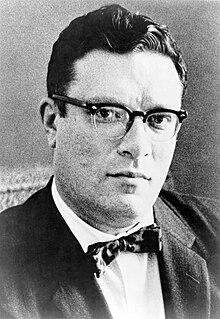
Isaac Asimov‘s expectations back in 1964 for how the world would change in 50 years do not need much commentary. In general the IT revolution has gone much further than he thought possible but styles of living and the gadgetry around us have not changed as much as he thought they would. His population estimates were not far wrong but the necessity for population control he envisaged is not necessary. Fertility rates are dropping much faster than he imagined possible. Unemployment is surely one of the greatest challenges of the day but not – as Asimov implied – due to a surfeit of leisure. All in all, pretty close!

From the New York Times of 16th August 1964:

Isaac.Asimov01.jpg

Asimov in 1965 (wikipedia)

Visit to the World’s Fair of 2014

By ISAAC ASIMOV

The New York World’s Fair of 1964 is dedicated to “Peace Through Understanding.” Its glimpses of the world of tomorrow rule out thermonuclear warfare. And why not? If a thermonuclear war takes place, the future will not be worth discussing. So let the missiles slumber eternally on their pads and let us observe what may come in the nonatomized world of the future.

What is to come, through the fair’s eyes at least, is wonderful. The direction in which man is traveling is viewed with buoyant hope, nowhere more so than at the General Electric pavilion. There the audience whirls through four scenes, each populated by cheerful, lifelike dummies that move and talk with a facility that, inside of a minute and a half, convinces you they are alive.

The scenes, set in or about 1900, 1920, 1940 and 1960, show the advances of electrical appliances and the changes they are bringing to living. I enjoyed it hugely and only regretted that they had not carried the scenes into the future. What will life be like, say, in 2014 A.D., 50 years from now? What will the World’s Fair of 2014 be like?

I don’t know, but I can guess.

One thought that occurs to me is that men will continue to withdraw from nature in order to create an environment that will suit them better. By 2014, electroluminescent panels will be in common use. Ceilings and walls will glow softly, and in a variety of colors that will change at the touch of a push button.

Windows need be no more than an archaic touch, and even when present will be polarized to block out the harsh sunlight. The degree of opacity of the glass may even be made to alter automatically in accordance with the intensity of the light falling upon it.

There is an underground house at the fair which is a sign of the future. if its windows are not polarized, they can nevertheless alter the “scenery” by changes in lighting. Suburban houses underground, with easily controlled temperature, free from the vicissitudes of weather, with air cleaned and light controlled, should be fairly common. At the New York World’s Fair of 2014, General Motors’ “Futurama” may well display vistas of underground cities complete with light- forced vegetable gardens. The surface, G.M. will argue, will be given over to large-scale agriculture, grazing and parklands, with less space wasted on actual human occupancy.

Gadgetry will continue to relieve mankind of tedious jobs. Kitchen units will be devised that will prepare “automeals,” heating water and converting it to coffee; toasting bread; frying, poaching or scrambling eggs, grilling bacon, and so on. Breakfasts will be “ordered” the night before to be ready by a specified hour the next morning. Complete lunches and dinners, with the food semiprepared, will be stored in the freezer until ready for processing. I suspect, though, that even in 2014 it will still be advisable to have a small corner in the kitchen unit where the more individual meals can be prepared by hand, especially when company is coming.

Robots will neither be common nor very good in 2014, but they will be in existence. The I.B.M. exhibit at the present fair has no robots but it is dedicated to computers, which are shown in all their amazing complexity, notably in the task of translating Russian into English. If machines are that smart today, what may not be in the works 50 years hence? It will be such computers, much miniaturized, that will serve as the “brains” of robots. In fact, the I.B.M. building at the 2014 World’s Fair may have, as one of its prime exhibits, a robot housemaid*large, clumsy, slow- moving but capable of general picking-up, arranging, cleaning and manipulation of various appliances. It will undoubtedly amuse the fairgoers to scatter debris over the floor in order to see the robot lumberingly remove it and classify it into “throw away” and “set aside.” (Robots for gardening work will also have made their appearance.)

General Electric at the 2014 World’s Fair will be showing 3-D movies of its “Robot of the Future,” neat and streamlined, its cleaning appliances built in and performing all tasks briskly. (There will be a three-hour wait in line to see the film, for some things never change.)

The appliances of 2014 will have no electric cords, of course, for they will be powered by long- lived batteries running on radioisotopes. The isotopes will not be expensive for they will be by- products of the fission-power plants which, by 2014, will be supplying well over half the power needs of humanity. But once the isotype batteries are used up they will be disposed of only through authorized agents of the manufacturer. ….

…. In 2014, there is every likelihood that the world population will be 6,500,000,000 and the population of the United States will be 350,000,000. Boston-to-Washington, the most crowded area of its size on the earth, will have become a single city with a population of over 40,000,000.

….

Even so, mankind will suffer badly from the disease of boredom, a disease spreading more widely each year and growing in intensity. This will have serious mental, emotional and sociological consequences, and I dare say that psychiatry will be far and away the most important medical specialty in 2014. The lucky few who can be involved in creative work of any sort will be the true elite of mankind, for they alone will do more than serve a machine.

Indeed, the most somber speculation I can make about A.D. 2014 is that in a society of enforced leisure, the most glorious single word in the vocabulary will have become work!

Read the whole article.

Best “Bad science” stories of 2013

January 6, 2014

Business Insider carries its top 10 “dumb”/false/bulls**t science stories of 2013.

(Turney and his Ship of Fools easily qualify for such a list but will have to wait for next year).

(in reverse order)

10. A scientist claimed vaccines make you gay

9.  A TIME Magazine cover “cured cancer”

8. PETA claimed chicken wings can shrink a baby’s penis

7. A chiropractor broke a baby’s neck

6. A scientist used math to “prove” gay marriage is wrong

5. Portland rejected water fluoridation

4. Anti-Vaxxer Jenny McCarthy joined The View

3.  Bigfoot DNA sequenced

2. The return of Cold Fusion

1. Terrible nature “documentaries”

My particular favourite is of the Nigerian “Chibuihem Amalaha, an award winning student at the University of Lagos, is claiming that he’s “disproved” gay marriage through science — and he used the power of magnets to do so. His “groundbreaking” work is backed by the university”.

050913F.scientifically-prov.jpg - 050913F.scientifically-prov.jpg

Scientifically proved that gay marriage is wrong (image thisdaylive.com)

But that’s not all. Amalaha, who says he’ll win a Nobel prize one day, has also used chemistry, biology, and mathematics to disprove gay marriage.

His mathematics of gay marriage is particularly illuminating. In an interview with This Day Live he says:

In mathematics which is another core area of science, I used what is called the principle of commutativity and idepotency. Commutativity in mathematics is simply the arrangement of numbers or arrangement of letters in which the way you arrange them don’t matter. For example, if you say A + B in mathematics you are going to have B + A. For example, if I say two plus three it will give five. If I start from three, I say three plus two it also give you five showing that two plus three and three plus two are commutative because they gave the same results. That shows that A + B will give you B + A, you see that there is a change. In A + B, A started the journey while in B + A, B started the journey. If we use A as a man and use B as a woman we are going to have B + A that is woman and man showing that there is a reaction. A + B reacted, they interchanged and gave us B + A showing that commutativity obeys that a man should not marry a man and a woman should not marry a woman. If you use idempotency, it’s a reaction in mathematics where A + A = A. Actually in abstract algebra, A + A =2A but we are less concerned with the numerical value two. We are more less concerned with the symbols A, you find out that A + A will give you A showing that the whole thing goes unchanged. It didn’t change unlike commutativity A + B give B + A there is a change. A started the journey in commutativity and A + B gave us B + A and B started the journey after the equality sign. But in the case of idempotency A + A will give you A showing that it goes unreacted. You started with A and you meet A ,the final result is A. Showing that a man meeting a man A + A will produce a man there is no reaction, it goes unreacted and in chemical engineering you have to send the material back to the reactor for the action to be carried out again showing that it goes unreacted. That is how mathematics has shown that gay marriage is wrong because commutativity proves that gay marriage is wrong. Idempotency also proves that gay marriage is wrong. So these are the principles I have used to prove gay marriage wrong in physics, chemistry, biology, mathematics and by the grace of God I am the only one that has proved this in the whole world.

Flawless launch of ISRO’s GSLV

January 5, 2014

ISRO is riding high.

After a flawless launch of the GSLV-D5 using an indigenous cryogenic engine for the first time, it now remains to insert the GSAT-14 satellite into its operational orbit. In three orbit raising manoeuvres, using the Liquid Apogee Motor, on board, GSAT-14 will reach the intended circular Geo-stationary orbit.

Graphic ISRO

“It is a tough job to understand and master cryogenic technology. It is ultimate and we have put in a lot of efforts and made it possible. Today, we can say and prepare with more confidence for the next mission of C-25 stage with 25 tonnes of propellant and 20 tonnes of cryogenic engine thrust for the GSLV MK-3 D-1 mission in early 2017. The high-end cryogenic engine is slated for completion and testing by 2015,” Vikram Sarabhai Space Centre director S Ramakrishnan told TOI minutes after the lift-off of GSLV-D5. 

About 3 hours to launch of ISRO’s GSLV-D5 mission

January 5, 2014

ISRO’s GSLV-D5 on the launch pad

Countdown Operations are underway at the Satish Dhawan Space Center on India’s East Coast from where a Geosynchronous Satellite Launch Vehicle will launch on a demonstration flight on Sunday at 10:48 UTC. GSLV is carrying the GSAT-14 communications satellite to Geostationary Transfer Orbit.

Links for live webcast, 3:52 PM IST onwards, today

http://webcast.isro.gov.in/
http://www.24framesdigital.com/isro/webcast/050114/

Consequences of Turney’s Antarctic junket are not yet over

January 5, 2014

The Xuelong is thought to have 111 crew on board while the Akademik Shokalskiy has 22. They are both currently trapped in the ice and the US icebreaker Polar Star is on its way from Sydney to render assistance if necessary. It will take the Polar Star about 7 days to reach the vicinity of the trapped vessels.

Cnut commanding the waves

Cnut commanding the waves

The consequences of Chris Turney’s narcissistic self-image of himself as an explorer in the Mawson mould and his irresponsible, publicity-seeking, junket into the Antarctic are not yet over. His proclamation that the ice should have melted away is reminiscent of King Cnut. Or perhaps like Cnut trying to demonstrate his limitations he was trying to demonstrate the fallibility of climate models which predict the loss of polar ice (and models such as that by his colleague Sherwood). It would be a travesty if the cost of diverting the 4 icebreakers (Chinese, French, Australian and now US) from their normal missions is not charged to Turney, the Climate Change Research Centre of the University of New South Wales and his media sponsors.

Xinhua reports:

BEIJING, Jan. 4 (Xinhua) — China has set up a leading team to rescue its icebreaker Xuelong, or Snow Dragon, which has been trapped by heavy floes since it rescued passengers on a Russian vessel stranded in Antarctica on Thursday.

The State Oceanic Administration (SOA) announced on Saturday the team will map out rescue plans and make “all-out efforts” to coordinate rescue operations, despite there is no immediate danger to personnel aboard Xuelong, which has abundant fuel and food supplies. …. 

Xueying 12, a helicopter on board Xuelong, on Thursday successfully evacuated all the 52 passengers aboard the Russian vessel MV Akademik Shokalskiy that has been stranded since Christmas Eve to the Australian icebreaker Aurora Australis.

However, after the rescue, Xuelong’s own movement was blocked by fields of floating ice.

Currently, Xuelong is located at 66.65 degrees south latitude and 144.42 degrees east longitude. It is surrounded by floes up to four meters thick and is about 21 km away from unfrozen waters, according to the SOA.

Qu Tanzhou, director of the State Oceanic Administration’s Chinese Arctic and Antarctic Administration, said the planned expedition by Xuelong is inevitably affected and changes are expected to be made to the vessel’s mission after it gets out of trouble.

“If the ship is stranded for a very long time, which is very rare indeed, then we’ll have to evacuate the people onboard and leave the vessel there,” he said.

AMSA Press Release:

6.30am AEDT Sunday 05 January 2014

US Coast Guard ice breaker to assist ships beset in ice in Antarctica

The Australian Maritime Safety Authority’s Rescue Coordination Centre (RCC Australia) has requested the US Coast Guard’s Polar Star icebreaker to assist the vessels MV Akademik Shokalskiy and Xue Long which are beset by ice in Commonwealth Bay.
The US Coast Guard has accepted this request and will make Polar Star available to assist.
The Polar Star has been en route to Antarctica since 3 December, 2013 – weeks prior to the MV
Akademik Shokalskiy being beset by ice in Commonwealth Bay. The intended mission of the Polar Star is to clear a navigable shipping channel in McMurdo Sound to the National Science Foundation’s Scientific Research Station. Resupply ships use the channel to bring food, fuel and other goods to the station. The Polar Star will go on to undertake its mission once the search and rescue incident is resolved.
RCC Australia identified the Polar Star as a vessel capable of assisting the beset vessels following MV Akademik Shokalskiy being beset by ice overnight on 24 December, 2013. RCC Australia has been in discussion with the US Coast Guard this week to ascertain if the Polar Star was able to assist once it reaches Antarctica.
The request for the Polar Star to assist the beset vessels was made by RCC Australia to the US Coast Guard on 3 January, 2014. The US Coast Guard officially accepted this request and released the Polar Star to RCC Australia for search and rescue tasking at 8.30am on 4 January, 2014.
The Polar Star will leave Sydney today after taking on supplies prior to its voyage to Antarctica.
It is anticipated it will take approximately seven (7) days for the Polar Star to reach Commonwealth Bay, dependent on weather and ice conditions.
At 122 metres, the Polar Star is one of the largest ships in the US Coast Guard fleet. It has a range of 16,000 nautical miles at 18 knots. The Polar Star has a crew of 140 people.
The Polar Star is able to continuously break ice up to 1.8 metres (6ft) while travelling at three (3) knots and can break ice over six (21ft) metres thick.
RCC Australia will be in regular contact with the relevant US Coast Guard RCC at Alameda, California, and the Captain of the Polar Star during its journey to Antarctica.

Human evolution as a braided stream rather than a branching tree

January 4, 2014
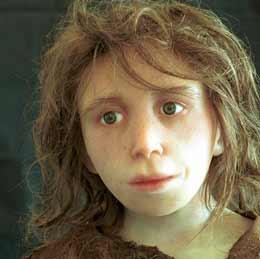
An interspecies love child? from Nature (Christoph P.E. Zollikofer)

An interspecies love child? from Nature (Christoph P.E. Zollikofer)

The genetic history of modern humans is creating a vast jigsaw puzzle. Genetic evidence is mounting that most people today carry some Neanderthal genes, that some carry what have been labelled “Denisovan” genes, that Denosivans and Neanderthals not only had a common ancestor but that there also was admixture between some Denisovans and some Neanderthals and that there was at least one other as yet unnamed archaic honim which interbred with the Denisovans. It now becomes clear that viewing all these various archaic humans as different species could be wrong. They could all well be the same species.

Chris Finlayson reviews the  paleoanthropology advances during 2013:

The conclusion of the Dmanisi study was that the variation in skull shape and morphology observed in this small sample, derived from a single population of Homo erectus, matched the entire variation observed among African fossils ascribed to three species – H. erectus, H. habilis and H. rudolfensis.

The five highly variable Dmanisi fossils belonged to a single population of H. erectus, so how could we argue any longer that similar variation among spatially and temporally widely distributed fossils in Africa reflected differences between species? They all had to be the same species. 

I have been advocating that the morphological differences observed within fossils typically ascribed to Homo sapiens (the so-called modern humans) and the Neanderthals fall within the variation observable in a single species.

It was not surprising to find that Neanderthals and modern humans interbred, a clear expectation of the biological species concept. …. If the fossils of 1.8 or so million years ago and those of the more recent Neanderthal-modern human era were all part of a single, morphologically diverse, species with a wide geographical range, what is there to suggest that it would have been any different in the intervening periods?

Probably not so different if we take the latest finds from the Altai Mountains in Siberia into account. Denisova Cave has produced yet another surprise, revealing that, not only was there gene flow between Neanderthals, Denisovans and modern humans, but that a fourth player was also involved in the gene-exchange game.

The identity of the fourth player remains unknown but it was an ancient lineage that had been separate for probably over a million years. H. erectus seems a likely candidate. Whatever the name we choose to give this mystery lineage, what these results show is that gene flow was possible not just among contemporaries but also between ancient and more modern lineages.

Just to show how little we really know of the human story, another genetic surprise has confounded palaeoanthropologists. Scientists succeeded in extracting the most ancient mitochondrial DNA so far, from the Sima de los Huesos site in Atapuerca, Spain.

The morphology of these well-known Middle Pleistocene (approximately 400,000 years old) fossils have long been thought to represent a lineage leading to the Neanderthals.

When the results came in they were actually closer to the 40,000 year-old Denisovans from Siberia. We can speculate on the result but others have offered enough alternatives for me to not to have to add to them. The conclusion that I derive takes me back to Dmanisi: We have built a picture of our evolution based on the morphology of fossils and it was wrong.

Some time ago we replaced a linear view of our evolution by one represented by a branching tree. It is now time to replace it with that of an interwoven plexus of genetic lineages that branch out and fuse once again with the passage of time

A braided stream rather than the branches of a tree is the better analogy where  – as John Hawkes describes it:

The “braided stream” analogy captures different information about human origins than the usual branching tree. The branches of a tree do not reconnect with each other above the point where they initially separate. A tree will never admit to exchanging sap between its branches, and there are no little xylem hyphae between branches to carry sap anyway. Our evolution was truly a network in which multiple populations existed and contributed to our process of adaptation.

But the braided stream is not quite satisfactory for the picture that is emerging:

promiscuity in the pleistocene

John Hawkes again:

I admit that the braided stream is not a perfect analogy. Diverging rivulets within a valley almost always come together again, forming a complicated network as they form sandbars and islets. None of them flow into a cul-de-sac. Some human populations of the past did become extinct, they did not inexorably flow back into the mainstream of our evolutionary history. Some of them may have flowed back into the mainstream only through very small channels of genetic exchange. When we go far enough back, some populations really did branch off into their own direction. It’s just not clear yet which populations those were. Maybe an evolutionary swamp would be a better analogy, full of algae-covered bayous.

I like the braided stream, and it’s clear that its time has come. Ancient DNA has begun to show the process of genetic exchange was not a minor player in our evolution. All human populations today evidence some mixture of ancient populations that existed well before the “origin of modern humans”. Genetic exchanges between different populations were dominant in the formation of some human adaptations. Some ancient populations can be understood only as the mixed descendants of other, yet more ancient ones. It’s mixing all the way back.

braided-stream-leone

A braided river from http://cloudman23.wordpress.com/ Image – Yann Arthus-Bertrand

The story will most likely become much more complex – as further pieces of the jigsaw are revealed – before the whole picture can be seen But it is already becoming apparent that the origin of modern humans includes genetic exchange with many “species” supposed to have predated AMH and this exchange was not insignificant.

Perhaps the concept of “Anatomically Modern Humans” has to be expanded and pushed back in time. Rather than an origin some 200,000 years ago the start of “modern humans” could need to be pushed back to about 500,000 years ago and has to somehow bring Neanderthals and Denisovans (and some others) back into the fold.

And maybe our ancestors of 20,000 generations ago were just as shocked at a Denisovan-Neanderthal marriage as some in India are today at an “inter-caste” marriage!