Global warming missing in South America

September 1, 2013

It’s only weather of course but the current winter in South America affords no evidence of global warming. The heat – if it is there – is extremely well hidden.

  1. It is cold that is far more deadly than warmth;
  2. it is only the availability of affordable energy which can help us ward off the cold;
  3. And it is only conventional energy sources (fossil, nuclear and hydro) whic are both available and affordable

Snow grips South American countries
Chile cold snap deaths total 16
Cold snap kills nine in Argentina

Peru snow state of emergency extended to more regions

The Peruvian government has extended to nine more regions a state of emergency called to cope with unusually cold weather and heavy snowfall. At least two people have died and 33,000 others have been affected by the cold spell, local officials say.

Tens of thousands of animals have frozen to death over the past week. President Ollanta Humala has travelled to Apurimac, one of the worst-hit areas, to oversee the distribution of emergency aid.

The state of emergency would be in place for 20 days, an official statement said. 

The heaviest snow fall to hit Peru in a decade has killed tens of thousands of llamas, alpacas, cattle and sheep, and left farmers destitute. A man died when the roof of his hut caved in under the weight of the snow in southern Carabaya province but the circumstances of the second death were unclear. Three people were rescued on Saturday from the same region after their home was cut off by snow. Rescue workers said the three, two girls and an elderly woman, were suffering from frostbite and snow blindness.

The cold front has also hit Peru’s south-eastern neighbour, Bolivia, and Paraguay, where a combined total of five people have died.

A woman walks along a snowy road on the outskirts of La Paz, Bolivia on 25 August 2013

A woman walks along a snowy road on the outskirts of La Paz, Bolivia on 25 August 2013 (BBC)

No acknowledgement or apology for plagiarism from Rawnsley

September 1, 2013

A few weeks ago the Observer’s political correspondent Andrew Rawnsley was apparently caught plagiarising an article in the Economist by Jeremy Cliffe:

The revelations about Rawnsley came 2 weeks ago from Guido Fawkes on his blog (run by Paul Staines and is probably the most read right-of-centre political blog in the UK):

Rawnsley’s column went missing for a few weeks but I see that he has returned today. His absence could have been vacation or a spot of “gardening leave” as a slap on the wrist for his “cut and paste” activities. But I can find no reference or acknowledgement or apology for his apparently quite blatant plagiarism.

The article today is a rather topical piece about Cameron and his lost vote in the House of Commons. This only happened 3 days ago so the article is probably mostly his own work. He expounds on the thesis that Cameron’s loss was his own and not a loss for the country!

But the basis for his thesis is odd and seems to be fundamentally unsound.

Why on earth would a political commentator in the “democracy” that is the UK  think that a vote taken in a duly elected Parliament could ever be a loss for the country? Unless he believes that Parliament’s normal role is just to rubber stamp all decisions made by the sitting Government.

Before the Sandwich came the snowy chocolatti

September 1, 2013

The use of the word “sandwich” to describe sliced meat between two slices of bread is supposed to originate after John Montagu, 4th Earl of Sandwich, (13 November 1718 – 30 April 1792). But the invention of the sandwich as a dish probably goes back to the first use of flat breads and of wrapping other edible foods within the breads. As far as we know flat breads originate at least from 4,000 BCE as they were known in Sumeria and Ancient Egypt.

“Sandwich”: It was named after John Montagu, 4th Earl of Sandwich, an 18th-century English aristocrat, although he was neither the inventor nor sustainer of the food. It is said that he ordered his valet to bring him meat tucked between two pieces of bread, and because Montagu also happened to be the Fourth Earl of Sandwich, others began to order “the same as Sandwich!”. It is said that Lord Sandwich was fond of this form of food because it allowed him to continue playing cards, particularly cribbage, while eating without getting his cards greasy from eating meat with his bare hands.

But it would seem from research by Kate Loveman that Admiral Sir Edward Montagu, the first Earl of Sandwich (1625 -1672) has an even greater claim to culinary fame than his great, great, grandson. Of course chocolate has been in use for at least some 800 years for pleasure and as a medicine but the first iced chocolate – or is it a chocolate ice? – is still a culinary milestone.The Earldom was created in 1660 and this recipe for a “snowy chocolatti” dates from 1668 or earlier.

The Earl’s iced chocolate recipe

  1. Prepare the chocolatti (to make a drink)
  2. Putt the vessell that hath the chocolate in it, into a jaraffa (carafe) of snow stirred together with some salt
  3. Shake the snow together sometyme and it will putt the chocolatti into tender curdled ice
  4. Soe eate it with spoons

Kate LovemanThe Introduction of Chocolate into England: Retailers, Researchers, and Consumers, 1640–1730,  Journal of Social History (Fall 2013) 47 (1): 27-46. doi: 10.1093/jsh/sht050

Abstract: 

In the mid-seventeenth century chocolate was a new and fascinating product in England, often grouped with two equally exotic drinks, coffee and tea. This article focuses on the early history of chocolate, examining how it was marketed, perceived, and consumed. Chocolate sellers, who included coffee-houses proprietors, frequently made use of print to educate potential customers: the 1640s and 1650s saw chocolate-drinking promoted as medicinal, excitingly foreign, and pleasurable. Further insights into the scientific, governmental, and social factors that drove interest in chocolate during the Restoration can be found in the manuscripts of the first Earl of Sandwich (1625–72).

Despite evidence of considerable industry on the part of chocolate consumers, in the 1690s the success of a new breed of elite chocolate houses led to chocolate becoming strongly associated with leisure and decadence. These cultural associations were promoted in succeeding decades by periodicals, drama, and satirical poems. Throughout the late seventeenth and early eighteenth centuries, consumers’ experimentation with chocolate took place in the context of succeeding government’s fiscal experiments with cacao and chocolate: new tax measures influenced the cost of chocolate and its availability. By consulting a range of sources, from customs records to recipe books, we can track the ways chocolate was used across the decades and the factors in its adoption by different groups of consumers.

BBC News writes:

Dr Kate Loveman, from the University of Leicester, said she found the recipes in manuscripts which belonged to the Earl of Sandwich in 1668.

At the time, the chocolate treats came with a health warning for damaging the stomach, heart and lungs. The research also shows some of the regular themes in chocolate advertising across the centuries.

Dr Loveman, a senior lecturer in 17th and 18th Century English literature, said she was looking through a Samuel Pepys journal when she came across a 30-page section on chocolate.

Dr Kate Loveman
Dr Kate Loveman said the recipe was for a very solid, dark version of iced chocolate drinks. “It struck me as quite an unusual, odd thing because I have never come across anything quite like this before,” she said. “So I thought I would look into it further to find out how unusual it actually was.

“It’s not chocolate ice-cream, but more like a very solid and very dark version of the iced chocolate drinks you get in coffee shops today. Freezing food required cutting-edge technology in 17th Century England, so these ices were seen as great luxuries.”

The Earl’s recipe was written about 100 years before his great-great-grandson allegedly invented the sandwich. Dr Loveman said: “In the 1660s, when the Earl of Sandwich collected his recipes, chocolate often came with advice about safe consumption. 

“The papers included quite stern warnings about the dangers. It was a drug as far as people of the 17th Century were concerned.

“One physician cautioned that the ingredients in hot chocolate could cause insomnia, excess mucus, or haemorrhoids. People worried that iced chocolate in particular was ‘unwholesome’ and could damage the stomach, heart, and lungs.”

Dr Loveman’s research also shows some of the continuities in chocolate advertising across the centuries, such as links between chocolate and women, pleasure and sexuality.

Obama blinks, passes the buck to Congress and Kerry looks like a war-monger

August 31, 2013

Well, I thought that Kerry’s speech yesterday had effectively closed off all options for retreat.

But I had not reckoned with Obama’s risk aversion and his distaste for making decisions.

He blinked, passed the buck to Congress and Kerry now looks like a war-monger! 

He found his exit from the “red-line box” he was in. And Cameron’s slap-in-the-face from his own Parliament probably provided Obama not only with the inspiration to find his own exit policy but also convinced him not to go it alone. Having French support (and the Turkish support does not really count) was clearly not sufficient for Obama to stick his neck out. The “special relationship” with the UK still has meaning – even if Cameron is smarting.

I suspect this deferment to Congress is more due to Obama’s reluctance to take risky decisions rather than his desire to support the role of Congress. Congress will not be recalled especially for this and will resume normally on Monday 9th September. If Congress approves a strike his back is covered – even if a strike achieves nothing. And if Congress rejects any strike he has an “out” and a Congress to berate for lack of moral “spine”. 

Quite clever really. A win-win for him at the cost only of enhancing perceptions of his risk aversion and his indecision. And he has no elections to face any more.

 So probably no strikes for the next 10 days but 10 days is a very long time for anything to happen.

======================

UPDATE! Someone pointed out to me that a delay of 10 days could also be very useful in the collection or manufacture of “evidence”. That may be unduly cynical but I note also that Putin’s call for the evidence to be shown and his statement that evidence which could not be seen could not be considered evidence came before Obama decided to pass the buck.

======================

Drunken gang of elk get obstreperous!

August 31, 2013

It is at this time every year when apples have fallen to the ground and are gently fomenting, that the stories of drunken elk (which are not moose) proliferate in Sweden. We usually get the odd elk cleaning up under our apple tree but – so far – we have never encountered an intoxicated animal. Elk find apples – and other fruits and berries – irresistible. Their resistance to intoxication seems relatively low and drunken elk get quite feisty. This time a gang of five drunken elk got very stroppy and barred a resident from entering his own home. However, as the police report reads “Police who arrived on the scene reported that the animals had been warned that the police were on their way and wisely decided to leave the address,”

The Local:

A gang of angry drunken elk barred a man from entering his home in suburban Stockholm on Tuesday, leaving the frightened homeowner no choice but to call police for help. “Five drunken elk were threatening a resident who was barred from entering his own home,” read an incident report on the website of the Stockholm police department.

The author of the report confirmed that the homeowner, who lives on the island of Ingarö in Stockholm’s eastern suburbs, was justified in calling the police for help. “I’m not surprised that he called the police when he was faced with a gang of five drunken elk,” police spokesman Albin Näverberg told The Local. “They can be really dangerous. They become fearless. Instead of backing away when a person approaches, they move toward you. They may even take a run at you.”

The incident involved four adult elk and one calf, Näverberg explained, all of whom were intoxicated after having eaten fermented apples that had fallen from the homeowner’s apple tree.

“Police who arrived on the scene reported that the animals had been warned that the police were on their way and wisely decided to leave the address,” the report read.

“The elk will have to find somewhere else to get intoxicated.”

Perhaps the most famous photograph of a drunken elk is from September 2011 of this one which got itself stuck in an apple tree

Moose in a tree - September

When The Local talked to Per Johansson about the elk (no, it’s not a moose) that had been caught in a tree after a fermented apples bender, he would never have imagined his words would be repeated worldwide. Type “elk in a tree” into Google, you’ll find 29 million hits. Worryingly, “moose in a tree” gives even more.
Photo: Gustav Johansson

US now has no option but to attack Syria – but to what end other than “feeling good”?

August 31, 2013

A “feel-good” strike?

After Kerry’s speech yesterday, it is no longer possible for the US not to carry out a strike (else Kerry will have no option but to resign). The UN inspectors left Syria today. Their analyses will take at least two weeks and the US cannot – after Kerry’s assertions yesterday – wait for that. President Obama is due in Sweden next Wednesday on his way to the G20 meeting in Saint Petersburg.

So an attack will surely take place between now and then. Probably tonight. It will be “limited” and targeted according to Obama. It will be in retaliation against those who killed 1429 people by using a nerve agent. The strike will certainly bring comfort to the Syrian rebels (including Al Qaida) and raise their hopes of a deepening intervention. If the strike is limited it is unlikely to be decisive in toppling Assad. It may weaken him. Right now Assad’s forces seem to have the upper hand. So a weakened Assad is likely to lead to the civil war being prolonged – whoever comes out on top.

So what would the objectives of the strike be? And how would success be measured?

It will not get rid of all chemical weapons. It may give pause for thought to future users of chemical weapons but it will only be a limited deterrent to future users (since previous users have not faced any repercussions). If the strike kills more than 1429 people or a significant number of “innocent civilians”, it will be difficult to claim any success.  if the numbers killed are small and the material destruction is limited, it will also provide – paradoxically – succour to Assad in that he has weathered the US-led storm. The only real success would be if the numbers killed are very small but the material destruction is so high that it may prevent Assad or his officers from being so quick to use such weapons again.

Certainly the US and its allies will “feel better”. Anybody killed in the strike will not. Assad will not but his opposition will.

But the risk with a “feel-good” strike is that it will not make the war any shorter and will only lead to further intervention and the risk of strengthening Al Qaida.

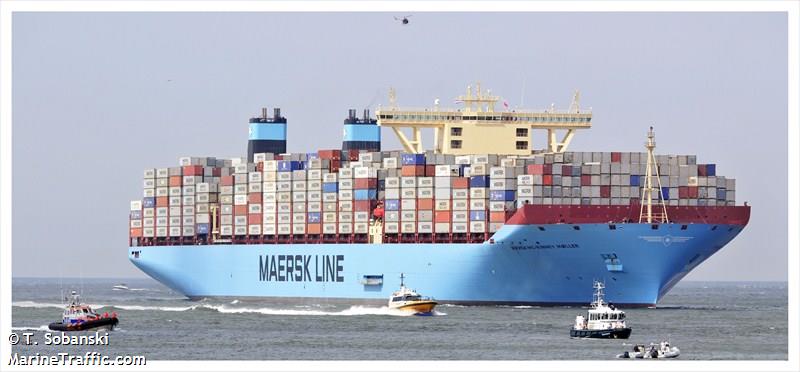
The largest ship in the world – today

August 31, 2013

It is not the largest ship ever built – that honour goes to the Seawise Giant (later named Knock Nevis) which is no longer in service and is currently being broken up by ship-breakers at Alang on the Gujarat coast (Video here). But the largest ship in service today is the Mærsk Mc-Kinney Møllera container ship of the Maersk line and named after the CEO of Maersk till 1993.

MAERSK MC KINNEY MOLLER (marinetraffic.com)

The longest ships ever

File:Bateaux comparaison2 with Allure.svg

Longest ships (Wikipedia)

Global warming has “gone missing” and the IPCC is aked to explain

August 30, 2013

Heat does not hide. It always flows towards lower temperatures.

Global warmists are now scrambling to explain why global temperatures have not been rising for the best part of two decades even though carbon dioxide concentrations keep increasing. That man-made carbon dioxide emissions may not be as important as they have fantasised is heretical and not an acceptable explanation. Instead they claim that the warming has been going on all along but the “heat is hiding” probably in the deep oceans!  How on earth it got there remains a mystery. Has it never “hidden” there before? Why just the deep oceans? Why not in the Earth’s mantle?

In any event, the hiatus in global warming can no longer be denied. So much so that the IPCC is now being asked to explain. Even Bloomberg – a well established proponent of the orthodox global warming doctrine which has been among the hiatus deniers – can no longer maintain that position. The IPCC will make a convenient scapegoat. Bloomberg  now writes (though with many caveats):

U.S. and European Union envoys are seeking more clarity from the United Nations on a slowdown in global warming that climate skeptics have cited as a reason not to “panic” about environmental changes, leaked documents show.

They’re requesting that more details on the so-called “hiatus” be included in a key document set to be debated at a UN conference next month that will summarize the latest scientific conclusions on climate change. … ..

A draft of the summary and the underlying 2,200-page report from the UN Intergovernmental Panel on Climate Change were obtained by Bloomberg from a person with official access to the documents who declined to be further identified because it hasn’t been published.

Government envoys from around the world will debate the final wording of the summary at an IPCC meeting that starts in Stockholm on Sept. 23. That document, formally the Summary for Policymakers, is designed to be used by ministers working to devise by 2015 a global treaty to curb climate change. ….

… The current version of the summary needs more information about the hiatus, according to the EU and the U.S.

“The recent slowing of the temperature trend is currently a key issue, yet it has not been adequately addressed in the SPM,” the EU said, according to an official paper that includes all governmental comments on the draft report. The U.S. comment suggested “adding information on recent hiatus in global mean air temperature trend.”

Addressing the hiatus is important because skeptics of man’s influence on warming the planet have seized on the slowing pace temperature increase as evidence that scientists have exaggerated the impact of manmade greenhouse gases. That supports their assertion that there’s less need for expensive policies to curb carbon emissions from factories, vehicles and deforestation. …

The summary document notes that the rate of warming over the past 15 years “is smaller than the trend since 1951,” citing a rate of about 0.05 degrees Celsius per decade in the years 1998 through 2012. The rate was about 0.12 degrees per decade from 1951 through 2012. …

….. The slowdown came as emissions grew, with the concentration of carbon dioxide in the atmosphere this year exceeding 400 parts per million for the first time on record.

The draft report includes possible reasons for the slowing rate, including natural variability, volcanic eruptions and a drop in solar energy reaching the Earth.

“Much of the information is present but it requires a lot of effort on the part of the reader to piece it all together,” the 28-nation EU said in the comments document.

The U.S. requested clarity on the implications of the data, commenting “this is an example of providing a bunch of numbers, then leave them up in the air without a concrete conclusion.”

Norway, Denmark and China requested information on the role oceans have played in the slowdown.

Black Holes are not as voracious as they are made out to be

August 30, 2013

I don’t understand the physics of black holes.

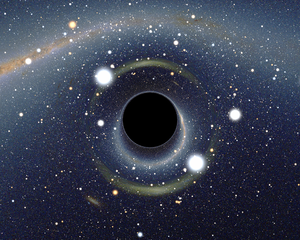
But I certainly had the impression that the relentless pull of gravity meant that they ruthlessly devoured everything in their paths and that they were bottomless pits. Everything beyond the event horizon – by definition – was entirely unknown and the stuff – possibly – of new Universes.

Not so – according to NASA. “Contrary to what some people think, black holes do not actually devour everything that’s pulled towards them. Sgr A* is apparently finding much of its food hard to swallow.” And so the black hole spits out what it can’t swallow!

Q. D. Wang, M. A. Nowak, S. B. Markoff, F. K. Baganoff, S. Nayakshin, F. Yuan, J. Cuadra, J. Davis, J. Dexter, A. C. Fabian, N. Grosso, D. Haggard, J. Houck, L. Ji, Z. Li, J. Neilsen, D. Porquet, F. Ripple, and R. V. Shcherbakov. Dissecting X-ray–Emitting Gas Around the Center of Our GalaxyScience, 2013; 341 (6149): 981-983 DOI:10.1126/science.1240755

NASA Press Release:

New Chandra images of Sagittarius A* (Sgr A*), which is located about 26,000 light-years from Earth, indicate that less than 1 percent of the gas initially within Sgr A*’s gravitational grasp ever reaches the point of no return, also called the event horizon. Instead, much of the gas is ejected before it gets near the event horizon and has a chance to brighten, leading to feeble X-ray emissions.

These new findings are the result of one of the longest observation campaigns ever performed with Chandra. The spacecraft collected five weeks’ worth of data on Sgr A* in 2012. The researchers used this observation period to capture unusually detailed and sensitive X-ray images and energy signatures of super-heated gas swirling around Sgr A*, whose mass is about 4 million times that of the sun.

“We think most large galaxies have a supermassive black hole at their center, but they are too far away for us to study how matter flows near it,” said Q. Daniel Wang of the University of Massachusetts in Amherst, who led of a study published Thursday in the journal Science. “Sgr A* is one of very few black holes close enough for us to actually witness this process.”

The researchers found that the Chandra data from Sgr A* did not support theoretical models in which the X-rays are emitted from a concentration of smaller stars around the black hole. Instead, the X-ray data show the gas near the black hole likely originates from winds produced by a disk-shaped distribution of young massive stars.

“This new Chandra image is one of the coolest I’ve ever seen,” said co-author Sera Markoff of the University of Amsterdam in the Netherlands. “We’re watching Sgr A* capture hot gas ejected by nearby stars, and funnel it in towards its event horizon.”

To plunge over the event horizon, material captured by a black hole must lose heat and momentum. The ejection of matter allows this to occur.

“Most of the gas must be thrown out so that a small amount can reach the black hole”, said Feng Yuan of Shanghai Astronomical Observatory in China, the study’s co-author. “Contrary to what some people think, black holes do not actually devour everything that’s pulled towards them. Sgr A* is apparently finding much of its food hard to swallow.”

The gas available to Sgr A* is very diffuse and super-hot, so it is hard for the black hole to capture and swallow it. The gluttonous black holes that power quasars and produce huge amounts of radiation have gas reservoirs much cooler and denser than that of Sgr A*. ….

For Chandra images, multimedia and related materials, visit: http://www.nasa.gov/chandra

A box of his own

August 30, 2013

The Ghosts of Iraq are still stalking the British House of Commons and David Cameron – much to his own dismay – is not as ruthless or as devious as Tony Blair. His Syria dossier was not as sexed-up as Blair’s Iraq dossier.

But President Obama’s dilemma in Syria is a box entirely of his own making.

Red line box