April 7, 2013
In the last 6 months the value of the “virtual” currency the Bitcoin has jumped from $9.7 to $149. It started increasing significantly in February and really took off in the middle of March this year. It seems too much of a coincidence that the worries (and the rumours) about the Cyprus banks followed the same time-table.

Bitcoin value in US Dollars
It is thought that much of the Russian money stashed away in Cyprus – especially the “black” money – left Cyprus before all the restrictions came into effect. That money must have gone somewhere and that somewhere would need not only to be “remote” but which also could provide the possibility of some “laundering” when the money was moved again. The Bitcoin perhaps could provide such a haven. If the bubble bursts in the next few months it could well indicate that the Russian money has moved again, well “laundered” and probably at a profit.

At current values the Bitcoin “hoard” – restricted to be 21 million Bitcoins – represents a little over $3 billion.
The Telegraph reports that
Russia is the country most interested in Bitcoin, internet searches show, after a week in which the controversial electronic currency reached a record high and led to talk of a bubble.
The virtual currency, which allows users to circumvent the banks, burst into the mainstream as the price of a Bitcoin rose to $147 (£96) against the dollar, from under $20 at the start of this year.
Russia is the country now performing the most internet searches for the term “Bitcoin”, according to Google figures, followed by Estonia, the United States and Finland. The UK is not in the top 10.
The data gave weight to the belief that the recent price spike was driven by the crisis in Cyprus, as cuts to depositors’ savings planned under its bail-out further undermined faith in the global banking system.
Russian businesses were thought to account for €19bn of deposits held in Cypriot banks as of September last year, due to tax advantages, cultural links and, in some cases, for reasons of tax evasion. …….
……….. Created by a developer using a psuedonym in 2009, Bitcoin was intended to offer a means of payment that cuts out the banks through a “purely peer-to-peer version of electronic cash [that] would allow online payments to be sent directly from one party to another without going through a financial institution”.
The coins are “mined” by computer processing, with the system capping the number that can be produced at 21m. The process is technically difficult, meaning it has a cost in terms of equipment and electricity.
Tags: Bitcoin, Cyprus, Electronic money, money laundering, Russia
Posted in Currency, Economics, Electronics, Russia | 2 Comments »
April 7, 2013
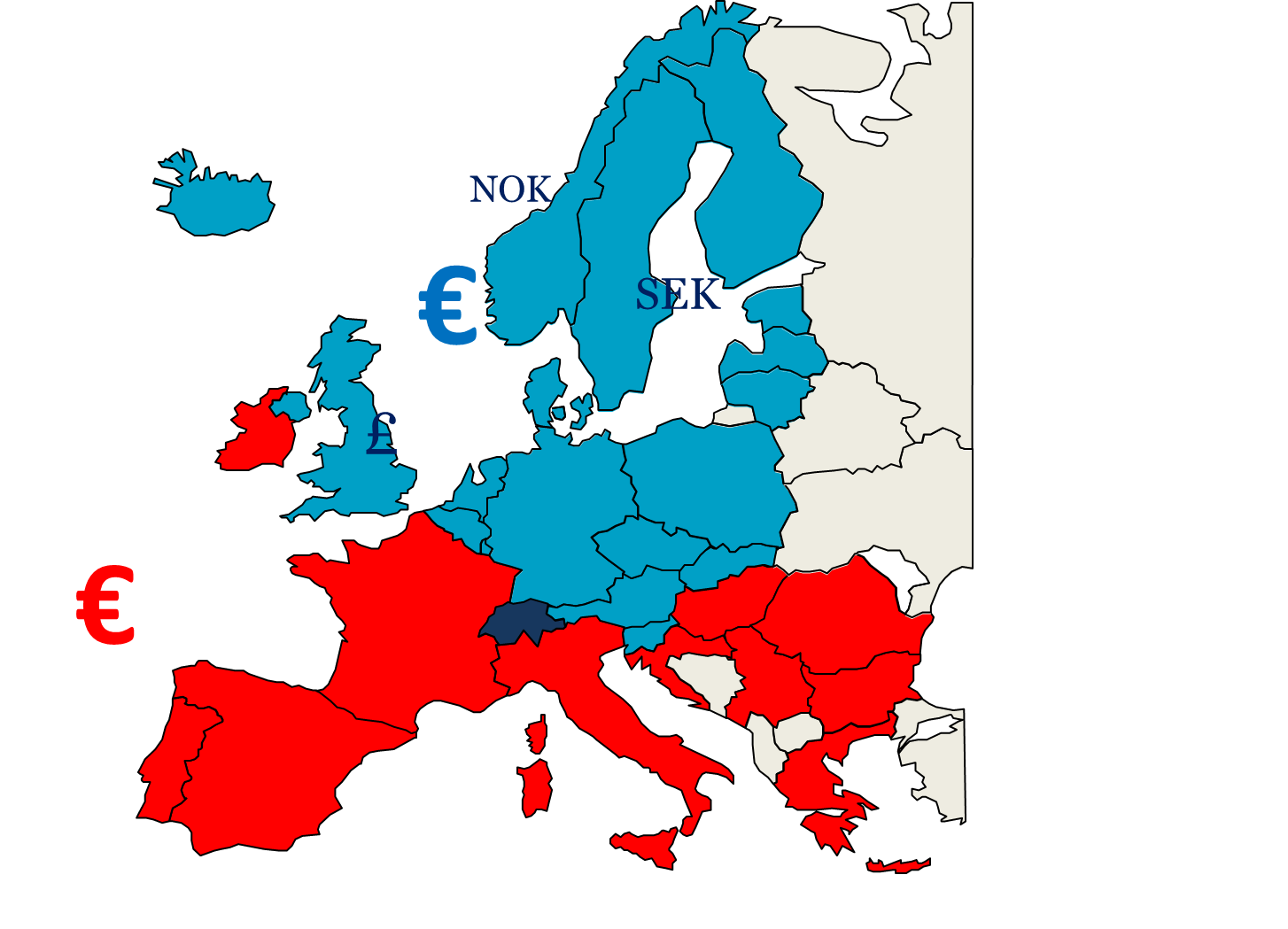
The common thread running through the countries which are now in or entering the Red Euro zone is that they have reached their current positions because they have all been incredibly profligate in their public sector while being incredibly lax in controlling the excesses of a rampant private banking sector. Of course the private sector “cowboys” have made obscene amounts of money and ridden off into the sunset. But a large number of public sector employees also made economically unjustified gains in the form of increased salaries and inflated pensions and reduced working hours. Now the piper has to be paid and of course those doing the paying are not necessarily those who gained the benefits. There is a pervading sense of the unfairness of it all.
It is only to be expected that those bearing the brunt of the consequences will fight to retain what they have. Portugal has been teetering on the brink of falling into the Red Euro zone and has been struggling to implement the austerity measures that are deemed necessary. Most of the austerity measures in Greece and Italy and Portugal postpone the day of reckoning but don’t really correct for the previous profligacy. Now Portugal’s Constitutional Court has rejected some of the measures for public sector salary and pension reductions as being “unfair”. Portugal continues “muddling through” and Government sources are playing down the impact of the Court’s rejections but Portugal is one step closer to the Red Euro. There is an argument that formally establishing the Red Euro zone with a lower value than the Blue Euro rather than “muddling through” with all the Euro constraints, would be a better way to go.
(Reuters) – Portugal’s constitutional court on Friday rejected four out of nine contested austerity measures in this year’s budget in a ruling that deals a blow to government finances but is unlikely to derail reforms two years after the country’s bailout.
The measures rejected by the court should deprive the country of at least 900 million euros ($1.17 billion) in net revenues and savings, according to preliminary estimates by economists.
… Debt-ridden Portugal agreed to a 78 billion euro bailout in 2011 from the European Union and International Monetary Fund. The entire package of austerity measures introduced by the 2013 budget is worth about 5 billion euros and includes the largest tax hikes in living memory, which were mostly upheld.
“It’s a lesser evil. … Putting it into perspective, a good manager and leader should not have difficulty finding room in a budget to accommodate this cut,” said Joao Cantiga Esteves, economist at the Lisbon Technical University.
…. The government has called a Cabinet meeting on Saturday, and would not provide any immediate comment. It has to cut the budget deficit to 5.5 percent of GDP this year from 6.4 percent in 2012, when it missed the goal but was still lauded by its EU and IMF lenders for its austerity efforts.
Analysts consider the outcome manageable and say the government should be able to cover the shortfall with additional spending cuts it has been working on at the request of lenders. Analysts say the lenders could also give Portugal more leeway in terms of budget targets.
…… On Wednesday, the government easily defeated a motion of no confidence, but the move united all the opposition in parliament against it. Socialist opposition leader Antonio Seguro said on Friday the court’s ruling “reinforces our position in d..emanding the government’s resignation.”
…… The 13 constitutional court judges have been scrutinizing articles of the 2013 budget since January when opposition parties argued that cuts to pensions and welfare benefits undermined workers’ basic rights.
The court rejected cuts in pensioners’ and public servants’ holiday bonuses, as well as reductions to sickness leave and unemployment benefits. They upheld tougher measures such as a reduction in the number of tax brackets, which alone brings in an estimated revenue of more than 2 billion euros.
Last year, the court also dealt a blow to government plans for more public-sector wage cuts, forcing it to resort to tax hikes instead. The austerity has provoked mass protests, but rallies in Portugal have been much more peaceful than in countries like Greece or Italy.
Tags: Austerity, Constitutional Court, European Union, International Monetary Fund, Portugal, Red Euro, Red Euro zone
Posted in Behaviour, Economy, Politics, Portugal | Comments Off on Portugal moves closer to a Red Euro
April 6, 2013
Correlation and causation again! Correlation does not necessarily mean causation and even real causation may not give any correlation.
The authors are from the Department of Geography and Urban Studies, Temple University, United States. And they get paid for this?
Does vegetation encourage or suppress urban crime? Evidence from Philadelphia, PA, Mary K. Wolfe and Jeremy Mennis, Landscape and Urban Planning, Volume 108, Issues 2–4, November–December 2012, Pages 112–122, http://dx.doi.org/10.1016/j.landurbplan.2012.08.006
(emphasis added)
Abstract: There is longstanding belief that vegetation encourages crime as it can conceal criminal activity. Other studies, however, have shown that urban residential areas with well-maintained vegetation experience lower rates of certain crime types due to increased surveillance in vegetated spaces as well as the therapeutic effects ascribed to vegetated landscapes. The present research analyzes the association of vegetation with crime in a case study of Philadelphia, Pennsylvania. We examine rates of assaults, robberies, burglaries, and thefts in relation to remotely sensed vegetation abundance at the Census tract level. We employ choropleth mapping, correlation, ordinary least squares regression, and spatial econometric modeling to examine the influence of vegetation on various crime types while controlling for tract-level socioeconomic indicators. Results indicate that vegetation abundance is significantly associated with lower rates of assault, robbery, and burglary, but not theft. This research has implications for urban planning policy, especially as cities are moving towards ‘green’ growth plans and must look to incorporate sustainable methods of crime prevention into city planning.
And Discover Magazine comments (comments?)
The explanation, the authors say, is twofold: One, green spaces encourage people to spend more time socially outdoors, which discourages crime. It’s especially helpful for crime control when young and old people mix together in public places. And two, the presence of plants has a therapeutic effect. Vegetation decreases mental fatigue and its associated symptoms, such as irritability and decreased impulse control, both considered to be precursors to violence.
This “plant therapy” mechanism is bolstered by the Philadelphia findings. The most violent of the crimes studied, aggravated assault, was most strongly correlated with a neighborhood’s degree of greenness, while the least violent crime, theft, showed no association. This could indicate that it’s a violent mentality itself that green spaces are discouraging.
That hypothesis needs further study.
And that last line is the giveaway.
No, every idiot hypothesis does not need further study!
Tags: Bad science, crime, Philadelphia, Social science, Temple University, Urban planning, vegetation
Posted in Behaviour, Solar science | Comments Off on Idiot science? Urban vegetation decreases violent crime but not theft!
April 6, 2013
I have posted earlier regarding the population decline that is inevitable if the fertility rates around the world continue to decline as they are doing. The declining fertility combined with the increase in longevity and the problems of aging pose new challenges of maintaining the growth and maintenance of the infrastructure that we would have become used to. In a hundred years from now the challenge could be a real shortage of labour.
The challenge in 2100 will be to maintain the balance between those “producing” to those “supported” in a declining and aging population. Perhaps immigration or population migrations or productivity increases by the use of robots and an increase in the age one joins the “supported” population will be parts of the solution. I have no doubt that solutions will be found, but the “overpopulation problem” would have left the stage. ….
The majority of children being born today in the developed world will live to be over 100 years old.
Now as Science 2.0 reports another model simulation shows that The Looming Population Implosion is inevitable and just a mathematical consequence of falling fertility rates.

Total fertility by major regions, 1950-2100 (children per woman) (UN)
A model based on global population data spanning the years from 1900 to 2010 has caused a research team to predict the opposite of what Doomsday Prophets of the 1960s and beyond insisted would happen – the number of people on Earth will stabilize around the middle of the century and perhaps even start to decline.
The results coincide with the United Nation’s downward estimates, which claim that by 2100 Earth’s population will be 6.2 billion, if low fertility and birth rate continues on its current path, below the 7 billion we are at now.
The numerical model developed by a team from the Autonomous University of Madrid (UAM) and the CEU-San Pablo University seems to confirm the lower estimate, in addition to a standstill and even a slight drop in the number of people on Earth by the mid-21st century. The population prospects between 1950 and 2100 provided by the UN were used to conduct the analysis published in the journal Simulation.
“This is a model that describes the evolution of a two-level system in which there is a probability of passing from one level to another,” as explained to SINC by Félix F. Muñoz, UAM researcher and co-author of the project. ……
……. The team considered the Earth as a closed and finite system where the migration of people within the system has no impact and where the fundamental principle of the conservation of mass –biomass in this case– and energy is fulfilled.
“Within this general principle, the variables that limit the upper and lower zone of the system’s two levels are the birth and mortality rates,” Muñoz pointed out and recalled the change that occurred in the ratio between the two variables throughout the last century.
“We started with a general situation where both the birth rate and mortality rate were high, with slow growth favouring the former,” he added, “but the mortality rate fell sharply in the second half of the 20th century as a result of advances in healthcare and increased life expectancy and it seemed that the population would grow a lot.
However, the past three decades have also seen a steep drop-off in the number of children being born worldwide.”
Tags: aging, Birth rate, Félix F. Muñoz, fertility rate, Mortality rate, overpopulation, Population, population decline, population implosion
Posted in Alarmism, Demographics, UN | 1 Comment »
April 6, 2013
Last night we saw the new Kon-Tiki movie at our local cinema. A full-fledged action/adventure film it relates the story of Thor Heyerdahl and his 1947 Kon-Tiki expedition. It is the most expensive film ever to have been made in Norway and was a nominee for Best Foreign Film at this year’s Oscars (which it did not win). The film is directed by Joachim Rønning and Espen Sandberg and the role of Thor Heyerdahl is played by Pål Sverre Valheim Hagen.

Kon-Tiki raft (Photo credit: Wikipedia)
I enjoyed every minute of this 2 hour movie. Stunning visuals and a clear demonstration, I think , that understatement is far more effective than “sound and fury” in sustaining excitement. It took me back some 50 years to 1962 when I first saw Heyerdahl’s own documentary movie about his expedition (which did win an Oscar in 1951). Ever since then I have eagerly followed Heyerdahl’s various expeditions and theories of the migrations of ancient peoples (Ra and Tigris and The Search for Odin among others). And my current fascination with anthropology is in no small measure due to Heyerdahl’s injection of adventure and wonder and a kind of “romance” into the long-dead past of our ancestors. It does not matter that his theories were heavily criticised and may not have been correct. It does not matter either that our theories about the past may no longer be capable of being “proven” conclusively. Imagining how our ancestors – just 100 or so generations ago – could have behaved and acted is what I find absolutely compelling. And Heyerdahl’s adherence to the materials and tools of the past adds credibility at least to imagining what our fore-fathers could have accomplished – if not necessarily to his own theories.
Back in 1962 when I first saw Heyerdahl’s documentary I had not fully appreciated the enormity of what Heyerdahl and his “glad amateurs” were trying to do. While he had an absolute belief in the migration of people from South America to Polynesia, his companions were only there either because he was or because they were seeking some intense adventure after the war. While the success of the Kon-Tiki could not prove that this migration had actually taken place it certainly proved that it could have. Heyerdahl’s theory received much criticism from the establishment view that Polynesia had been populated solely from Asia. But what all this “establishment criticism” sometimes forgets is their sense of wonder and that Heyerdahl does actually prove that it could have happened. This criticism continued well into the 1990’s but the latest genetic studies now show that Heyerdahl was in fact partly correct.
Heyerdahl’s theory of Polynesian origins never gained acceptance among anthropologists. Physical and cultural evidence had long suggested that Polynesia was settled from west to east, migration having begun from the Asian mainland, not South America. In the late 1990s, genetic testing found that the mitochondrial DNA of the Polynesians is more similar to people from southeast Asia than to people from South America, showing that their ancestors most likely came from Asia. Easter Islanders are of Polynesian descent. Anthropologist Robert Carl Suggs included a chapter titled “The Kon-Tiki Myth” in his book on Polynesia, concluding that “The Kon-Tiki theory is about as plausible as the tales of Atlantis, Mu, and ‘Children of the Sun.’ Like most such theories it makes exciting light reading, but as an example of scientific method it fares quite poorly.” Anthropologist and National Geographic Explorer-in-Residence Wade Davis also criticised Heyerdahl’s theory in his book The Wayfinders, which explores the history of Polynesia. Davis says that Heyerdahl “ignored the overwhelming body of linguistic, ethnographic, and ethnobotanical evidence, augmented today by genetic and archaeological data, indicating that he was patently wrong.”
But that is changing as advanced genetic studies show that there is some clear admixture from South America.
That means that some time before the remote islands – including Easter Island – were colonised by Europeans the locals had interbred with people from South America. ….
The established theory has always been that Polynesia was colonised via Asia around 5,500 years ago. This has been backed up by archaeology, linguistics and some genetic studies. But in 1947, Heyerdahl controversially claimed that Easter Island’s famous statues were similar to those at Lake Titicaca in Bolivia, and sailed a raft from Peru to French Polynesia to prove it could have been colonised from America.
Now Professor Erik Thorsby of the University of Oslo in Norway has found clear evidence to support elements of Heyerdahl’s hypothesis.
The Polynesian gene pool: an early contribution by Amerindians to Easter Island, Erik Thorsby, Published 6 February 2012, doi:10.1098/rstb.2011.0319, Phil. Trans. R. Soc. B 19 March 2012 vol. 367 no. 1590 812-819 (full text pdf)
Abstract: It is now generally accepted that Polynesia was first settled by peoples from southeast Asia. An alternative that eastern parts of Polynesia were first inhabited by Amerindians has found little support. There are, however, many indications of a ‘prehistoric’ (i.e. before Polynesia was discovered by Europeans) contact between Polynesia and the Americas, but genetic evidence of a prehistoric Amerindian contribution to the Polynesian gene pool has been lacking. We recently carried out genomic HLA (human leucocyte antigen) typing as well as typing for mitochondrial DNA (mtDNA) and Y chromosome markers of blood samples collected in 1971 and 2008 from reputedly non-admixed Easter Islanders. All individuals carried HLA alleles and mtDNA types previously found in Polynesia, and most of the males carried Y chromosome markers of Polynesian origin (a few had European Y chromosome markers), further supporting an initial Polynesian population on Easter Island. The HLA investigations revealed, however, that some individuals also carried HLA alleles which have previously almost only been found in Amerindians. We could trace the introduction of these Amerindian alleles to before the Peruvian slave trades, i.e. before the 1860s, and provide suggestive evidence that they were introduced already in prehistoric time. Our results demonstrate an early Amerindian contribution to the Polynesian gene pool on Easter Island, and illustrate the usefulness of typing for immunogenetic markers such as HLA to complement mtDNA and Y chromosome analyses in anthropological investigations.
Tags: Easter Island, Kon-Tiki, Kon-Tiki movie, Polynesia, South America, Thor Heyerdahl
Posted in Anthropology, Behaviour, Norway, Science | 1 Comment »
April 5, 2013
The stubborn high pressure and the late spring have given the highest level of ice coverage for this time of year in the Baltic Sea since records began in the 1960’s.
Svenska Dagbladet reports: The stubborn high pressure has set a new record late date of maximum ice extent. On 29 the March, 176,000 square kilometers of the Baltic Sea surface were covered by ice.
The previous record was on 25th March 2008 when 49,000 square kilometers was present.
Swedish Ice report
STSN42 ESWI 0310514/3/13
BAY OF BOTHNIA IN THE ARCHIPELAGOS UP TO 80 CM FAST ICE. AT SEA OFF THE FAST ICE EDGE IN THE WE STERN AND NORTHERN PARTS, A 15 NAUTICAL MILES WIDE AREA WITH ALTERNATING 10 – 30 CM LEVEL ICE. JUST WEST OF FARSTUGRUNDEN AND IN THE BAY OF SKELLEFTEA THERE ARE LEADS WITH OPEN WATER. EAST OF THERE, NORTH OF THE LATITUDE THROUGH BJUROKLUBB, MOSTLY 30-70 CM VERY CL OSE DRIFT ICE WITH HEAVY RIDES AND CRACKS. RIDGES, DIFFICULT TO PASS OCCUR OFF RAAHE AND FURTHER NORTHWARDS PASSING NAHKIAINEN. SOUTH OF BJUROKLUBB THE DRIFT ICE IS 30-60 CM THICK WITH RIDGES AND CRACKS. OFF THE SWEDISH COAST MOSTLY THIN LEVEL ICE AND SINGLE HEAVY FLOES. …….
Tags: Baltic Sea, Sea ice
Posted in Climate, Sweden, Weather | Comments Off on Record ice levels in the Baltic Sea
April 5, 2013
Back in 2002 a paper in Climate Research by Pat Michaels and his colleagues seriously questioned the sensitivities assumed in the exaggerated IPCC projections for global temperature but the paper was considered heretical and its authors were castigated by the global warming orthodoxy. So Pat Michaels and his colleagues would be more than entitled to an “I told you so” and even some more derisory nose-thumbing at the IPCC.
As Michaels and Knappenberger write at Cato:
Getting Our Due
In the Diary feature of this week’s The Spectator, rational optimist Matt Ridley has a collection of rather random observations from his daily life that have him thinking about (or maybe wishing for since Old Man Winter has been slow to loose his grip in the U.K. and Western Europe, much like he has across the Eastern U.S.) anthropogenic global warming.
What has his attention is that global warming just doesn’t seem to be going according to plan. And for those who have bought into that plan, their plan-driven actions are starting to make them look foolish.
But it’s not as if we haven’t “told you so”—a fact that Ridley draws attention to in the closing segment of his article. …….
What we determined in our 2002 study was that the amount of global warming projected by the end of this century was most likely being overestimated. When we adjusted the climate model projections to take into account and better match the actual observations, our best estimate of the amount of warming we expected from 1990 to 2100 was about 1.8°C (3.2°F), which was in the lower end of the IPCC projected range, and which Ridley correctly noted, we termed as “modest.”
Further, we anticipated the slowdown in the warming rate. …..
…… Now, more than 10 years later, more and more evidence is piling in that we were right, including several recent papers that apply a technique not all that dissimilar in theory than our own (e.g. Gillett et al., 2012; Stott et al., 2013).
So even though we still are largely ostracized, at least we rest assured that we were pretty much on target—and some people are starting to take notice.
Revised 21st century temperature projections, Patrick J. Michaels, Paul C. Knappenberger, Oliver W. Frauenfeld and Robert E. Davis, Climate Research, Vol. 23: 1–9, 2002
Abstract: Temperature projections for the 21st century made in the Third Assessment Report (TAR) of the United Nations Intergovernmental Panel on Climate Change (IPCC) indicate a rise of 1.4 to 5.8°C for 1990–2100. However, several independent lines of evidence suggest that the projections at the upper end of this range are not well supported. Since the publication of the TAR, several findings have appeared in the scientific literature that challenge many of the assumptions that generated the TAR temperature range. Incorporating new findings on the radiative forcing of black carbon (BC) aerosols, the magnitude of the climate sensitivity, and the strength of the climate/carbon cycle feedbacks into a simple upwelling diffusion/energy balance model similar to the one that was used in the TAR, we find that the range of projected warming for the 1990–2100 period is reduced to 1.1–2.8°C. When we adjust the TAR emissions scenarios to include an atmospheric CO2 pathway that is based upon observed CO2 increases during the past 25 yr, we find a warming range of 1.5–2.6°C prior to the adjustments for the new findings. Factoring in these findings along with the adjusted CO2 pathway reduces the range to 1.0–1.6°C. And thirdly, a simple empirical adjustment to the average of a large family of models, based upon observed changes in temperature, yields a warming range of 1.3–3.0°C, with a central value of 1.9°C. The constancy of these somewhat independent results encourages us to conclude that 21st century warming will be modest and near the low and of the IPCC TAR projections.
Tags: climate change, climate sensitivities, global warming, IPCC, Patrick Michaels
Posted in Alarmism, Climate, Science | Comments Off on Climate sensitivity – 10 years on and Pat Michaels et al get their due
April 5, 2013
The two-€ Europe is effectively here and it is advisable to keep any savings far away from the Red Euro zone:

Spreading Red Euro
Tags: EU, Euro, Red Euro
Posted in Business, Economy | 1 Comment »
April 5, 2013
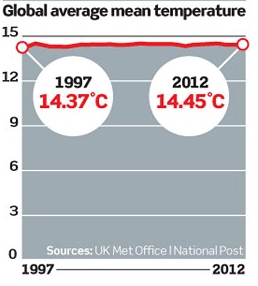
Another “climate sensitivity” to join the long list of global warming exaggerations. A coral reef has recovered from a severe “bleaching” event in just 12 years to a level that was thought to require many decades. In fact the assumption that the cause of the severe disturbance in in 1998 was due to global warming is itself looking very shaky. After all, if it was due to global warming (rather than some local temperature or other event) then why on earth did it reverse in 1998? Or is it just a coincidence that no global warming has been observed since that time?
Polar bear numbers are increasing, clouds may “cool” more than they “heat”, the earth’s green cover is increasing, the Antarctic has more ice than it ever had and the Arctic ice variability is not unprecedented and glaciers are not melting at any greater rate than the pre-industrial rate. It is becoming increasingly clear that the “sensitivity” of the global climate to carbon dioxide has been grossly exaggerated.

Location of Reef building corals (Photo credit: Wikipedia)
“Recovery of an isolated coral reef system following severe disturbance”, by J. P. Gilmour, L. D. Smith, A. J. Heyward, A. H. Baird and M. S. Pratchett published online at Science on Friday, 5th April, 2013.
Abstract: Coral reef recovery from major disturbance is hypothesized to depend on the arrival of propagules from nearby undisturbed reefs. Therefore, reefs isolated by distance or current patterns are thought to be highly vulnerable to catastrophic disturbance. We found that on an isolated reef system in north Western Australia, coral cover increased from 9% to 44% within 12 years of a coral bleaching event, despite a 94% reduction in larval supply for 6 years after the bleaching. The initial increase in coral cover was the result of high rates of growth and survival of remnant colonies, followed by a rapid increase in juvenile recruitment as colonies matured. We show that isolated reefs can recover from major disturbance, and that the benefits of their isolation from chronic anthropogenic pressures can outweigh the costs of limited connectivity.
PhysOrg writes: Scott Reef, a remote coral system in the Indian Ocean, has largely recovered from a catastrophic mass bleaching event in 1998, according to the study published in Science today. The study challenges conventional wisdom that suggested isolated reefs were more vulnerable to disturbance, because they were thought to depend on recolonisation from other reefs. Instead, the scientists found that the isolation of reefs allowed surviving corals to rapidly grow and propagate in the absence of human interference. Australia’s largest oceanic reef system, Scott Reef, is relatively isolated, sitting out in the Indian Ocean some 250 km from the remote coastline of north Western Australia (WA). Prospects for the reef looked gloomy when in 1998 it suffered catastrophic mass bleaching, losing around 80% of its coral cover. The study shows that it took just 12 years to recover. Spanning 15 years, data collected and analysed by the researchers shows how after the 1998 mass bleaching the few remaining corals provided low numbers of recruits (new corals) for Scott Reef. On that basis recovery was projected to take decades, yet within 12 years the cover and diversity of corals had recovered to levels similar to those seen pre-bleaching.
Tags: Coral bleaching, Coral reef, reef recovery, Scott Reef, Western Australia
Posted in Alarmism, Australia, Biology, Climate, Natural Phenomena | Comments Off on Coral reef not so sensitive to global warming after all (if it ever was)
April 4, 2013
That climate is a subject for study is obvious. That it can be called a “discipline” is questionable but allowable. But any claim that it is settled and understood, let alone fanciful claims that we can control it, are just arrogant nonsense. When the study of climate might get to be a “science” lies some few centuries in the future – if ever. Climate studies may be a discipline but a “science” it is not.
As with many articles in RealClearPolitics this by Robert Tracinski is trenchant, concise, precise and extremely well written. But RCP has not often been known to break with the global warming orthodoxy and I was surprised to find this there.
Very well worth reading.
Many years ago, I remember thinking that it would take many years to refute the panicked claims about global warming. Unlike most political movements, which content themselves with making promises about, say, what the unemployment rate will be in two years if we pass a giant stimulus bill—claims that are proven wrong (and how!) relatively quickly—the environmentalists had successfully managed to put their claims so far off into the future that it would take decades to test them against reality.

But guess what? The decades are finally here.
…….. So basically, all that the global warming advocates really have, as the evidentiary basis for their theory, is that global temperatures were a little higher than usual in the late 1990s. That’s it. Which proves nothing. The climate varies, just as weather varies, and as far as we can tell, this is all well within the normal range. …..
……
So here’s the state of play of climate science a third of a century into the global warming hysteria. They don’t have a reliable baseline of global temperature measurements that would allow them to say what is normal and natural and what isn’t. Their projections about future warming are demonstrably failing to predict the actual data. And now they have been caught, yet again, fudging the numbers and manipulating the graphs to show a rapid 20th-century warming that they want to be true but which they can’t back up with actual evidence.
A theory with this many holes in it would be have been thrown out long ago, if not for the fact that it conveniently serves the political function of indicting fossil fuels as a planet-destroying evil and allowing radical environmentalists to put a modern, scientific face on their primitivist crusade to shut down industrial civilization.
But can’t we all just stop calling this “science” now?
Full article here
Tags: Alarmism, climate, climate change, climate studies, global warming, RealClearPolitics, Robert Tracinski, Science
Posted in Alarmism, Climate, Science | Comments Off on Climate studies a “science” is not