Proof that at the UN diplomats often do not think

February 13, 2011
Indian Minister of External Affairs S.M. Krish...

Image via Wikipedia

When making his speech at the UN Security Council, the Indian External Affairs minister S. M. Krishna started by reading the speech of the Portuguese Foreign Minister instead of his own. It took three whole minutes before another member of the Indian delegation stopped him and asked him to start again!!

One wonders how long the Minister would have continued before realising it was not his own speech. One wonders also if his colleagues were sleeping if it took them 3 minutes to realise what was happening. Of course UN speeches are so full of platitudes and phrases “signifying nothing” that it is sometimes difficult to distinguish one speech from another.

Another confirmation of my belief that the UN is not a place given to thought but serves only for reading out prepared positions by rote (prepared by others of course). Neither politicians / ministers, diplomats or their speech writers come out with much credit.

India Today has the story:

While delivering his speech at the UNSC, Krishna read out portions of the Portuguese foreign minister’s speech instead.

The occasion was significant as it was the Indian foreign minister’s first speech at the UNSC after New Delhi entered the coveted body on January 1 as a non-permanent member after nearly two decades.

Krishna was scheduled to speak after his Portuguese counterpart Luis Amado at a session on Friday on ‘Maintenance of International Peace and Security: Interdependence between Security and Development’. Portugal has also been elected to the UNSC for a two- year period.

As soon as the minister started speaking, almost everyone present realised that he was reading from Amado’s speech, as a few lines were out of place. Krishna apparently did not realise his mistake and went on.

“On a more personal note, allow me to express my profound satisfaction regarding the happy coincidence of having two members of the Portuguese Speaking Countries, Brazil and Portugal, together here today,” the minister said as a horrified Indian contingent watched. “The European Union is also responding in this manner in coordination with the United Nations.”

It was after three minutes that India’s permanent representative to the UN, Hardeep Puri, intervened and asked him to start afresh.

Clearly embarrassed, the ministry of external affairs (MEA) on Saturday tried to play down the minister’s gaffe.

It insisted that the “mistake” was not so crucial because the initial paragraph of all formal addresses contains ” certain salutations and courteous references and he had used such expressions from the address of the previous speaker”. Sources in the MEA said it was a “genuine” mistake. Amado had delivered an extempore speech and its written summary was distributed to all other 14 ministers of the UNSC members and five invitee ministers.

Krishna spoke immediately after Amado and he mixed the text of his own speech with the summary of what the Portugese minister had said. The copy of Amado’s speech in a folder did not bear either his name or the name of his country. Hence, the ” honest and inadvertent mistake”, a source said.

A former foreign minister, who did not wish to be named, put the blame on the Indian diplomats and ministerial staff present. “They should have alerted the minister within a few seconds. It was their responsibility to ensure that he had the correct speech before he began,” he said. Apart from Puri, other Indian diplomats present included MEA additional secretary (international organisations) Dilip Sinha and adviser to the minister Raghavendra Shastry. All of them were sitting right behind Krishna.

Rivers in the sky

February 12, 2011

Weather (and climate) which are contained within the thin chaotic layer around the earth’s surface are very far away from being “settled science” in spite of what Al Gore and those of his ilk like to pretend.

Unmanned aircraft are now being used in a new programme to study the “atmospheric rivers” which transport vast quantities of rain around the globe.

They’re called atmospheric rivers – narrow regions in Earth’s atmosphere that transport enormous amounts of water vapor across the Pacific or other regions. Aptly nicknamed “rivers in the sky,” they can transport enough water vapor in one day, on average, to flood an area the size of Maryland 0.3 meters (1 foot) deep, or about seven times the average daily flow of water from the Mississippi River into the Gulf of Mexico. The phenomenon was the subject of a recent major emergency preparedness scenario led by the U.S. Geological Survey, “ARkStorm,” which focused on the possibility of a series of strong atmospheric rivers striking California – a scenario of flooding, wind and mudslides the USGS said could cause damages exceeding those of Hurricane Katrina in 2005.

JPL airborne sensor to study 'Rivers in the Sky'

NASA's Global Hawk soars aloft from Edwards Air Force Base, Calif., on a functional check flight of the WISPAR aircraft payload system and science instruments. Credit: NASA Dryden Flight Research Center

While atmospheric rivers are responsible for great quantities of rain that can produce flooding, they also contribute to beneficial increases in snowpack. A series of atmospheric rivers fueled the strong winter storms that battered the U.S. West Coast from western Washington to Southern California from Dec. 10 to 22, 2010, producing 28 to 64 centimeters (11 to 25 inches) of rain in certain areas. The atmospheric rivers also contributed to the snowpack in the Sierras, which received 75 percent of its annual snow by Dec. 22, the first full day of winter.

To improve our understanding of how atmospheric rivers form and behave and evaluate the operational use of unmanned aircraft for investigating these phenomena, NASA scientists, aircraft and sensors will participate in a National Oceanic and Atmospheric Administration-led airborne field campaign slated to begin Feb. 11.

Called Winter Storms and Pacific Atmospheric Rivers, or WISPAR, the field campaign, which continues through the end of February, is designed to demonstrate new technology, contribute to our understanding of atmospheric rivers and assist NOAA in potentially conducting offshore monitoring of atmospheric rivers to aid in future weather predictions.

Read original article.

Essence of a Manager – separate page

February 12, 2011

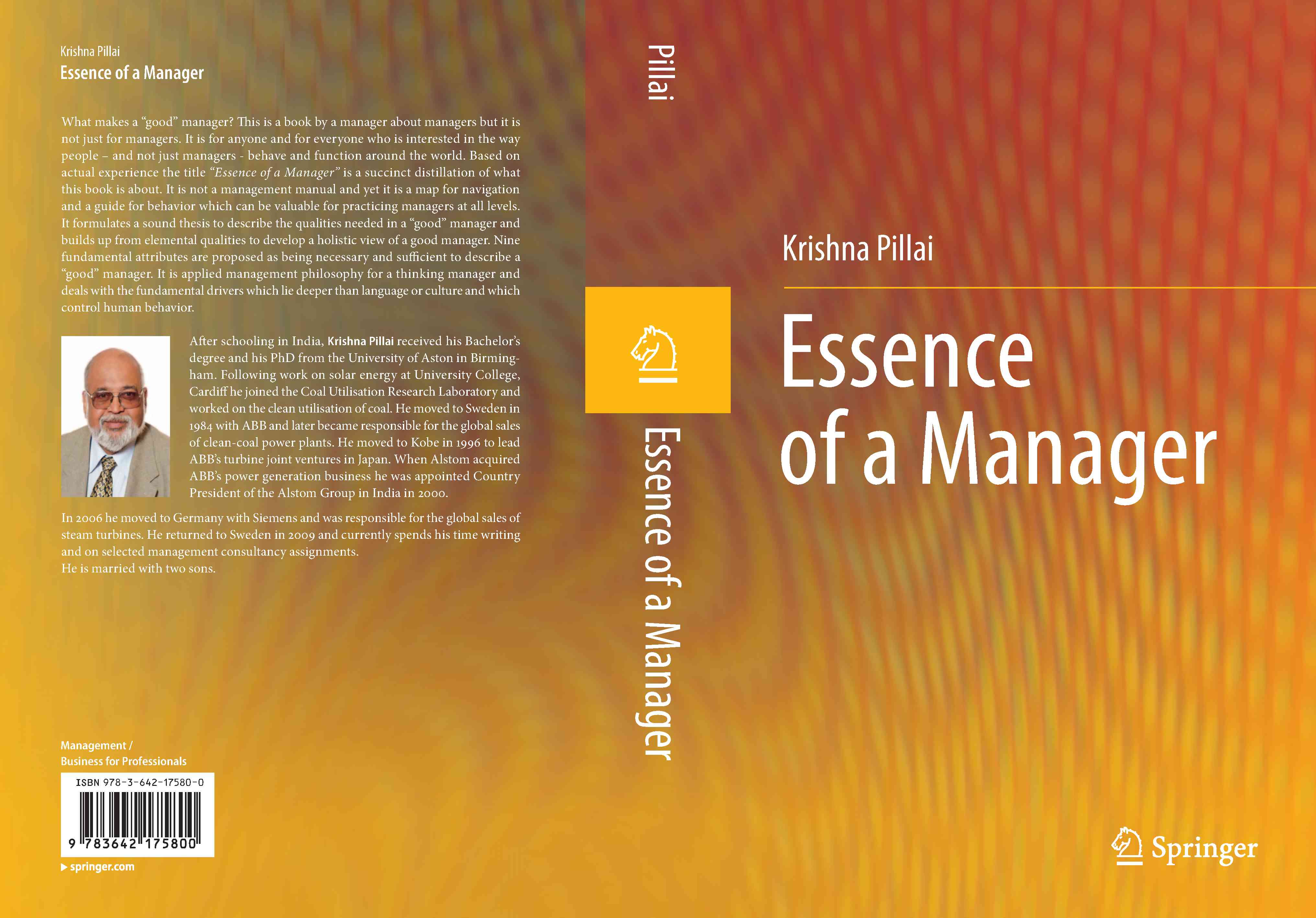
On advice from some experts on the marketing of books – which is a field in which I am a beginner – I have created a separate page for my book Essence of a Manager which is due to be published on 29th March 2011 by Springer.

In addition to practising managers and students of management I am hoping it will be of interest for HR practitioners and generally for anyone interested in behaviour around the world.

Extracts, quotations and reviews will be posted on this page as will any comments.


Oil price drops as Mubarak steps down – will Saudi Arabia follow?

February 12, 2011

We are in for a period with very volatile oil prices as the Middle East enters the age of “people power”. It is quite unlikely that this wave of popular “revolt” will stop with Tunisia and Egypt. Yemen is already showing signs and Libya, Algeria, Morocco, Jordan and the Gulf States are all regimes with a potential for revolution. Saudi Arabia is the big one though for oil price.

But the events in Egypt with no clear political leader and with no retaliatory violence to deliberate provocation are both amazing and encouraging. There is a widespread political maturity that is quite fantastic after 30 years of authoritarian rule.

The Hindu reports:

Besides Egyptian President Hosni Mubarak’s stepping down, the rising dollar index and rally of U.S. stocks triggered oil selling and sent the price to a 10-week low. …

… Light, sweet crude for March delivery dropped 1.15 dollars to 85.58 dollars a barrel on the New York Mercantile Exchange, its lowest settlement since Nov. 30, 2010. The crude oil price went up and down following Egypt’s fears and joys. The commodity had experienced an approximately 6 percent price increase since the crisis began on Jan. 25. Much of that move pertained to the uncertainty surrounding the leadership of Egypt. Although Egypt is not a main oil producer, it controls the Suez Canal, which is an important transportation route for oil from the Middle East.


The short term consequences for oil price when (and it has to be “when” and not “if”) the Saudis finally dismantle the anachronistic regime they have cannot be predicted. But the long-term consequences will probably be a reduction of the base price.

The key is when. It is also amazing in this information and “spying” dominated world that the entire intelligence community had no inkling  of what was coming in Tunisia and Egypt. Information was probably available but clearly no one made the correct analysis or drew the right conclusions.

Essence of a Manager

February 11, 2011

My book now has a publication date in March 2011 and advance copies can be ordered from Springer.

It can also be obtained through Amazon (UK) and Bokus.

Springer Science+Business Media


Essence of a Manager

Pillai, Krishna, 1st Edition., 2011, XIV., Hardcover

ISBN: 978-3-642-17580-0

Due: March 2011

What makes a “good” manager? This is a book by a manager about managers but it is not just for managers. It is for anyone and for everyone who is interested in the way people – and not just managers – behave and function around the world. Based on actual experience the title “Essence of a Manager” is a succinct distillation of what this book is about. It is not a management manual and yet it is a map for navigation and a guide for behaviour which can be valuable for practicing managers at all levels. It formulates a sound thesis to describe the qualities needed in a “good” manager and builds up from elemental qualities to develop a holistic view of a good manager. Nine fundamental attributes are proposed as being necessary and sufficient to describe a “good” manager. It is applied management philosophy for a thinking manager and deals with the fundamental drivers which lie deeper than language or culture and which control human behaviour.

Amazon (UK)

Bokus.com

Some reviews can be found here: Reviews EOAM – Around the world and back to Finspång

Lars-Otto Gullman, retired, former Director Metallurgy, Gränges, Finspång

I wish I had read Essence of a Manager some 40 years ago, prior to my own industrial career!  A similar presentation of the demands on a manager and how a manager can develop his abilities I have not seen till now. In Essence of a Manager the author analyses the nature of the personal qualities a good manager must possess to be able to perform his tasks in a satisfactory way. A method, based upon interview technique, is presented as an effective means of identifying potentially good managers. Many examples are given from the author´s long and worldwide experience of managements styles in different countries and cultures.


Rolls Royce profits down 76% as Trent 900 costs start to kick in

February 10, 2011

BBC reports:

Manufacturing giant Rolls-Royce has said the mid-air failure of one of its Trent 900 engines on a Qantas superjumbo had led to costs of £56m. The explosion in the engine forced an emergency landing of the A380 in November last year. The one-off cost contributed to annual pre-tax profits dropping 76% to £702m in 2010 from £2.96bn. Foreign exchange costs and interest rate and fuel hedging contracts also contributed to the profit fall.

But the Derby-based company said that underlying pre-tax profits – which strip out one-off costs – were up by 4% to £955m in 2010 and were a better indication of its performance.

Rolls Royce say that the may face further “modest costs” but this seems to be far too optimistic considering that all the engine servicing costs have yet to show up and all the various compensation claims from Qantas, Airbus, Lufthansa, and Singapore Airline will take some time to work their way through. Once all the claims are presented there is an even chance that some will need arbitration before settlement which will take some time.

Jorn Madslien also writes:

Investors will be scrutinising Rolls-Royce’s financial figures to try to find out how the recent engine failure that led to the grounding of six Qantas Airbus A380 aircraft affected the company. ……..

….. The long-term effects of the engine failure, for instance a potential fall in new orders over the months and years ahead, cannot be measured at this stage. Consequently, the final impact on the company’s bottom line is not yet known.

It does not seem as if Rolls Royce have made any provision for further costs which is a little worrying and I stay with my estimate of around $300 million as the total hit that Rolls will have to swallow for the Trent 900 for the A380 in addition to any impact on engine sales.

Judging from the delays the development cost of the Trent 1000 for the Dreamliner is also likely to be significantly more than budgeted or expected.

It will be at least 2012 before the full financial impact is known though some residual impacts will continue for many years.

The wrecked engine after QF32 landed in Singapore in Nov. 2010:Photo: AFP


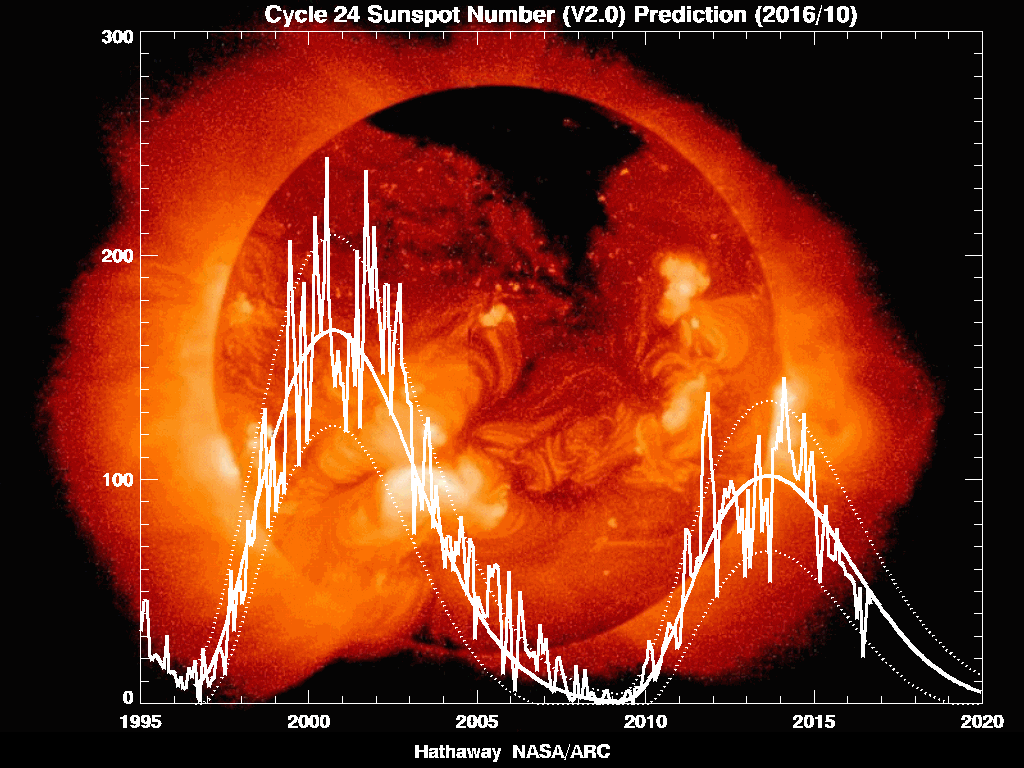
Solar Cycle 24 forecast reduced yet again

February 10, 2011

We had a reduced forecast from NASA just a month ago and it has reduced yet again.

The peak is now expected in July 2013 but this could well slip a month or two. This Landscheidt Minimum continues to look like a Dalton Minimum.

December 2010 forecast smoothed sunspot number maximum of 64 in June 2013

January 2011 forecast smoothed sunspot number maximum of 59 in June/July 2013

February 2011

Current prediction for the next sunspot cycle maximum gives a smoothed sunspot number maximum of about 58 in July of 2013. We are currently two years into Cycle 24 and the predicted size continues to fall.

The latest forecasts for sunspot number and 10.7 Radio flux and Ap progression are here: http://www.swpc.noaa.gov/SolarCycle/

Related:

https://ktwop.wordpress.com/2010/12/23/is-the-landscheidt-minimum-a-precursor-for-a-grand-minimum/

Very fishy: Dismissed from Cambridge, PhD from Imperial, misconduct at UCL, employed at UEL

February 9, 2011

The latest revelations about the chequered career of Jatinder Ahluwalia being dismissed from Cambridge for falsifying data seems like a film script for Leonardo DiCaprio and another Catch Me If You Can movie.

At Cambridge Dr M.D. Brand, Reader in Cellular Biochemistry was his advisor and in a letter dated November 10, 1997, wrote:

…I am no longer prepared to act as PhD supervisor for Jatinder Ahluwalia, and…recommend that he removed from the Board’s list of graduate students because I believe he has been inventing experimental results.

Brand sent Ahluwalia a copy of his letter, and offered again to let him repeat his experiments with witnesses. Ahluwalia evidently didn’t take advantage of that offer. He lost his studentship funding from the Engineering and Physical Sciences Research Council at the end of 1997, and was dismissed from the graduate studies program
on February 18, 1998.

While the actions at Cambridge and UCL seem to restore some faith in academic integrity some questions arise about his stint at Imperial College where he received his PhD and at the University of East London where he is currently employed as Senior Lecturer & Programme leader in Pharmacology but is writing papers about plagiarism.

He writes on the UEL site:

I undertook my PhD training at Imperial College, Chelsea & Westminster Hospital and Novartis London, studying the mechanisms by which cannabinoid (CB1) and vanilloid (VR1) receptors regulate nociceptive transmission at pre-synaptic nerve terminals.

I was based in Novartis (London) throughout my doctoral studies.

The question arises as to whether Imperial College were aware of his shenanigans at Cambridge. His apparent employment or  funding by Novartis during his PhD also raises questions about whether Novartis were aware of his dismissal from Cambridge and even about his discoveries for (or sponsored by) Novartis:

During my first year, we discovered that CB1 and VR1 receptors are expressed on pre-synaptic nerve terminals (Ahluwalia et al. Neuroscience 100, 685-688, 2000; Ahluwalia et al. Neuroscience 110, 747-753, 2002). The final year of my PhD was spent investigating the effect of the endocannabinoid anandamide on pre-synaptic neurotransmitter release from cultured dorsal root ganglion neurons  (Ahluwalia et al. Journal of Neurochemistry, 84, 585-591, 2003; Ahluwalia et al. EJN, 17, 1-8, 2003).

His paper on plagiarism while at UEL also has some obvious commercial implications.

Imperial College, UEL and Novartis ought to be worried and perhaps so also should be the editors of Neuroscience and the Journal of Neurochemistry.


The E-type turns 50

February 9, 2011

The London Design Museum is putting on a special display to celebrate 50 years of the Jaguar E-type from its launch at the Geneva Motor Show in 1961. In the late 1960’s as an apprentice in England, the E-type represented the stuff of our dreams. But back then when my weekly wage as an engineering apprentice was £3- 10s per week, the £2,000 price tag was as unattainable as a date with Sophia Loren!

In the 1970’s when I could aspire to more,  I actually considered the Triumph GT6 – also known as the “poor-man’s E-type” – but instead I settled for a much more sedate Renault -12. And by the time I could consider its price tag the E-type was no longer in production and my tastes had a decided preference for the comfort of a Mercedes.

The Design Museum celebrates 50 years of the iconic Jaguar E-Type with a display in the Design Museum Tank.

Jaguar E-Type series 1, 1961

Originally launched at the Geneva Motor Show in 1961, the E-Type’s caused an instant sensation. With a 3.8 litre XK engine, a top speed of 150 miles per hour and a price of £2000, the E-Type was an accessible dream and signalled the new era of modernity of the 1960s. Between 1961 and 1974 over 70,000 E-Types were produced.

The bullet-like design of the E-Type was the result of the mathematical and engineering talent of Malcolm Sayer and the E-type was the first large-scale production road car to be developed from the study of aerodynamics. The founder of Jaguar, Sir William Lyons combined his flare for style and luxury with his business and marketing skills to ensure the E-Type became the car of celebrities from George Harrison of the Beatles to footballer George Best

The E-Type on display was manufactured in 1961 and has been provided by Classic Motors Cars Limited.

On its release Enzo Ferrari called it “The most beautiful car ever made”.

File:SeriesoneJag.jpg

Jaguar e-Type series one: image Wikipedia

The E-type was 4.4 m long with a 3.8 litre engine while the GT6 had a length of 3.7 m and a 2 litre engine. Technically and in looks the Triumph GT6 never came close to the E-type, but it looked fast. On the few occasions when I drove a friend’s GT6, my main memory is that it had a decided “tail-wag” when cornering.

File:1973.triumph.gt6.red.arp.jpg

1973 Triumph GT6: image Wikipedia

Bot nowadays my tastes are much more sedate and the Jaguar E-type remains the dream it always was. So I shall make do with my Mercedes E-class.

Mercedes E-class 2010: image via Flickr


La Niña and NAO driving current stormy weather

February 8, 2011
During cold La Niña episodes the normal patter...

La Nina Regional impacts: Image via Wikipedia

It may seem obvious (or it should be) that it is ocean currents that dominate weather and man-made effects pale into insignificance in relation to these. But it has been more politically correct to find that every kind of weather event is due to man-made global warming.

But as this article in PhysOrg shows, perhaps the oceans (and the sun) are beginning to get their due (but of course they don’t really care whether anybody believes in them or not – they just carry on).

The term La Niña refers to a period of cooler-than-average sea-surface temperatures in the Equatorial Pacific Ocean that occurs as part of natural climate variability. This situation is roughly the opposite of what happens during El Niño (“the boy”) events, when surface waters in this region are warmer than normal. Because the Pacific is the largest ocean on the planet, any significant changes in average conditions there can have consequences for temperature, rainfall and vegetation in distant places. Scientists at the International Research Institute for Climate and Society (IRI), part of Columbia’s Earth Institute, expect moderate-to-strong La Niña conditions to continue in the tropical Pacific, potentially causing additional shifts in rainfall patterns across many parts of the world in months to come.

These shifts, combined with socioeconomic conditions and other factors, are making some countries more vulnerable. However, La Niña and El Niño conditions actually allow for more accurate seasonal forecasts and help better predict extreme drought or rainfall in some areas. ………..

“Based on current observations and on predictions from models, we see at least a 90 percent chance that La Niña conditions will continue through March,” said IRI’s chief forecaster, Tony Barnston.

Climate scientists have found La Niña’s fingerprints on a number of extreme weather events such as the devastating flood that occurred in Pakistan in 2010, as well as flooding in West Africa, South Africa and most recently in Queensland, Australia, where an area equal to the combined size of France and Germany was underwater. La Niña is also to blame for Cyclone Yasi, one of the strongest to hit Australia, which came ashore on Feb. 2. Cyclone Yasi is the second most damaging Australian cyclone on record after Cyclone Tracy, which struck in 1974.

But La Niña isn’t to blame for the recent severe weather affecting the Northeast. Winter weather for these regions is often driven not by La Niña but by large-scale weather patterns over the U.S., the northern Atlantic Ocean and the Arctic. These are often short-term, and are generally predictable only a week or so in advance. They are the culprits responsible for the dip in temperatures and spike in snow storms in the Midwest and Northeast.

…………

Since 1950, the world has experienced six major La Niña events, wreaking havoc in countries around the world. In 2000, for example, floods associated with La Niña affected 400,000 people in southern Africa, caused at least 96 deaths and left 32,000 homeless.

La Niña conditions typically persist for 9 to 12 months, peaking sometime during the end of the year. But 2010 was a lively year for climate scientists: For the first four months of this year, El Niño conditions prevailed in the tropical Pacific, but that quickly changed, and by June, a La Niña pattern had emerged.

“Last year’s transition from El Niño to La Niña was about the most sudden we’ve ever had,” Barnston said. “When we had rapid flips like this in the past, we sometimes ended up having a two-year La Niña, such as right after the El Niño episodes of 1972 to 1973 and 1997 to 1998.”

Barnston cautions that the likelihood of this happening with the current La Niña is unknown. “Even if we do have a second year of La Niña developing in northern summer 2011, we expect at least a brief return to neutral conditions from May to July of 2011.”

Related:

https://ktwop.wordpress.com/2011/02/03/la-nina-begins-to-show-up-in-global-temperature/

https://ktwop.wordpress.com/2011/02/05/la-nina-will-last-well-into-2011-and-could-extend-into-2012/

https://ktwop.wordpress.com/tag/la-nina/