Indian low-cost carrier signs record Airbus deal, plans to fly overseas routes

January 12, 2011

Bloomberg reports:

IndiGo, the Indian low-cost carrier that agreed to a record plane order, may begin overseas flights in August as economic growth stokes travel in the world’s second-most populous nation. The carrier eventually plans to fly to the Middle East, Southeast Asia and other South Asianations, President Aditya Ghosh said in a phone interview today. The New Delhi-based carrier is unable to start international flights before August because of government regulations.

VT-INA - IndiGo - Airbus A320-232: image PlanespottersNet_026313.jpg

IndiGo may consider sale-and-leaseback deals and debt issuances to help pay for the 180 Airbus SAS A320 planes it has signed a preliminary agreement for, Ghosh said. The aircraft, worth about $15 billion at list prices, will boost the carrier’s fleet as it competes with Air India and Jet Airways India Ltd. in Asia’s second fastest-growing major economy.

The new order, which was announced yesterday, builds on the 100 A320s that IndiGo signed up for in 2005, the year before it began services. The carrier was operating 32 planes at the end of November, according to data on Airbus’ website. The other planes in the initial order for 100 are due to be delivered by 2015, Ghosh said. The airline is a unit of closely held InterGlobe Enterprises Ltd., which also runs hotels and offers technology services…..

Deliveries of the next 180 single-aisle planes will run from 2016 to 2025, Ghosh said. These planes will include 150 of Airbus’s revamped A320, which will be fitted with new engines. The carrier is the first customer for this new version.

Indian carriers are buying aircraft and adding overseas routes as rising wages and trade stoke leisure and business travel. Domestic passenger numbers will likely surge fourfold to 180 million a year by 2020, according to a government forecast…..

Airlines in India have to fly domestically for at least five years before they can start overseas services, under government rules.

Snow in all US States except Florida

January 12, 2011

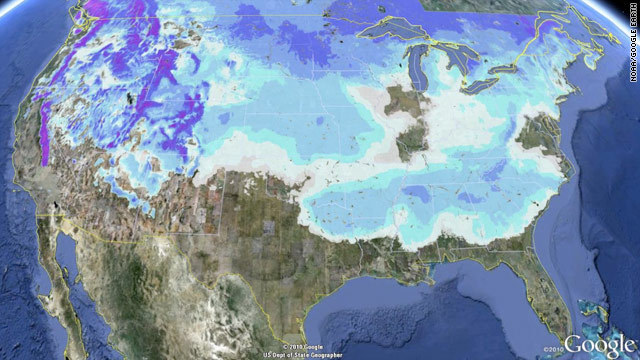
A map of snowfall in the United States is revealing right now: 49 states have snow on this 1/11/11 and only one does not.

From the southern snow storm heading north, which is affecting air travel, to the pending storm in New York City, and flurries out west, there’s plenty of white stuff going around.

The lone state without a flake? It’s the Sunshine State…Florida. Locals are celebrating the fact, though interestingly, parts of the state saw snow just days ago.

Even Hawaii has snow, in Mauna Kea on the Big Island.


Corruption in the European Union is alive and well

January 12, 2011
Constituency for the European Parliament elect...

Image via Wikipedia

Transparency International’s work and its Corruption Perception Index are both important and necessary, but they are just a small contribution to trying to restore ethics and integrity into public life. It mainly addresses the public sector and takes little account of the lack of ethics in the commercial world. Another problem with the CPI is that is skewed and as a perception index tends to be overly representative of the petty but widespread corruption (the so-called “facilitation fees”) in public services and among government employees. These are more common in developing countries and newly “democratised” countries where wage levels are low and institutional processes are still under evolution. But what the CPI does not address properly is the high level of corruption and fraud among politicians and bureaucrats in the developed world (Europe, the US, Japan, Korea for example) – which are not as numerous as in developing countries  but where the monetary values involved are huge. If we distinguish between petty bribery and corruption on the one hand and “grand” fraud and corruption on the other, I have little doubt that the US, Europe and Japan continue not only to lead the “grand” fraud and corruption stakes by a long way but are also the most innovative in finding new ways of being corrupt.

Politicians in the European Parliament and bureaucrats in the European Union are particularly venal and are subject to even less scrutiny than the national parliaments of the member countries (where padding expenses, influence peddling and basic corruption are also well established). The latest example of institutionalised corruption in Europe comes from The Telegraph:

The EU’s financial watchdog has systemically “sabotaged” investigations and caved into intimidation from countries including France and Italy to cover up fraud, according to a senior official.

Maarten Engwirda, a former Dutch member of European Court of Auditors for 15 years, who retired 10 days ago, has alleged that abuse of EU funds was swept under the carpet by an auditing body that was supposed to expose wrongdoing.

“There was a practice of watering down if not completely removing criticism,” he told the Dutch Volkskrant newspaper yesterday.

Slim Kallas, the European Commission’s vice-president, who was responsible for anti-fraud measures from 2004 to 2010 and who is now the EU transport chief, is accused of putting “heavy pressure” on investigators to tone down findings of abuse.

Mr Kallas also clashed with the Court of Auditors over its use of strict accounting standards which meant that the EU’s annual accounts have embarrassingly never been given a clean bill of health. Mr Engwirda, 67, also described an endemic “cover-up culture” within the court and wider EU institutions that had prevented the true extent of fraud from being disclosed.

Marta Andreasen, a Ukip MEP and a member of the European Parliament’s budgetary control committee, that she had come under “huge pressure to conceal the truth about EU expenditure” before being sacked as the commission’s chief accountant for whistle-blowing in 2002. “I witnessed the arm twisting of the Auditors each time they attempted to reveal the failures in the EU accounting and control systems. They came under huge pressure to keep the accountancy fraud hushed up,” she said. “Sadly the auditors did not support me when I stood up in defence of European taxpayers. In my opinion the court is not an independent body.”

Pieter Cleppe, the Brussels spokesman of the Open Europe pressure group said: “This insider story should serve as a warning not to give in to EU demands for more money until the culture of financial irresponsibility is being dealt with more fundamentally.”

http://www.telegraph.co.uk/news/worldnews/europe/eu/8252958/EU-financial-watchdog-systemically-sabotaged-fraud-investigations.html

There is little doubt that European politicians have received their pay-offs whenever a “fraud” investigation has been “sabotaged”.

Related: https://ktwop.wordpress.com/2011/01/07/chief-risk-officer-of-bayerische-landesbank-arrested-for-50-million-bribes/

https://ktwop.wordpress.com/2011/01/09/widespread-corruption-within-turkish-customs-bribes-pool-of-125-million/

A metallic glass tougher than steel

January 11, 2011

An exciting new paper in materials technology –

A damage-tolerant glass by Marios D. Demetriou, Maximilien E. Launey, Glenn Garrett, Joseph P. Schramm, Douglas C. Hofmann, William L. Johnson & Robert O. Ritchie

Nature Materials (2011) doi:10.1038/nmat2930
From EurekAlert:

A new type of damage-tolerant metallic glass, demonstrating a strength and toughness beyond that of any known material, has been developed and tested by a collaboration of researchers with the U.S. Department of Energy (DOE)’s Lawrence Berkeley National Laboratory (Berkeley Lab)and the California Institute of Technology. What’s more, even better versions of this new glass may be on the way. The new metallic glass is a microalloy featuring palladium, a metal with a high “bulk-to-shear” stiffness ratio that counteracts the intrinsic brittleness of glassy materials.

Glassy materials have a non-crystalline, amorphous structure that make them inherently strong but invariably brittle. Whereas the crystalline structure of metals can provide microstructural obstacles (inclusions, grain boundaries, etc.,) that inhibit cracks from propagating, there’s nothing in the amorphous structure of a glass to stop crack propagation. The problem is especially acute in metallic glasses, where single shear bands can form and extend throughout the material leading to catastrophic failures at vanishingly small strains.

In earlier work, the Berkeley-Cal Tech collaboration fabricated a metallic glass, dubbed “DH3,” in which the propagation of cracks was blocked by the introduction of a second, crystalline phase of the metal. This crystalline phase, which took the form of dendritic patterns permeating the amorphous structure of the glass, erected microstructural barriers to prevent an opened crack from spreading. In this new work, the collaboration has produced a pure glass material whose unique chemical composition acts to promote extensive plasticity through the formation of multiple shear bands before the bands turn into cracks.

“Our game now is to try and extend this approach of inducing extensive plasticity prior to fracture to other metallic glasses through changes in composition,” Ritchie says. “The addition of the palladium provides our amorphous material with an unusual capacity for extensive plastic shielding ahead of an opening crack. This promotes a fracture toughness comparable to those of the toughest materials known. The rare combination of toughness and strength, or damage tolerance, extends beyond the benchmark ranges established by the toughest and strongest materials known.”

The initial samples of the new metallic glass were microalloys of palladium with phosphorous, silicon and germanium that yielded glass rods approximately one millimeter in diameter. Adding silver to the mix enabled the Cal Tech researchers to expand the thickness of the glass rods to six millimeters. The size of the metallic glass is limited by the need to rapidly cool or “quench” the liquid metals for the final amorphous structure.

“The rule of thumb is that to make a metallic glass we need to have at least five elements so that when we quench the material, it doesn’t know what crystal structure to form and defaults to amorphous,” Ritchie says.

The new metallic glass was fabricated by co-author Demetriou at Cal Tech in the laboratory of co-author Johnson. Characterization and testing was done at Berkeley Lab by Ritchie’s group.

Sea of Okhotsk rescue update: Tartar Straits frozen to the bottom

January 11, 2011

Little news is coming out of Russia where icebreakers are battling to rescue the ships trapped in the Sea of Okhotsk. It all seems to be going much slower than hoped for and bringing the Sodruzhestvo out is clearly posing some challenges.

Itar-Tass reports:

The icebreakers Krasin and Admiral Makarov have escorted the Bereg Nadezhdy refrigerator ship to ice-free water in the Sea of Okhotsk and now are heading to rescue the Sodruzhestvo floating base still trapped in the ice, a spokesman for the Russian Ministry of Transport told Itar-Tass on Tuesday.

“Taking into account weather forecasts, it has been decided to leave the Bereg Nadezhdy refrigerator ship in a safe sea area and send the Krasin and Admiral Makarov icebreakers to the Sodruzhestvo floating base to help it get out of ice and reach the area where the Bereg Nadezhdy is waiting,” the spokesman said, adding that the move would cut back on the length of the rescue operation. The Sodruzhestvo remains trapped in ice. It has fuel and foodstuffs enough for 75 days. Experts believe that it will be harder to take it out to clear waters because its hull is wider than that of an icebreaker. The Krasin icebreaker is expected to widen the canal for the ship’s passage.

artar Straits: graphic Wikimedia

The Tartar Straits is reported to be frozen right down to its bottom for the first time in many years. The ice field in the Sea of Okhotsk is also reported to have grown from 25km wide to 45 km wide.

“The ice has hit the bottom and the ice field is spreading northwards. The icebreakers have broken through two big floes and are facing another one. After the icebreakers get the Sodruzhestvo base to the area, where they left the Bereg Nadezhdy, the four ships will proceed to a loose ice area in a single caravan. The Magadan icebreaker and a tanker ship are waiting for them there”.

EasyJet has much to learn: Incompetence compounded by “threats of arrest”

January 11, 2011

From the Daily Mail:

Dozens of Easyjet passengers were ordered off a plane and threatened with arrest if they refused – because the overloaded jet was too heavy to take off.

The flight from Birmingham to Geneva was over-filled with 10 tonnes too much fuel so the captain asked the last 37 customers to get off the plane. When some passengers refused to budge they were informed that three police officers were waiting in the airport terminal and would arrest them if necessary.

I have experienced this once on an SAS flight from Copenhagen to Norrköping. We had just seated ourselves when my son cried out “Dad, they’re taking our bags away”. Sure enough they had overfilled the plane with fuel and off-loaded baggage to compensate. But the Captain came out and apologised personally to each affected passenger, explaining that the ground crew had over-filled with fuel according to his instructions which had been based on a passenger manifest which was about 2 hours out-of-date. He acknowledged it was his fault publicly on the loudspeakers and that he had no excuses.  He promised that all baggage would come out on the next flight and would be delivered to our addresses (which did happen). By the time we had landed, the stewardesses had taken down the addresses of the affected passengers and when we landed the kids were plied with toys, puzzles and 2 weeks worth of chocolates and we were given carrier bags full of bottles of wine and champagne left over from the meal service.

What I was particularly struck by was that all the irritation and anger of the passengers was completely neutralised as soon as the captain made his public acknowledgement, admitted the mistake and took responsibility. The mood on the plane palpably changed and by the time we had landed my boys actually thought it was all part of an adventure  organised especially for them. Needless to say they still have a deep seated loyalty to the SAS brand even though SAS has fallen on relatively hard times and we usually have to fly Lufthansa to reach the destinations we need to get to. That Captain had a touch of class.

EasyJet has a lot to learn about what taking responsibility actually means.

If at all possible EasyJet and RyanAir are airlines I avoid like the plague.

Sundog (parhelion) as seen in N. China

January 11, 2011

A parhelion (sundog) combined with a halo is seen in Changchun, capital of northeast China's Jilin Province, Jan. 8, 2011. (Xinhua/Lin Hong)


From Wikipedia:

Sundogs are formed by plate-shaped hexagonal ice crystals in high and cold cirrus clouds or, during very cold weather, by ice crystals called diamond dust drifting in the air at low levels. These crystals act as prisms, bending the light rays passing through them by 22°. If the crystals are randomly oriented, a complete ring around the sun is seen — a halo. But often, as the crystals sink through the air they become vertically aligned, so sunlight is refracted horizontally — in this case, sundogs are seen.

As the sun rises higher, the rays passing through the crystals are increasingly skewed from the horizontal plane. Their angle of deviation increases and the sundogs move further from the sun. However, they always stay at the same altitude as the sun.

Sundogs are red-colored at the side nearest the sun. Farther out the colors grade through oranges to blue. However, the colors overlap considerably and so are muted, never pure or saturated. The colors of the sundog finally merge into the white of the parhelic circle (if the latter is visible).

It is theoretically possible to predict the forms of sundogs as would be seen on other planets and moons. Mars might have sundogs formed by both water-ice and CO2-ice. On the giant gas planets — Jupiter, Saturn, Uranus and Neptune — other crystals form the clouds of ammonia, methane, and other substances that can produce halos with four or more sundogs.

And yet another irreproducible, irrefutable result!!

January 10, 2011

From EurekAlert:

New paper in Nature Geoscience examines inertia of carbon dioxide emissions

New research indicates the impact of rising CO2 levels in the Earth’s atmosphere will cause unstoppable effects to the climate for at least the next 1000 years, causing researchers to estimate a collapse of the West Antarctic ice sheet by the year 3000, and an eventual rise in the global sea level of at least four metres.

The study, to be published in the Jan. 9 Advanced Online Publication of the journal Nature Geoscience, is the first full climate model simulation to make predictions out to 1000 years from now. It is based on best-case, ‘zero-emissions’ scenarios constructed by a team of researchers from the Canadian Centre for Climate Modelling and Analysis (an Environment Canada research lab at the University of Victoria) and the University of Calgary.

The Daily Mail headline proclaims

(and perhaps – following Nostradamus – we should only use quatrains !)

Sea levels will rise by at least 13ft in next 1,000 years, claim scientists

Global sea levels will rise

By at least 13ft in the next 1,000 years

As a result of carbon dioxide emissions,

Scientists have warned.


The ‘unstoppable’ impact of global warming

Will cause a catastrophic collapse

Of the West Antarctic ice sheet

By the year 3000.


“Ongoing climate change following a complete cessation of carbon dioxide emissions” by Nathan P. Gillett, Vivek K. Arora, Kirsten Zickfeld, Shawn J. Marshall and William J. Merryfield will be available online at http://www.nature.com/ngeo/index.html

Or perhaps it should have been published here:

The Journal of Irreproducible Results


Development of stealth fighter aircraft moves East

January 10, 2011

Both China and India are developing 5th Generation stealth fighters; China on its own and India as part of a joint development programme together with Russia.

From http://china-defense.blogspot.com/2010/12/latest-batch-of-j-20-photos.html

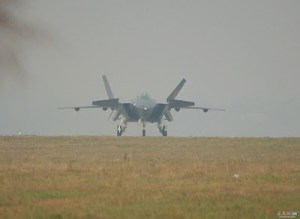
Chinese Chengdu J20 - 5th generation stealth fighter: image http://china-defense.blogspot.com

Rumours from China’s Chengdu Aerospace Corporation (CAC) and the adjoining Aircraft Plant No 132 suggest that a flight of a Chinese-developed fifth-generation fighter prototype would take place by the end of the year. Reportedly, two airframes (numbered 2001 and 2002) have been assembled at the 132 plant.

In August 2008 it was reported that 611 Institute was selected to be the main contractor for the development of the fifth-generation stealthy J-20, and that 601 Institute was the sub-contractor. It was rumored that 611 Institute has started to issue manufacturing drawings for constructing the first prototype, which is expected to fly by 2012, even though the full configuration one won’t fly until a few years later. The latest rumor suggested that a full-scale mock-up had been built at CAC.

From http://www.globalsecurity.org/military/world/china/j-xx.htm

File:Pak fa.jpg

Sukhoi PAK FA T50: image wikipedia

Russia and India are jointly developing the Sukhoi PAK FA / T-50 , which first flew in January 2010. In June 2001, India was offered ‘joint development and production’ of this new 5th generation fighter by Russia. Russia had been trying to sell this concept both to China and India for some time. It seems probable that China declined to participate in this project given a belief that Russia stood to gain more from Chinese participation than did China. That is, it would seem that China had determined that it could produce a superior product without Russian help. With the first flight of the Russian stealth fighter in 2010, an arguably superior Chinese steath fighter might be expected to take to the skies not too long thereafter.

Chinese combat aviation has made remarkable strides in recent years, moving from a collection of obsolete aircraft that would have provided a target-rich environment to potential adversaries. Today China flies hundreds of first rate aircraft, and even flies more Sukhoi Flankers [the aircraft the American F-22 was designed to counter] than does Russia. The Chinese stealth fighter has arrived right on schedule. Chinese military technology is generally rated about two decades behind that of the United States. while the advent of a Chinese counterpart to the F-22 fighter might be disconcerting, the first flight of the prototype American F-22 stealth fighter came on September 29, 1990.

From the Hindustan Times:
New Delhi, December 21, 2010: India and Russia on Tuesday finalised a contract for the biggest defence programme in the country’s history — a $30-billion (Rs 1,35,000-crore) project involving the joint production of 200-250 fifth generation fighter aircraft (FGFA). The aircraft, being called the perspective multi-role fighter (PMF), will exploit the basic design of the Russian Sukhoi T-50 PAK-FA prototype, with modifications thrown in to meet the Indian Air Force’s “more stringent specifications”. The 30-tonne aircraft will be a swing-role fighter with stealth features for increased survivability, advanced avionics, smart weapons, top-end mission computers and 360-degree situational awareness. What will put the co-produced fighter in a different league is its ability to supercruise, i.e. sustain supersonic speeds in combat configuration without kicking in fuel-guzzling afterburners. Currently, the US Air Force’s F-22 Raptor is the only fighter in the world that can supercruise.
The contract for the joint design and development of the FGFA was signed between Hindustan Aeronautics Limited and two Russian firms, Sukhoi Design Bureau and Rosoboronexport. The fighter will be jointly marketed to international air forces. The first prototype flew its maiden sortie in January 2010 and has conducted more than 40 flights. The IAF hopes to induct it by 2018.
A joint statement issued by the ministry of external affairs said Prime Minister Manmohan Singh and Russian President Dmitry Medvedev agreed that the December 2009 pact covering bilateral military cooperation during the next decade would lead to a more substantive engagement cutting across joint research and development, manufacturing and marketing activities.
In the meantime DNA reports:
 

HAL Tejas at Aero India 2009

HAL Tejas: Image via Wikipedia

India today joined a select group of nations manufacturing warplanes with the home-grown Light Combat Aircraft ‘Tejas’ moving a step closer to its induction into the Indian Air Force after getting its Initial Operational Clearance (IOC) here. 

27 years after the project was initiated, defence minister AK Antony handed over the IOC certificate to Air Chief Marshal PV Naik at the HAL airport in Bangalore.

“This is only the semi-finals”, Antony said, adding the LCA would enhance national security and build the country’s own fighter aircraft capabilities.

The aircraft, with an investment of over Rs 14,500 crore ($3.2 billion), has been developed by DRDO’s Aeronautical Development Agency after battling technology denial regimes and sanctions for nearly three decades. “After crossing a number of challenges and accomplishing a significant series of milestones including weapon delivery, in over 1500 sorties, the country is poised for a major turning point with the declaration of the IOC,” Antony said.

The IAF has plans to induct a total of around 200 planes of which orders for the initial 40 have already been placed by the IAF.

The aircraft, which costs between Rs 180 to 200  crore ($45 million)  per piece, is presently powered by American GE-F 404 engine and the advanced GE-414 engines have been chosen for powering the LCA Mk II aircraft, which are likely to be developed by 2014.
 

Mt. Merapi rumbles on and rains cause cold lava floods

January 10, 2011

Mount Merapi has continued erupting in the past two or three weeks but at much lower intensities than the  fatal eruptions which occurred on October 26 and November 5.

Island Crisis reports that:

YOGYAKARTA, INDONESIA (BNO NEWS) — With heavy rainfall accompanied by sporadic but strong wind currents, Indonesia’s Yogyakarta was hit by the largest outflow of cold lava and mud, locally known as lahar dingin, since October’s Merapi eruptions, local media reported.

The cold lava damaged several bridges and created chaos as traffic flow was cut off for around 18 hours on one of the city’s main highways, which was flooded under meter-deep lahar in several areas. “In addition to destroying the Gempol main bridge on the Putih River, lahar also destroyed bridges in other villages, leading to the isolation of hundreds of residents in seven hamlets,” Heri Prawoto, head of the Magelang district’s Disaster Management Office, told the Jakarta Globe.

But the resilience of humans is amazing.

The Merapi Golf Course in Yogyakarta, covered in ash. image credit: DigitalGlobe.

In Merapi’s Shadow, a Tourism Boom

The golf courses may be covered in volcanic ash, but tourists are flocking to Indonesia to see devastated villages near the recently eruptive Mount Merapi volcano.

Tourists with a curiosity about the aftermath of earthquakes, tsunamis and volcanic eruptions are being courted to the central Javanese city of Yogyakarta, Reuters reports.

The eruptions, which began on Oct. 26, killed more than 350 people and created nearly 400,000 refuges. That destruction, it seems, is a selling point for local travel agencies desperate for tourists’ dollars. “In the new volcano tour package, we’ll take customers to explore the closest village to the peak and see how bad the devastation is,” Edwin Ismedi Hinma, of the local tour agencies association, told Reuters. “Then we’ll take them to a river to watch cold lahars flood past.”