Socio-economic measures can help adapt crops for climate change

October 8, 2010

The headline in the Telegraph is both remarkable and irresponsible.

Climate change threatens UK harvest

The article is about a new paper in Environmental Research Letters:

Increased crop failure due to climate change: assessing adaptation options using models and socio-economic data for wheat in China

Andrew J Challinor, Elisabeth S Simelton, Evan D G Fraser, Debbie Hemming and Mathew Collins Environ. Res. Lett.5 034012  doi: 10.1088/1748-9326/5/3/034012

This paper deals with simulations of  crop failures due to heat and water stress in North east China, where the simulations are themselves based on climate model output taken from the coupled atmosphere–ocean simulations of the Hadley centre for the period 1990 – 2099. The base-line for climate was for the period 1950-1989.


Grain crops China: Xinhua News Agency


The authors conclude that based on their simulations

The results from this study suggest that climate change will result in increasing spring wheat crop failure in northeast Chinadue to increasing extremes of both heat and water stress.

But the authors also studied socio-economic adaptation factors. Access to capital and land, increasing fertilizer, per capita investments in agriculture, and falling numbers of rural households all of which reduce vulnerability. They find that “measures to adapt may include institutional policies to support adaptation; schemes to ensure that the requisitecrop varieties are available to farmers; crop insuranceschemes or weather derivatives to aid management ofclimate variability; plant breeding; and building capacity foragricultural extension services to effectively prepare farmers for extreme events”. They go on to conclude that

The simulations show significant potential for adaptation throughboth socio-economic and biophysical measures. The methods used could form part of a methodology to link climate andcrop models, socio-economic analyses and crop variety trialdata. By examining at the regional scale the range of abioticstresses likely to be experienced by crop production systemsin the future, the relative importance of these stresses couldbe determined using a risk-based or probabilistic framework.This work could in turn be used with analyses of current andpotential future germplasm, and socio-economic conditions,in order to prioritize efforts to adapt regional-scale cropproduction to climate change, using a range of measures suchas policy, plant breeding and biotechnology.

But The Telegraph somehow can only see the alarmist side. They also manage to bring the UK Met Office into the story and create a remarkable headline from these simulations of North East China! Louise Gray writes:

Climate change threatens UK harvest

Climate change could push up food prices by causing large-scale crop failures in Britain, the Met Office has warned. Rising temperatures could mean events such as the drought in Russia this summer, which pushed up grain prices, hit countries like the UK.

Voice print technology led to arrests of alleged terrorists in Europe

October 8, 2010

Officials who apparently thwarted an alleged terror plot against Europe used voiceprinting technology to catch several suspects.


By the time you are 18 you have a unique voice print:derlinguist.com


The British Government Communications Headquarters used voice identification technology to help uncover the plot according to a report in the Canadian Press. Several of the voices were recorded along the Pakistan-Afghanistan border.

Police in southern France on Tuesday arrested 12 suspects in sweeps against suspected Islamic militant networks, including three men linked to a network recruiting fighters for Afghanistan.

In one of the cases, nine suspected Islamic militants were detained in southeastern Marseille and its suburbs, and authorities turned up at least one automatic rifle and a pump gun, the officials said.

In Tuesday’s other roundup, two men were arrested in Marseille and another in southwestern Bordeaux on suspected ties to a Frenchman arrested in Naples, Italy, last month accused of links to an Afghan recruiting ring.

Officials in Germany were tightlipped Tuesday on details of a U.S. missile strike in Pakistan’s rugged mountain border area where Pakistani officials said eight German militants were killed.

U.S. officials believe a cell of Germans and Britons was at the heart of the Europe terror plot. Germany’s ARD public television cited unidentified sources Tuesday as saying four of the Germans killed in the missile attack were of Turkish descent.

Developers of voice biometric technology say it can be more useful than traditional fingerprint analysis in fighting terror. The private sector has already embraced the technology, with U.S. probation officers using it to monitor offenders, and Canadian call centres using it to identify customers. Israel’s largest bank, Bank Leumi, says it has been using voice biometrics for the past decade to deter fraud and boost customer safety.

U.S. and British intelligence run an international eavesdropping program that gathers huge amounts of information. So big is the overload that the National Security Agency is building a massive storage centre in Utah to handle the mountains of data.

Almog Aley-Raz, whose Israel-based company PerSay Ltd. supplies governments and businesses around the world, said that using voice biometrics could allow officials to scan a large number of phone conversations for a several suspects’ voices, greatly streamlining intelligence work.

“An entry-level server enables you to run 100 streams of audio against maybe 100 voiceprints,” he said, noting that in some cases dozens or even hundreds of servers could be run back-to-back to comb through intercepted calls. Aley-Raz accepted that the technology had its flaws — it is vulnerable to background noise and poor audio quality, for example, and can become confused when people start talking over one another.

Chang’e-2 starts transmitting data from lunar orbit

October 8, 2010


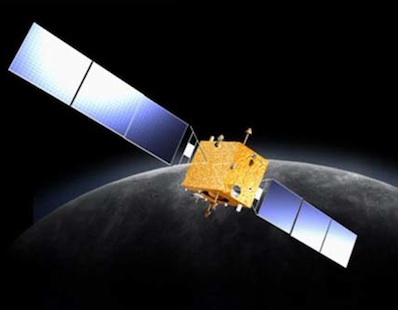
Chang'e-2 lunar probe: Credit: CNSA


Chang’e-2 remains on track and the scond orbit correction planned for Sunday may not be necessary.

From the Beijing Review:

All scientific exploration equipment has begun operation on China’s new lunar probe,Chang’e-2. The instruments that collect information about the space environment between the Earth and the Moon have sent back their first batch of data. The ground control center received the first readings from Chang’e-2 early Tuesday morning. The equipment on board detects a wide array of information such as gamma radiation levels.

The control center has confirmed that all instruments are working correctly.

The center announced that the second correction of Chang’e-2‘s orbit has been cancelled, as data proves the satellite is travelling strictly to plan following the first correction.

Experts said the satellite might change its orbit slightly due to the influence of the atmosphere and cosmic environment. Timely correction is therefore needed to prevent Chang’e-2 from deviating from its designed orbit.

The probe went through its first trajectory correction 17 hours after its successful launch. According to the original plan, the second correction would have been on Sunday. The control center is now watching closely for the timing of its next orbit correction. It’s the first time a Chinese lunar probe has directly entered an Earth-Moon transfer orbit without orbiting the Earth first.

Chang’e-2 satellite was launched just before 7 p.m. on October 1, inaugurating China’s second phase of a three-step moon mission, which will eventually culminate in a soft landing on the Moon.

From Spaceflight Now:

Chang’e 2 will map candidate landing sites for the next mission in China’s lunar program, which targets a robotic touchdown on the moon after launch in 2013. Another project in China’s long-term plans is a vehicle to return soil and rock from the moon back to Earth.

After its $134 million baseline mission at the moon is finished, Xinhua reports Chang’e 2 could enter an extended phase.

Officials are considering three scenarios for Chang’e 2’s overtime, including sending the spacecraft away from the moon and into deep space, giving Chinese engineers practice in operations further from Earth. The satellite’s propellant could also return Chang’e 2 to Earth orbit, according to Huang Jiangchuan, a chief designer quoted in Xinhua.

Chang’e 2 could also continue circling the moon, relaying more science data before attempting a landing or impact on the surface, officials said.

Chang’e 1 was deliberately crashed into the moon at the end of its mission in March 2009.


Oh dear ! Science in the service of totalitarianism

October 7, 2010

Fred Pearce in the New Scientist is at it again!

The world badly needs an independent carbon police to check the figures and catch the carbon frauds.

Can science deliver?


Carbon police?


Verifying national emissions requires both “bottom-up” independent oversight of the inventories, and better “top-down” monitoring of the atmosphere, says Matthias Jonas of the International Institute for Applied Systems Analysis in Laxenberg, Austria.

A new climate treaty will also need carbon sniffers in tropical forests, especially in countries that sign up to a part of the deal called REDD (Reduced Emissions from Deforestation and Forest Degradation). REDD would offer cash to countries that conserve their forests so they can soak up atmospheric CO2. This means knowing how much carbon is actually being absorbed by the forests. In August, a study of Peruvian forests by Greg Asner of Stanford University, California, found existing estimates of carbon stored and released could be out by as much as 50 per cent.

Enough said!

The Carbon Police mean business. Trees and plants not absorbing their required amount of carbon dioxide will be punished severely.

10:10

Literature Nobel goes to Mario Vargas Llosa

October 7, 2010

Just announced:

The Nobel Prize in Literature 2010


Peru: Vargas Llosa resigns to official comittee in reject of

Vargas Llosa


Mario Vargas Llosa from Peru

From: Sofia Ström Svenska Dagbladet:

Vargas Llosa was born in 1936 in Peru, but grew up in Bolivia. He made an international breakthrough with his novel The City and the dogs in 1963.
The novel was perceived in Llosa’s homeland as controversial and thousands of copies were burned in public. For many years he worked as a journalist. He has in recent years lived in  Barcelona, Madrid, Paris and Lima. Among his other famous works include War at World’s End and Bock Festival.

Why Forecasts need to be wrong

October 7, 2010


The Lorenz attractor is an example of a non-li...

Image via Wikipedia


This started yesterday as a short comment on the changing forecasts by Hathaway on solar activity in Solar Cycle 24 but has now become something else.

As clarification, I  distinguish here between prophecies and forecasts  where:

  • I take prophecies to be a promise about the future  based primarily on faith and made by prophets , witchdoctors, soothsayers and politicians such as “You will be doomed to eternal damnation if you don’t do as I say”,
  • I take “forecasts” to be an estimate of future conditions based on known data with the use of calculations, logic, judgement, some intuition and even some faith. They are extrapolations of historical conditions to anticipate – and thereby plan for -future conditions.

Read the rest of this entry »

Tenacious life: Biological oasis found in Yellowstone Lake

October 6, 2010
att=Yellowstone Lake Aerial

Image via Wikipedia: Yellowstone Lake

From Science Daily:

Montana State University researchers have discovered a rare oasis of life in the midst of hundreds of geothermal vents at the bottom of Yellowstone Lake.

A colony of moss, worms and various forms of shrimp flourishes in an area where the water is inky black, about 90 degrees Fahrenheit, and a cauldron of nutrients, gases and poisons, the researchers reported in the September issue of Geobiology.

The vent is close to 100 feet below the surface of Yellowstone Lake and a third of a mile offshore in the West Thumb region. The worms and shrimp live among approximately two feet of moss that encircles the vent. The researchers said that the Fontinalis moss is not known to grow in the conditions they found on the floor of Yellowstone Lake and that a worm found associated with the moss had never been reported in North America. The researchers also noted that this was the first in-depth published study of the biology associated with any geothermal vent in Yellowstone Lake.

“The proliferation of complex higher organisms in close association with a Yellowstone Lake geothermal vent parallels that documented for deep marine vents, although to our knowledge this is the first such documentation for a freshwater habitat”

D. Lovalvo, S. R. Clingenpeel, S. McGinnis, R. E. Macur, J. D. Varley, W. P. Inskeep, J. Glime, K. Nealson, T. R. McDermott. A geothermal-linked biological oasis in Yellowstone Lake, Yellowstone National Park, WyomingGeobiology, 2010; DOI: 10.1111/j.1472-4669.2010.00244.x

Science Daily article:

http://www.sciencedaily.com/releases/2010/10/101004141327.htm

New Research – “A stronger sun cools the earth”??

October 6, 2010

New research and like all good research poses more questions than it answers. And the caveat is that the 3 year period of the research may not be very significant in the rythms of the sun. But it only emphasises to me that climate models which ignore the sun are not really worth very much. And climate models will only begin to become interesting when the sun’s influences and mechanisms by which they apply are far better understood.

From The Telegraph:

An increase in solar activity from the Sun actually cools the Earth, suggests new research that will renew the debate over the science behind climate change.

A stronger Sun actually cools the Earth

Stronger Sun actually cools the Earth??

Focused on a three-year snapshot of time between 2004 and 2007, as solar activity waned at the end of one of the Sun’s 11-year cycles, the new data shows the amount of light and heat reaching the Earth rose rather than fell. Its impact on melting polar ice caps, and drying up rivers could therefore have been exaggerated by conventional climate models during the period.

Scientists also believe it may also be possible that during the next upturn of the cycle, when solar activity increases, there might be a cooling effect at the Earth’s surface.

In the New Scientist:

Joanna Haigh of Imperial College London studied satellite measurements of solar radiation between 2004 and 2007, when overall solar activity was in decline.

Haigh’s measurements showed that visible radiation increased between 2004 and 2007, when it was expected to decrease, and ultraviolet radiation dropped four times as much as predicted. Haigh then plugged her data into an atmospheric model to calculate how the patterns affected energy filtering through the atmosphere. Previous studies have shown that Earth is normally cooler during solar minima.Yet the model suggested that more solar energy reached the planet’s surface during the period, warming it by about 0.05 °C.

An influence of solar spectral variations on radiative forcing of climate

by Joanna D. Haigh, Ann R. Winning, Ralf Toumi & Jerald W. Harder

(Nature, DOI: 10.1038/nature09426).

The effect is slight, but it could call into question our understanding of the sun’s subtle effects on climate. Or could it? Stefan Brönnimann of the University of Bern in Switzerland says Haigh’s study shows the importance of looking at radiation changes in detail but cautions that her the results could be a one-off. He points out that the sun’s most recent cycle is known to have been atypical

Chemistry Nobel to 3 for palladium catalysis

October 6, 2010

The Nobel Prize in Chemistry 2010 was awarded jointly to Richard F. Heck, Ei-ichi Negishi and Akira Suzuki “for palladium-catalyzed cross couplings in organic synthesis”.

Translated from Svenska Dagbladet:

Their research has led to improved possibilities to produce sophisticated chemicals. It’s all about complex organic molecules for which the need is steadily increasing. The need for new drugs to treat cancer, for example, or slow deadly viruses. Even agriculture can benefit from this technology to protect crops.
Their work  “has improved the chemists’ ability to better meet all these aspirations”.
Even the electronics industry makes use of this research for OLED‘s composed of organic molecules that are transparent and can be used to produce super-thin displays. The palladium-catalyzed cross-coupling is one of the keys in the process.

Another example is  discodermolide which in the future could be a life-saving chemotherapy. This substance was discovered  in the 1980’s when a marine sponge  was discovered at 33 meters depth in the Caribbean Sea. The creature does not have eyes and legs, and because of its inability to escape has become a master at making complex toxic molecules. Their’ methodology has made it possible to produce discodermolide artificially and studies have shown that it can fight cancer cells. The element palladium can act as a meeting place for carbon atoms and can then act as a catalyst.

The uniqueness of this method is that it can be implemented “under mild conditions and with high precision “.

Richard Heck, 79 years old, is a U.S. citizen and a Professor at University of Delaware.

Ei-Ichi Negishi, Japan, is 75 years old. He is a Professor at Purdue University in West Lafayette, USA.

The 80-year-old Akira Suzuki is a Japanese citizen and Professor at Hokkaido University in Sapporo, Japan.

Chang’e-2 enters 12 hour lunar orbit

October 6, 2010

Chang’e-2 enters 12 hour lunar orbit

China’s second unmanned lunar probe  Chang’e-2, completed its first braking Wednesday, which decelerated the spacecraft and successfully allowed it to enter a 12-hour orbit, according to the Beijing Aerospace Control Center (BACC). Chang’e-2, following instructions from the center, started the first braking at 11:06 a.m. and entered the 12-hour elliptical moon orbit 32 minutes later. It was the first braking for Chang’e-2. The space- probe needs to brake another two times before it can enter the designed 118-minute working orbit. The braking “laid a solid foundation” for Chang’e-2 to carry out scientific explorations in its final orbit, BACC said in a press release.

Compared with Chang’e-1, it is more challenging for Chang’e-2 to brake as it must do so at a closer distance to the moon and at a higher speed. A Long-March-3C carrier rocket carried Chang’e-2 into space blasting off from the Xichang Satellite Launch Center, in southwest China’s Sichuan Province, at about 7 p.m. Friday.

To acquire more detailed moon data, Chang’e-2 will enter a lower lunar orbit about 100 km above the surface, compared with the 200-km altitude of Chang’e-1, according to the control center. Before its first braking, the lunar probe had traveled nearly 350,000 km.

Screen shows the virtual animation of the first braking of Chang'e II lunar probe in Beijing Aerospace Control Center in Beijing, capital of China, Oct. 6, 2010. China's second unmanned lunar probe, Chang'e II, completed its first braking Wednesday, which decelerated the satellite and successfully made it enter a 12-hour orbit, according to the Beijing Aerospace Control Center. (Xinhua/Tian Zhaoyun) (xzj)

Cheng'e - 2 enters 12 hour lunar borbit

Two satellites into orbit

In other news today a Long March 4B rocket carrying two satellites of the “Shijian VI-04” group lifted off from the launch pad in Taiyuan, capital of north China’s Shanxi Province, Oct. 6, 2010. The satellites which have entered their space orbits will carry out probes on space environment and radiation and conduct space science experiments, according to the Taiyuan Satellite Launch Center.