Archive for the ‘Oceans’ Category

Life below the seabed which does not depend on photosynthesis

March 18, 2013

A new paper describes the finding of  live microbial communities in the earth’s crust deep below the seabed. Without recourse to sunlight and photosynthesis these bacteria seem to have found a different source of energy. “The bacteria feed on chemicals that are released when water seeps down through the rocks. The rocks contain iron ions that can react with sea water and produce hydrogen, which the bacteria can use as an energy source for producing their own organic matter,” says author Mark Lever. “This form of chemical synthesis, which is an alternative energy source to photosynthesis, also occurs elsewhere on Earth, for instance around warm springs in the seabed. But this is the first time that it has been found in the earth’s crust below the sea.”

M.A. Lever et al., “Evidence for microbial carbon and sulfur cycling in deeply buried ridge flank basalt,” Science, 339:1305-08, 2013DOI:10.1126/science.1229240

The Scientist: Tiny fissures in 3.5-million-year-old rock hundreds of meters below the seabed are home to microbes that gain their energy from the rock itself, according to a paper published in Science today (March 14). The study suggests that the largest ecosystem on the planet depends on energy, not from the sun, but from chemical reactions.

“The fact that you can get viable microbes out of those rock samples—and they’re clearly indigenous; they’re not contaminants—that’s just tremendously exciting,” said Andy Fisher, a professor of earth and planetary sciences at the University of California, Santa Cruz, who was the lead scientist on the drilling vessel.

The oceanic crust of volcanic-derived basalt rock lies below the sedimentary seabed, covers approximately two thirds of the Earth’s surface, and is on average 7 kilometers thick. Although scientists have found evidence of life within this vast expanse of rock, the samples obtained were of crustal fluids, rather than the basalt itself, explained Mark Lever, an ecologist at Aarhus University in Denmark, who led the study. “Ours was the first direct study that conclusively showed that there is life within these rocks,” he said. …..

….. The thick layer of sediment “acts like a blanket” to keep the relatively young crust warm, around 64°C, explained Damon Teagle, a professor of geochemistry at Southampton University in the UK, who was not part of the team. It also largely prevents seawater from entering the rock from above, he said. There is, however, horizontal flow of water through the rock from distant sediment-free entry points created by small seamounts. But, by the time that water has reached the site where Lever’s rock samples were collected, “it’s suggested to be over 10,000 years old,” said Lever. The water in the samples is also free of oxygen and chemically quite distinct from seawater due to the filtering effect of passing through rock. …..

…… Back in his land-based lab, Lever and colleagues extracted DNA from the fissure samples and identified genes for methane and sulfur metabolism, consistent with microbes living in an oxygen-free environment. He also observed that the chemical composition of the rock samples was in line with methane and sulfur metabolism by resident microbes.

The presence of microbial genes and characteristic rock chemistry was not sufficient to confirm the existence of life, however. “The sulfur and carbon isotopes that were analyzed could, in theory, have been produced thousands or millions of years ago,” said Lever, and the microbial DNA could have been from fossils. But, he added, “we didn’t just find DNA.”

The team also found that rocks incubated for several years under conditions resembling the crustal environment exhibited rising methane levels. “[It’s] evidence that [the microbes] are active and directly gaining energy from reactions with the rocks,” Lever said. ….

Two years after BP oil spill, natural recovery is much greater than expected

April 21, 2012

Immediately after this accident it was being touted as the greatest environmental catastrophe of all time. The hyperbole is of course necessary to generate headlines and the “alarmist brigade” who believe that humanity is the worst thing that has ever happened to the earth are quick to pile on the exaggerations. But the earth is rather more resilient than they would like us to believe.

NewsWise reports:

This Friday, April 20, will mark two years since the explosion aboard the Deepwater Horizon oil rig caused vast quantities of crude oil to flow into the Gulf of Mexico.

But despite the size of the spill, “the natural recovery is far greater than what anybody hoped when it happened,” said James Morris, a professor of biology at the University of South Carolina. “The fears of most people – that there would be a catastrophic collapse of the ecosystem in the Gulf – never materialized.” …….

He’s been impressed with the recovery of the area’s ecology.

“The fisheries have come back like gangbusters,” he said. “One of the interesting findings was that after the oil spill, bait fish populations collapsed, and predator populations boomed. The reason was that there was no fishing pressure on the top predators because people stopped fishing after the spill. So the predator fish populations rebounded, and they grazed down their prey.”

“The marshes that I saw actually looked very good,” he added. “And I was taken to the worst by officials who wanted to impress us that the damage was really significant, and that you could still find oil in the marshes. And you can still find oil in the marshes, but the greatest damage to the place where they took us was from the trampling by the reporters, scientists, and agency people tromping around out there looking for damage.”

“There’s some evidence that perhaps there are some lingering problems, but it’s not entirely clear,” Morris said. “For example, there’s ambiguity about whether there’s been an effect on species like dolphins. Some people will remain forever convinced that dolphins are washing up because of this spill, but in a recent report that NOAA just released, the dolphin mortality was unexplainably high leading up to the spill. So before the spill, the dolphin mortality was higher than normal, and it’s been higher than normal since the spill.”

But “alarmism” is based on making predictions of catastrophes to come which will never be put to the test during the lifetime of the forecasters.

Ocean warming over last 135 years twice as great as over last 50 years

April 2, 2012

This new paper just reinforces my view that man-made carbon dioxide is insignificant with regard to climate. But I wonder how this finding is somehow going to be attributed to anthropogenic carbon dioxide.

Painting of HMS Challenger (1858)

Painting of Challenger by William Frederick Mitchell - Wikipedia

A new study combining data from the HMS Challenger (1872 – 1876) with the the modern data set of the Argo Programme shows that ocean warming 135 years ago was significantly faster than that in the last 50 years.

“… the magnitude of the temperature change since the 1870s is twice that observed over the past 50 years. …. This implies that the time scale for the warming of the ocean is not just the last 50 years but at least the last 100 years.”

… the 100-year timescale of ocean warming implies that Earth’s climate system as a whole has been gaining heat for at least that long.

Dean Roemmich, W. John Gould, John Gilson. 135 years of global ocean warming between the Challenger expedition and the Argo ProgrammeNature Climate Change, 2012; DOI: 10.1038/nclimate1461

Summary: The ocean’s dominant role over the atmosphere, land, or cryosphere comes from its high heat capacity and ability to remove heat from the sea surface by currents and mixing. The longest interval over which instrumental records of subsurface global-scale temperature can be compared is the 135 years between the voyage of HMS Challenger (1872–1876) and the modern data set of the Argo Programme(2004–2010). Argo’s unprecedented global coverage permits its comparison with any earlier measurements. This, the first global-scale comparison ofChallenger and modern data, shows spatial mean warming at the surface of 0.59 °C±0.12, consistent with previous estimates of globally averaged sea surface temperature increase. Below the surface the mean warming decreases to 0.39 °C±0.18 at 366 m (200 fathoms) and 0.12 °C±0.07 at 914 m (500 fathoms). The 0.33 °C±0.14 average temperature difference from 0 to 700 m is twice the value observed globally in that depth range over the past 50 years, implying a centennial timescale for the present rate of global warming. Warming in the Atlantic Ocean is stronger than in the Pacific. Systematic errors in the Challenger data mean that these temperature changes are a lower bound on the actual values. This study underlines the scientific significance of the Challenger expedition and the modern Argo Programme and indicates that globally the oceans have been warming at least since the late-nineteenth or early-twentieth century.

And if warming in the last 50 years was just half the rate of warming over the last 100 years it follows that warming in the first 50 years was 3 times greater than the rate in the second 50.

La Niña may come back for a third straight year

March 4, 2012

P. Gosselin reports on his blog that Norwegian scientists are already predicting that La Niña may come back for a 3rd year.

(Related: La Niña will last well into 2011 and could extend into 2012)

It wasn’t all that long ago when a number of climate scientists were projecting the Earth would soon fall into an almost permanent, increasing El Niño mode, where the surface temperatures of the equatorial Pacific would always be like what we saw in 1998 – all man-made.

Today a number of German-language papers are reporting that Norwegian scientist Tore Furevik of the Bjerknes Centre of the University of Bergen says he expects the opposite to happen at least this year. Furevik says that La Niña may come back for third straight year. “The situation is simlar to the previous year,” he says.

Die Welt here writes that “there are no signs that La Nina is going to disappear anytime soon” and that according to Norwegian experts “it will occur even more strongly than in 2011″.

The Wiener Zeitung of Vienna, Austria adds:

The La Niña phenomena has been persisting since 2010 and there are no signs of it going away. We had this strong cooling in 2010 and instead of getting warmer, we stayed in a long cold phase’, said Furevik. “And it appears as if an even stronger La Niña will occur.’”

Furevik’s La Niña forecast contradicts the experts’ forecast, where an ensemble of models show the trend towards an El Niño for the 2nd half of the year:

Discovery of Icelandic ocean current unsettles “settled” climate theories

August 23, 2011

So much for settled science.

A new paper overturns previous thinking that the East Greenland Current was the main source of the Atlantic Meridional Overturning Circulation (AMOC). The newly discovered North Icelandic Jet (NIJ) is now thought to dominate the return of dense water south through gaps in the Greenland-Scotland Ridge to keep the “great ocean conveyor belt” moving.

Kjetil Våge, Robert S. Pickart, Michael A. Spall, Héðinn Valdimarsson, Steingrímur Jónsson, Daniel J. Torres, Svein Østerhus & Tor Eldevik. Significant role of the North Icelandic Jet in the formation of Denmark Strait overflow waterNature Geoscience, 21 August 2011 DOI:10.1038/ngeo1234

graphic by Reuters

 Science Daily reports:

ScienceDaily (Aug. 21, 2011) — An international team of researchers, including physical oceanographers from the Woods Hole Oceanographic Institution (WHOI), has confirmed the presence of a deep-reaching ocean circulation system off Iceland that could significantly influence the ocean’s response to climate change in previously unforeseen ways. 

The current, called the North Icelandic Jet (NIJ), contributes to a key component of the Atlantic Meridional Overturning Circulation (AMOC), also known as the “great ocean conveyor belt,” which is critically important for regulating Earth’s climate. As part of the planet’s reciprocal relationship between ocean circulation and climate, this conveyor belt transports warm surface water to high latitudes where the water warms the air, then cools, sinks, and returns towards the equator as a deep flow.

Crucial to this warm-to-cold oceanographic choreography is the Denmark Strait Overflow Water (DSOW), the largest of the deep, overflow plumes that feed the lower limb of the conveyor belt and return the dense water south through gaps in the Greenland-Scotland Ridge.

For years it has been thought that the primary source of the Denmark Overflow is a current adjacent to Greenland known as the East Greenland Current. However, this view was recently called into question by two oceanographers from Iceland who discovered a deep current flowing southward along the continental slope of Iceland. They named the current the North Icelandic Jet and hypothesized that it formed a significant part of the overflow water.

Now, in a paper published in the Aug. 21 online issue of the journal Nature Geoscience, the team of researchers — including the two Icelanders who discovered it — has confirmed that the Icelandic Jet is not only a major contributor to the DSOW but “is the primary source of the densest overflow water.” ……..

Baltic sea ice highest in 25 years

February 26, 2011

From The Local:

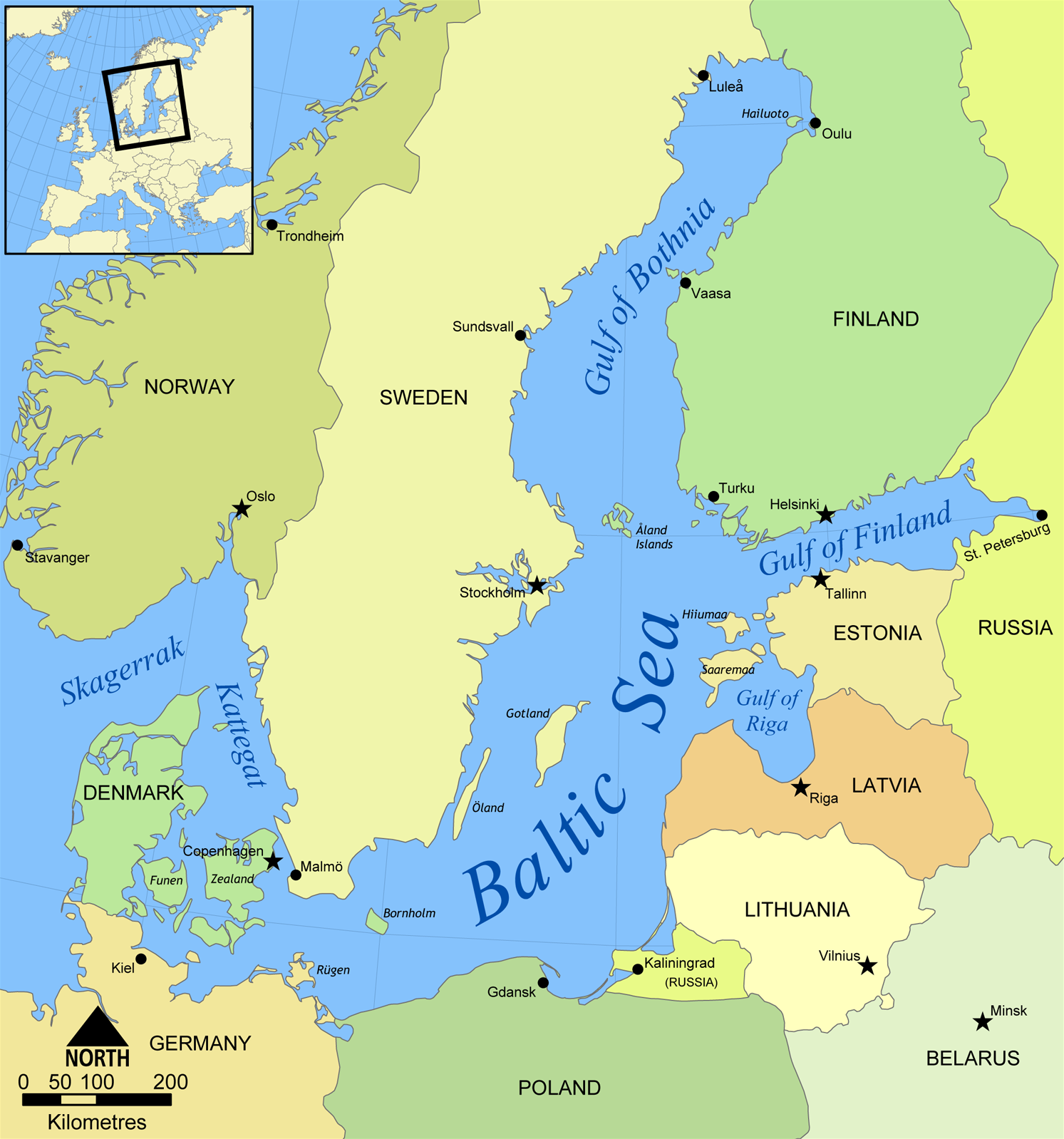
Baltic Sea: image Wikipedia

Deep freeze puts Baltic on track for record ice

Following another extended stretch of sub-zero temperatures, ice coverage on the Baltic Sea is greater than it’s been in nearly a quarter century, Sweden’s meteorological agency reports. About 250,000 square kilometres of the Baltic Sea are now covered in ice according to the Swedish Meteorological and Hydrological Institute (SMHI).

The last time so much of the Baltic was frozen was the winter of 1986-87, when ice covered nearly 400,000 square kilometres of the sea’s surface.

SMHI warns that ice coverage on the Baltic could expand further in the coming days, possibly setting a new record. “The surface water is cold and if winter-like temperatures continue in the region a few more weeks, we’ll probably get an icy winter on par with 1984-85, one of the toughest winters in the 1980s,” SMHI oceanographer Amund E. B. Lindberg said in a statement.

According to SMHI’s estimates, ice may eventually connect the Swedish mainland all the way out to the Baltic island of Gotland, which lies about 90 kilometres off of Sweden’s eastern coast.

Baltic ice cover is not only unusually wide this winter, but also unusually thick, especially in Gulf of Bothnia off Sweden’s northeastern coast, where air temperatures have consistently hovered around -30 degrees Celsius in recent months.

In some areas far out at sea, ice is more than 60 centimetres thick in the northern parts of the gulf. Recent cold temperatures near the southern areas of the Gulf of Bothnia have resulted in ice thickness growing by 30 centimetres in just two weeks.

Icebreakers from the Swedish Maritime Administration (Sjöfartsverket) have been working round the clock to ensure that sea routes on the Baltic remain open, but strong winds expected at the weekend may complicate their work.

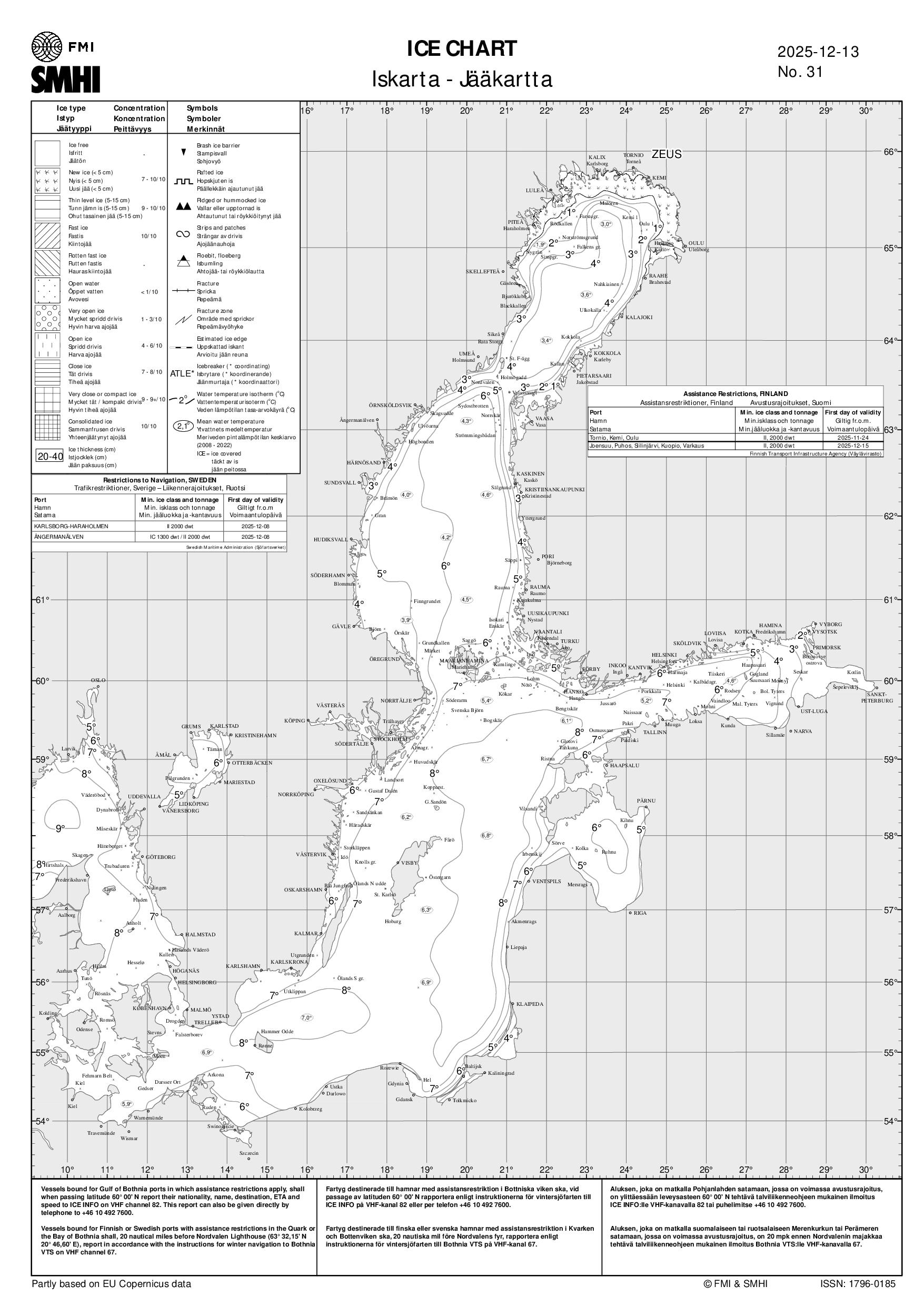
SMHI’s daily ice report says:

During the next two days  heavy ice drifting and ridge forming is expected in all waters of the Baltic Sea north of N58 °.

A detailed sea ice map is available here:

Baltic Sea ice levels 20110225: image smhi

La Niña and NAO driving current stormy weather

February 8, 2011
During cold La Niña episodes the normal patter...

La Nina Regional impacts: Image via Wikipedia

It may seem obvious (or it should be) that it is ocean currents that dominate weather and man-made effects pale into insignificance in relation to these. But it has been more politically correct to find that every kind of weather event is due to man-made global warming.

But as this article in PhysOrg shows, perhaps the oceans (and the sun) are beginning to get their due (but of course they don’t really care whether anybody believes in them or not – they just carry on).

The term La Niña refers to a period of cooler-than-average sea-surface temperatures in the Equatorial Pacific Ocean that occurs as part of natural climate variability. This situation is roughly the opposite of what happens during El Niño (“the boy”) events, when surface waters in this region are warmer than normal. Because the Pacific is the largest ocean on the planet, any significant changes in average conditions there can have consequences for temperature, rainfall and vegetation in distant places. Scientists at the International Research Institute for Climate and Society (IRI), part of Columbia’s Earth Institute, expect moderate-to-strong La Niña conditions to continue in the tropical Pacific, potentially causing additional shifts in rainfall patterns across many parts of the world in months to come.

These shifts, combined with socioeconomic conditions and other factors, are making some countries more vulnerable. However, La Niña and El Niño conditions actually allow for more accurate seasonal forecasts and help better predict extreme drought or rainfall in some areas. ………..

“Based on current observations and on predictions from models, we see at least a 90 percent chance that La Niña conditions will continue through March,” said IRI’s chief forecaster, Tony Barnston.

Climate scientists have found La Niña’s fingerprints on a number of extreme weather events such as the devastating flood that occurred in Pakistan in 2010, as well as flooding in West Africa, South Africa and most recently in Queensland, Australia, where an area equal to the combined size of France and Germany was underwater. La Niña is also to blame for Cyclone Yasi, one of the strongest to hit Australia, which came ashore on Feb. 2. Cyclone Yasi is the second most damaging Australian cyclone on record after Cyclone Tracy, which struck in 1974.

But La Niña isn’t to blame for the recent severe weather affecting the Northeast. Winter weather for these regions is often driven not by La Niña but by large-scale weather patterns over the U.S., the northern Atlantic Ocean and the Arctic. These are often short-term, and are generally predictable only a week or so in advance. They are the culprits responsible for the dip in temperatures and spike in snow storms in the Midwest and Northeast.

…………

Since 1950, the world has experienced six major La Niña events, wreaking havoc in countries around the world. In 2000, for example, floods associated with La Niña affected 400,000 people in southern Africa, caused at least 96 deaths and left 32,000 homeless.

La Niña conditions typically persist for 9 to 12 months, peaking sometime during the end of the year. But 2010 was a lively year for climate scientists: For the first four months of this year, El Niño conditions prevailed in the tropical Pacific, but that quickly changed, and by June, a La Niña pattern had emerged.

“Last year’s transition from El Niño to La Niña was about the most sudden we’ve ever had,” Barnston said. “When we had rapid flips like this in the past, we sometimes ended up having a two-year La Niña, such as right after the El Niño episodes of 1972 to 1973 and 1997 to 1998.”

Barnston cautions that the likelihood of this happening with the current La Niña is unknown. “Even if we do have a second year of La Niña developing in northern summer 2011, we expect at least a brief return to neutral conditions from May to July of 2011.”

Related:

https://ktwop.wordpress.com/2011/02/03/la-nina-begins-to-show-up-in-global-temperature/

https://ktwop.wordpress.com/2011/02/05/la-nina-will-last-well-into-2011-and-could-extend-into-2012/

https://ktwop.wordpress.com/tag/la-nina/

Global cooling indicators are increasing

January 23, 2011

The conditions in the relatively thin, chaotic surface layer of atmosphere surrounding the earth within the earth-sun system are what we call climate in the long term over large geographic regions and what we call weather in the short term over small geographic regions. I am convinced that these conditions are dominated by the sun and that the primary vehicles for transporting energy around the earth’s surface (and which is decisive for the chaotic boundary layer) are the oceans. The energy carrying capacity of the atmosphere is small compared to that of the oceans.

The major ocean cycles which seem to be most relevant are the Atlantic Multidecadal Oscillation (AMO) and the Pacific Decadal Oscillation (PDO). The El Niño-Southern Oscillation (ENSO) seems to be superimposed on the major cycles which which may even derive from ENSO and the deep ocean circulation patterns. The major cycles also contain sub-cycles such as the Nothern Atlantic Oscillation (NAO) or the Southern Oscillation Index (SOI). There are other minor cycles such as the Arctic Oscillation Index (AO) and the Antarctic Oscillation (AAO).

The indicators that we are in a period of 20 – 30 years of global cooling are increasing:

1. The quiet sun is perhaps the most important indicator we have that we are entering (or have entered) a global cooling period. The period 2000 – 2030 could well be similar to that during the Dalton Minimum between 1790 – 1820.

Image Attachment

graphics credit: sc25.com

2. There have been regular periods of warming and cooling in the past.

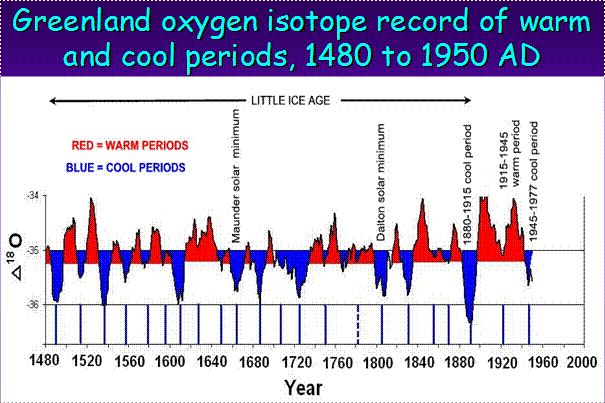
Alternating periods of warm and cooler weather have been with us as far back as our climate records go. Some of the past cooler periods have been more severe than others, like the Sporer, Maunder and Dalton Minimums. Professor Don Easterbrook has documented some 20 such cool periods over the last 500 years

Figure 1

graphic: Don Easterbrook

3. Taking just the main ocean cycles, the AMO is a 66 year cycle.

AMO peaks occurred on May 1878 and November 1944. The next peak is forecasted to occur in April 2011. The last trough occurred in January 1978, and the next trough is expected to occur in June 2044. As we see here, the length of a complete cycle is about 66.5 years.

The AMO went positive in 1994 and actually peaked in July 2010 and is now on its way down. It should go negative sometime in 2015 and remain negative till about 2048.

4. The Pacific Decadal Oscillation (PDO) has a shorter cycle of about 60 years.

graphic: digitaldiatribes.files.wordpress.com

The PDO cycle is not quite as long as AMO. Because the periods differ, their peaks and troughs will vary relative to each other. This has an interesting long-term result in terms of warming and cooling. The PDO had a peak in the function in October 1929 (about 15 years prior to AMO). The next peak occurred May 1990 (about 21 years prior to the anticipated AMO peak). The period here is about 60.5 years.

PDO has gone negative since September 2007  and will remain in negative territory probably for the next 30 years. For about 2 decades the PDO and the AMO will both be negative (but as can be seen above the amplitude of the short term variations are so large that short periods in the positive region are perfectly possible and inevitable, even while the long term average is negative or vice versa.)

5. ENSO and the efects of La Niñas and El Niños.

Returning to Matti Vooro’s article:

During negative or cool phases of PDO and AMO, there are more La Niñas than during the positive phases. This contributes to more cold winters and colder years during negative PDO. During positive or warm phases of PDO and AMO, there are significantly more El Niños. This is why there is more warming when the PDO is positive. The current negative or cool PDO and the La Niña are why we have had all the recent cold weather. The La Niña’s may have directly contributed to the Red River Flooding of 2009 and the recent flooding in Australia and Brazil.

…. The AMO is affected by ENSO cycles, especially El Ninos, so we saw a brief warming of AMO during 2010. Climate history shows that global cooling was strongest when both the PDO andAMO were both simultaneously in the negative or cool mode – like in 1964-1976 and again 1916 to 1923. The AMO cycles have been quite variable. During its last cycle it was in the negative or cool mode for 30 years (1964-1994] and its cycle seems to be related to the Meridional Overturning Circulation [MOC] and the changes in the Atlantic Thermohaline Circulation [THC]. There are a number of estimates when it will again go negative. My best estimate is about 2015 based on the most frequent past intervals of around 20 years and the cooler waters that feed the MOC from the Southern Oceans. Once it does go negative, the global temperature anomalies may drop further until about 2030, the Arctic temperature may cool further and the Arctic ice extent should increase again.

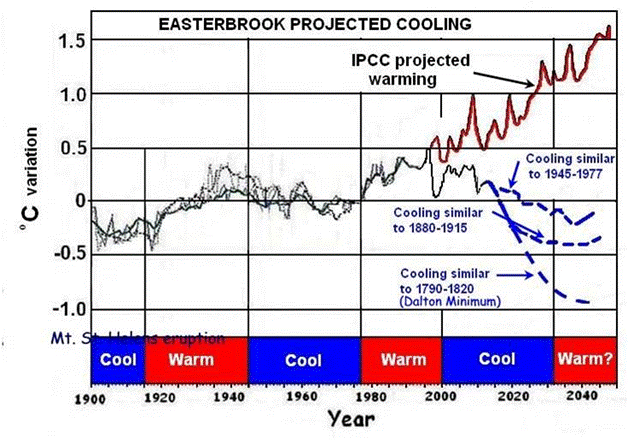
Professor Easterbrook has made a global forecast for temperature:

The IPCC projections are no longer credible but it must be borne in mind that these projections had little to do with actually bringing science to make the best forecast possible but instead were focused on poltical objectives; it seems mainly to redistribute wealth and to demonise CO2 so as to drive the carbon trading market.

That global cooling is upon us seems more and more likely and I apprehend that Easterbrooks’s lowest curve will materialise and show that the current Landscheidt minimum will be comparable to the Dalton minimum.


Since last ice age, warming and cooling have been caused by ocean currents

January 16, 2011

A new paper in Science giving ocean currents in the Atlantic their due (and without finding it necessary to appeal to tales of carbon dioxide). Perhaps the science is not so settled after all!

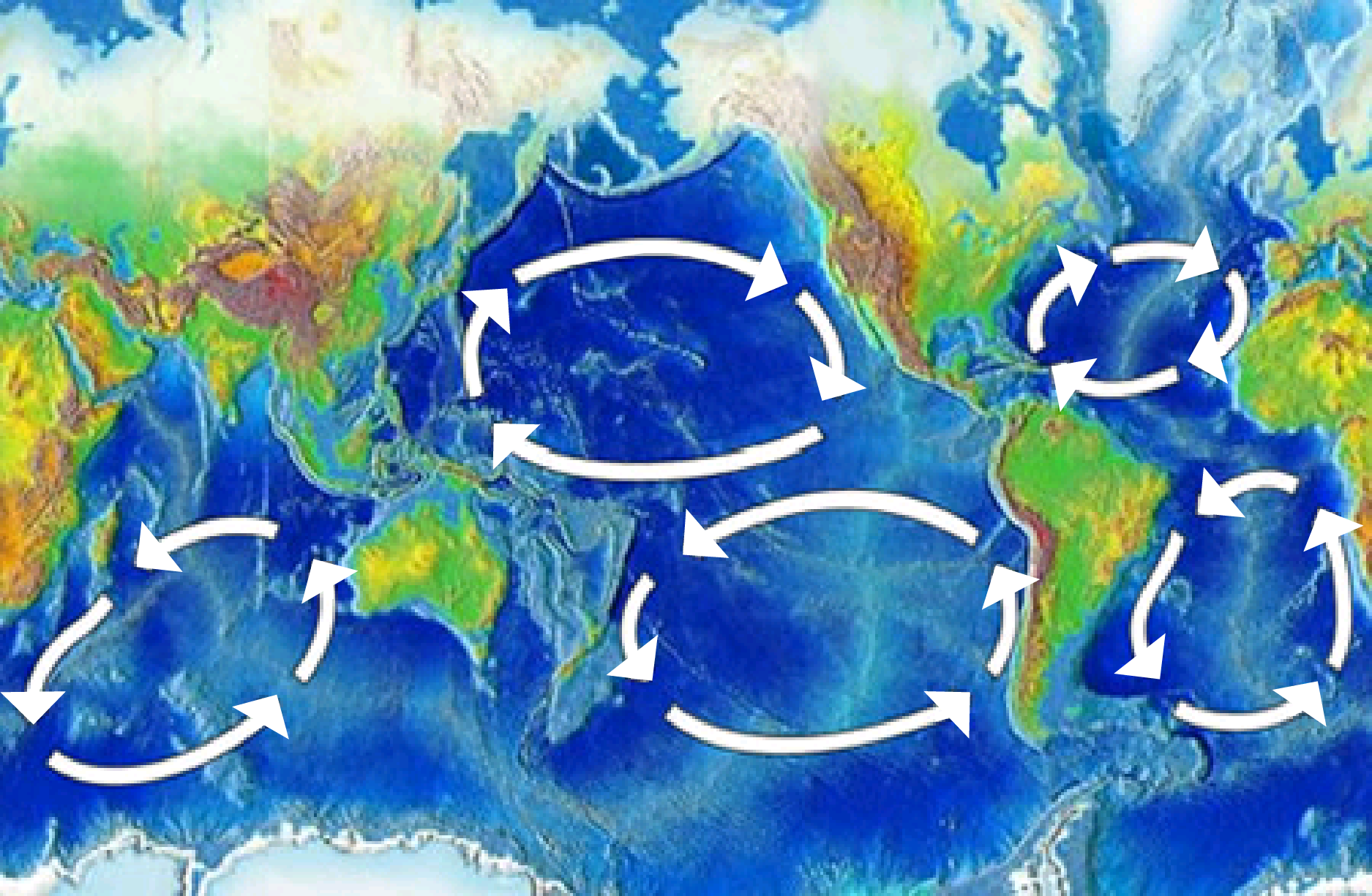
File:Oceanic gyres.png

The five major ocean-wide gyres — the North Atlantic, South Atlantic, North Pacific, South Pacific, and Indian Ocean gyres. Each is flanked by a strong and narrow “western boundary current,” and a weak and broad “eastern boundary current”: Wikimedia

The Deglacial Evolution of North Atlantic Deep Convection. by D. J. R. Thornalley, S. Barker, W. S. Broecker, H. Elderfield, I. N. McCave.  Science, 2011; 331 (6014): 202 DOI: 10.1126/science.1196812

Science Daily reports:

… Scientists have long suspected that far more severe and longer-lasting cold intervals have been caused by changes to the circulation of the warm Atlantic ocean currents themselves.

Now new research led by Cardiff University, with scientists in the UK and US, reveals that these ocean circulation changes may have been more dramatic than previously thought. The findings, published January 14, 2011 in the journal Science, show that as the last Ice Age came to an end (10,000 — 20,000 years ago) the formation of deep water in the North-East Atlantic repeatedly switched on and off. This caused the climate to warm and cool for centuries at a time.

The circulation of the world’s ocean helps to regulate the global climate. One way it does this is through the transport of heat carried by vast ocean currents, which together form the ‘Great ocean conveyor’. Key to this conveyor is the sinking of water in the North-East Atlantic, a process that causes warm tropical waters to flow northwards in order to replace the sinking water. Europe is kept warmer by this circulation, so that a strong reduction in the rate at which deep water forms can cause widespread cooling of up to 10 degrees Celsius. ….. The new results suggest that the Atlantic ocean is capable of radical changes in how it circulates on time scales as short as a few decades.

Dr Thornalley said: “These insights highlight just how dynamic and sensitive ocean circulation can be. Whilst the circulation of the modern ocean is probably much more stable than it was at the end of the last Ice Age, and therefore much less likely to undergo such dramatic changes, it is important that we keep developing our understanding of the climate system and how it responds when given a push.”

Paper Abstract:

Deepwater formation in the North Atlantic by open-ocean convection is an essential component of the overturning circulation of the Atlantic Ocean, which helps regulate global climate. We use water-column radiocarbon reconstructions to examine changes in northeast Atlantic convection since the Last Glacial Maximum. During cold intervals, we infer a reduction in open-ocean convection and an associated incursion of an extremely radiocarbon (14C)–depleted water mass, interpreted to be Antarctic Intermediate Water. Comparing the timing of deep convection changes in the northeast and northwest Atlantic, we suggest that, despite a strong control on Greenland temperature by northeast Atlantic convection, reduced open-ocean convection in both the northwest and northeast Atlantic is necessary to account for contemporaneous perturbations in atmospheric circulation.