Archive for the ‘Science’ Category
October 13, 2011
Earthquakes and volcanos in the Canary Islands cause concern because studies have shown that if they struck El Hierro or La Palma — just north of El Hierro – there is a possibility that a large part of El Hierro island would slide into the ocean and trigger a huge tsunami that could travel across the Atlantic hitting the eastern seaboard of the US in six hours.
Earlier posts are here and here.

Recent earthquake swarms on El Hierro - image: Instituto Geográfico Nacional
Underwater Volcanic Eruptions Edge Closer To El Hierro Mainland
Two new underwater volcanic eruptions have occurred off the south coast of El Hierro, the smallest and southernmost island in the Canary Islands.
Seismologists say two separate fissures have been identified less than 3.7 kilometres and 2.8 kilometres from La Restinga, a town on the southeast of the island. Authorities have detected a sulphur odour in the area while dead fish have also been spotted floating on the surface of Las Calmas Sea.
The fresh eruptions occurred 48 hours after a subsea eruption, Spain’s first since an eruption on La Palma in 1971, occurred approximately 5 kilometres from La Restinga. The town’s 570 residents were subsequently evacuated as a precautionary measure in the event of volcanic activity moving closer to the island.
The eruptions take place amidst an unprecedented earthquake swarm in El Hierro. The number of earthquakes recorded since July 17, 2011 on El Hierro has now exceeded 10,300.
Hierro, a shield volcano, has had a single historic eruption from the Volcan de Lomo Negro vent in 1793. The eruption lasted approximately one month and produced lava flows. …….
…. A Red Alert was issued by local authorities for the town of La Restinga, where local residents were evacuated from on Tuesday evening. Spanish Prime Minister José Luis Rodríguez Zapatero and cabinet colleagues later attended an emergency briefing on the developing situation.
The IGN says all three of its seismic stations on El Hierro in the Canary Islands have registered a volcanic tremor of low frequency in the south of the island at La Restinga, the southern-most village in the Canaries.
Hundreds Remain Evacuated
Roughly 600 people were evacuated Tuesday on Spain’s El Hierro Island in the Canaries due to the eruption of a nearby underwater volcano. They remained outside their homes on Wednesday as authorities feared an impending eruption. …. In a press release issued on Wednesday, the Canary Islands government said that although no specific changes have been observed since Tuesday evening, precautions remain in effect: “Among the security measures to ensure the safety of the population remains the designation by the Maritime Authority of Santa Cruz de Tenerife maritime exclusion zone which is closed to shipping, fishing, diving, sports or recreation in the area within a radius of four nautical miles from the tip of La Restinga.”
Ferry crossings to the island also remain suspended. People were, however, allowed to return to their homes on Wednesday under the protection of civil safety officials to retrieve medicines, clothing, and other necessities.
Some took to message boards on Tuesday and Wednesday claiming that a landslide in the Canary Islands could cause a mega-tsunami that would devastate the Eastern Seaboard of the United States. ……
Tags:Canary Island, El Hierro, La Palma, La Restinga, Spain, tsunamis, underwater volcanos, Volcano
Posted in Geosciences, Natural Phenomena, Science, Volcanos | 3 Comments »
October 12, 2011
It has always struck me as incredibly arrogant and amazingly stupid that the climate “scientists” have ignored the effects of the sun for 2 decades – presumably because:
- they did not understand the sun,
- doomsday scenarios were better for getting funding,
- they had such an overweening conviction about man made effects, and
- they actually believed their computer models were the greatest thing since sliced bread!
This is an exciting time for solar physics, and its role in climate. As one leading climate scientist told me last month, it’s a subject that is now no longer taboo. And about time, too.
Tags:BBC Weather, climate, climate change, global warming, Paul Hudson, solar effects on climate, Sun
Posted in Climate, Science, Solar science | 1 Comment »
October 5, 2011
Retractions of scientific papers is increasing sharply.
I am a strong believer in the Rule of the Iceberg where “whatever becomes visible is only 10% of all that exists”. And while I do not know if the number of retractions of scientific papers is increasing because detection methods are improved or because scientific misconduct is increasing, I am quite sure that the misconduct that is indicated by retractions is only a small part of all the misconduct that goes on.
What is clear however is that the world wide web provides a powerful new forum for the exercising of a check and a balance. It provides a hitherto unavailable method for mobilising resources from a wide and disparate group of individuals. The success of web sites such as Retraction Watch and Vroniplag are testimony to this. And the investigative power of the on-line community is particularly evident with Vroniplag as has been described by Prof. Debora Weber-Wulff’s blog. And this investigative power – even if made up of “amateurs” in the on-line community – can bring to bear a vast and varying experience of techniques and expertise which – if harnessed towards a particular target – can function extremely rapidly. The recent on-line investigation and disclosure that an award winning nature photographer had been photo-shopping a great number of photographs of lynxes, wolves and raccoons and had invented stories about his encounters was entirely due to “amateurs” on the Flashback Forum in Sweden who very quickly created a web site to disclose all his trangressions and exactly how he had manipulated his images.
Nature addresses the subject of retractions today:
This week, some 27,000 freshly published research articles will pour into the Web of Science, Thomson Reuters’ vast online database of scientific publications. Almost all of these papers will stay there forever, a fixed contribution to the research literature. But 200 or so will eventually be flagged with a note of alteration such as a correction. And a handful — maybe five or six — will one day receive science’s ultimate post-publication punishment: retraction, the official declaration that a paper is so flawed that it must be withdrawn from the literature. … But retraction notices are increasing rapidly. In the early 2000s, only about 30 retraction notices appeared annually. This year, the Web of Science is on track to index more than 400 (see ‘Rise of the retractions’) — even though the total number of papers published has risen by only 44% over the past decade. ….
…… When the UK-based Committee on Publication Ethics (COPE) surveyed editors’ attitudes to retraction two years ago, it found huge inconsistencies in policies and practices between journals, says Elizabeth Wager, a medical writer in Princes Risborough, UK, who is chair of COPE. That survey led to retraction guidelines that COPE published in 2009. But it’s still the case, says Wager, that “editors often have to be pushed to retract”. ……
In surveys, around 1–2% of scientists admit to having fabricated, falsified or modified data or results at least once (D. Fanelli PLoS ONE4, e5738; 2009). But over the past decade, retraction notices for published papers have increased from 0.001% of the total to only about 0.02%. And, Ioannidis says, that subset of papers is “the tip of the iceberg” — too small and fragmentary for any useful conclusions to be drawn about the overall rates of sloppiness or misconduct.
Instead, it is more probable that the growth in retractions has come from an increased awareness of research misconduct, says Steneck. That’s thanks in part to the setting up of regulatory bodies such as the US Office of Research Integrity in the Department of Health and Human Services. These ensure greater accountability for the research institutions, which, along with researchers, are responsible for detecting mistakes.
The growth also owes a lot to the emergence of software for easily detecting plagiarism and image manipulation, combined with the greater number of readers that the Internet brings to research papers. In the future, wider use of such software could cause the rate of retraction notices to dip as fast as it spiked, simply because more of the problematic papers will be screened out before they reach publication. On the other hand, editors’ newfound comfort with talking about retraction may lead to notices coming at an even greater rate. ……
Read the article
A graphic of retractions is here.
The academic and scientific community will – perforce – mirror the surrounding society it is embedded in. Standards of ethics and instances of misconduct will follow those of the surrounding environment. But the scientific community is somewhat protected in terms of not often having to bear liability for what they have published. Having to bear some responsibility and face liability for the quality of what they produce can be a force which will improve ethical standards immensely. Bringing incompetent or cheating scientists to book is not an attack on science. And it is what science needs to regain some of the reputation that has been tarnished in recent times. With the spotlight that is now available in the form of the world wide web, I expect the level of scrutiny to increase and this too can only be a force for the good.
Tags:Academic publishing, Committee on Publication Ethics, ethics, Nature, Retraction Watch, Scientific misconduct, scientific retractions, United States Office of Research Integrity
Posted in Academic misconduct, Ethics, Media, Science, scientific misconduct | Comments Off on Scientific retractions increasing sharply but is it due to better detection or increased misconduct?
October 3, 2011
Lamarckism – after the French biologist Jean-Baptiste Lamarck (1744–1829) – is the idea that an organism can pass on characteristics that it has acquired during its lifetime to its offspring (soft inheritance). Publication of Charles Darwin’s theory of natural selection, and Mendelian genetics led to the general abandonment of the Lamarckian theory of evolution in biology. Despite this abandonment, interest in Lamarckism has recently increased, as several studies in the field of epigenetics have highlighted the possible inheritance of behavioral traits acquired by the previous generation.
Hard inheritance is the passing down of the constant nucleotide sequence of DNA which only changes by rare random mutation. The very slowness of this rate of mutation – and since mutations are usually not beneficial – has been a problem in explaining the variation and diversity observed in particular species. The variations observed in modern humans and which have presumably been generated within just the last 50,000 to 100, 000 years are difficult to explain by natural selection alone especially since there have only been some 5,000 generations available for this diversity to have been established.
A mechanism has long been sought for soft inheritance where environmental influences can be brought into play. Epigenetic mechanisms leave DNA sequence unaltered but can affect DNA by preventing the expression of genes.
A new paper in Science provides some further evidence that the epigenome may well be the hereditary “carrier” of environmental effects but may also cause much more rapid change than genetic mutations.
Science Daily: A “hidden” code linked to the DNA of plants allows them to develop and pass down new biological traits far more rapidly than previously thought, according to the findings of a groundbreaking study by researchers at the Salk Institute for Biological Studies. The study, published September 16 in the journal Science, provides the first evidence that an organism’s “epigenetic” code — an extra layer of biochemical instructions in DNA — can evolve more quickly than the genetic code and can strongly influence biological traits. ……..
…. Now that they have shown the extent to which spontaneous epigenetic mutations occur, the Salk researchers plan to unravel the biochemical mechanisms that allow these changes to arise and get passed from one generation to the next.
They also hope to explore how different environmental conditions, such as differences in temperature, might drive epigenetic change in the plants, or, conversely, whether epigenetic traits provide the plants with more flexibility in coping with environmental change.
“We think these epigenetic events might silence genes when they aren’t needed, then turned them back on when external conditions warrant,” Ecker said. “We won’t know how important these epimutations are until we measure the effect on plant traits, and we’re just now to the point where we can do these experiments. It’s very exciting.”
Read Article
R. J. Schmitz, M. D. Schultz, M. G. Lewsey, R. C. O’Malley, M. A. Urich, O. Libiger, N. J. Schork, J. R. Ecker.Transgenerational Epigenetic Instability Is a Source of Novel Methylation Variants. Science, 2011; DOI:10.1126/science.1212959
Tags:Charles Darwin, DNA, epigenetic, epigenome, Jean-Baptiste Lamarck, Lamarckism, Mendelian inheritance
Posted in Evolution, Science | Comments Off on Acquired, hereditary epignetic codes could evolve faster than genetic mutations
October 3, 2011
The 2011 Nobel Prize in Physiology or Medicine was awarded today and the 3 winners are in the field of immunology.
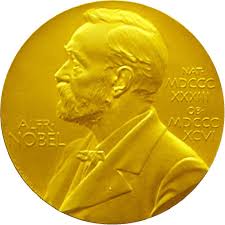
The prize was divided, one half jointly to Bruce A. Beutler and Jules A. Hoffmann “for their discoveries concerning the activation of innate immunity” and the other half to Ralph M. Steinman “for his discovery of the dendritic cell and its role in adaptive immunity“.
The Thomson Reuter predictions – this time – missed the mark.
Official press release here.
Summary
This year’s Nobel Laureates have revolutionized our understanding of the immune system by discovering key principles for its activation.
Scientists have long been searching for the gatekeepers of the immune response by which man and other animals defend themselves against attack by bacteria and other microorganisms. Bruce Beutler and Jules Hoffmann discovered receptor proteins that can recognize such microorganisms and activate innate immunity, the first step in the body’s immune response. Ralph Steinman discovered the dendritic cells of the immune system and their unique capacity to activate and regulate adaptive immunity, the later stage of the immune response during which microorganisms are cleared from the body.
The discoveries of the three Nobel Laureates have revealed how the innate and adaptive phases of the immune response are activated and thereby provided novel insights into disease mechanisms. Their work has opened up new avenues for the development of prevention and therapy against infections, cancer, and inflammatory diseases.
Tags:Bruce Beutler, Jules A. Hoffmann, Nobel prize, Nobel Prize in Physiology or Medicine, Ralph M. Steinman
Posted in Medicine, Nobel Prize, Science, Sweden | 3 Comments »
October 3, 2011
UPDATE!
The Literature Nobel will be announced on Thursday 6th October.
Starting today with the prize for physiology or medicine the Nobel prize winners for 2011 will be announced over the next 10 days.

The schedule for the announcements is:
- October 3rd: Physiology or medicine
- October 4th: Physics
- October 5th: Chemistry
??October 13th?? October 6th : Literature (According to tradition, the Swedish Academy has not yet set the date for its announcement of the Nobel Prize in Literature)- October 7th: Peace
- October 10th: Economic sciences (Sveriges Riksbank Prize in Economic Sciences in Memory of Alfred Nobel
- Robert L. Coffman Vice President and Chief Scientific Officer, Dynavax Technologies, Berkeley, CA USA
WHY: with Timothy R. Mosmann, for their discovery of two types of T lymphocytes, TH1 and TH2, and their role in regulating host immune response
- Brian J. Druker JELD-WEN Chair of Leukemia Research, and Director, OHSU Knight Cancer Institute, Oregon Health & Science University, Portland OR USA
WHY: with Nicholas B. Lydon and Charles L. Sawyers for their development of imatinib and dasatinib, revolutionary, targeted treatments for chronic myeloid leukemia
- Robert S. Langer David H. Koch Institute Professor, Department of Chemical Engineering, Massachusetts Institute of Technology, Cambridge, MA USA
WHY: with Joseph P. Vacanti, for their pioneering research in tissue engineering and regenerative medicine
- Nicholas B. Lydon Founder, Granite Biopharma, LLC, Jackson Hole, WY USA; Co-founder and Director, AnaptysBio, San Diego, CA USA; and Co-founder and Director, Blueprint Medicines, Cambridge, MA USA
WHY: with Brian J. Druker and Charles L. Sawyers for their development of imatinib and dasatinib, revolutionary, targeted treatments for chronic myeloid leukemia
- Jacques F. A. P. Miller Emeritus Professor, Walter and Eliza Hall Institute of Medical Research and the University of Melbourne, Parkville, Melbourne, Australia
WHY: for his discovery of the function of the thymus and the identification of T cells and B cells in mammalian species
- Timothy R. Mosmann Professor, Department of Microbiology and Immunology, and Michael and Angela Pichichero Director in the David H. Smith Center for Vaccine Biology and Immunology, University of Rochester Medical Center, University of Rochester, Rochester, NY USA
WHY: with Robert L. Coffman, for their discovery of two types of T lymphocytes, TH1 and TH2, and their role in regulating host immune response
- Charles L. Sawyers Marie-Josée and Henry R. Kravis Chair in Human Oncology and Pathogenesis, Memorial Sloan-Kettering Cancer Center, New York, NY USA. Also, Howard Hughes Medical Institute Investigator
WHY: with Brian J. Druker and Nicholas B. Lydon Charles L. Sawyers for their development of imatinib and dasatinib, revolutionary, targeted treatments for chronic myeloid leukemia
- Joseph P. Vacanti John Homans Professor of Surgery, Harvard Medical School; Surgeon-in-Chief and Chief of the Department of Pediatric Surgery and Director of the Laboratory for Tissue Engineering and Organ Fabrication, Massachusetts General Hospital, Boston, MA USA
WHY: with Robert S. Langer, for their pioneering research in tissue engineering and regenerative medicine
Tags:2011 Nobel prize schedule, Nobel prize 2011 predictions, Thomson Reuters Nobel predictions
Posted in Science, Sweden | 1 Comment »
September 26, 2011
I am travelling this week.
I had an interesting – if rather depressing – discussion with a fellow traveler (a patent lawyer) at the airport yesterday. The discussion turned to the manner in which science which happened to be “in fashion” became political movements and the manner in which science itself took on politically correct dimensions.
Sometimes – as with eugenics – the political movement came first and the science followed to fit the movement. In fact, his contention was that even where the science had come first, the development of a political movement would always lead to subsequent science being constrained to support the imperatives of the movement.
I brought up the caase of AGW and how an uncertain science – in my opinion – had been hijacked by a political movement such that one particular hypothesis – which has still to be proven – had become the only politically correct or allowable science. I suggested that real observations might change what was considered politically correct. Since global temperature – if such a thing can be defined – has been declining for the last decade even though carbon dioxide has been increasing, I expected that new science would have to take these real observations into account in their mathematical modelling and that the strength of the dogma would eventually decrease.
My companion however disagreed. He suggested that all political movements had to be fundamentally and economically viable to survive. If the movement was lucrative – as AGW had become – then there would be a vested interest in maintaining the science it was based on even if the facts said otherwise. This would be achieved, he argued, by the “Science” allowing or accounting for some deviations – as for example with explanations made up for why a decade or two of cooling could occur without disturbing the central thesis of the “Science”. He cited medical science and examples of purported treatments which were continued for long periods after they were discredited because of the revenues that they were generating. He suggested that the chemical industry was the prime driver for the banning of some refrigerants (based on now outdated ozone depletion science) just so that they could shift production to newer refrigerants having much higher margins. Similarly he felt that the environmental benefits of switching to low energy lamps was minuscule but the lighting industry much preferred the margins and revenues generated by these to those generated by incandescent light bulbs which were suffering from intense competition.
His conclusion was that since the AGW “industry” was generating large revenues whether through carbon trading schemes or by the extraction of subsidies from taxpayer money for so-called “green” energy or “green” fuels, then the vested interest in showing that any conflicting measurements were a temporary aberration would be very strong. Since the timescales of climate change were in the order of hundreds of years, he felt that a mere 20 or 30 years of inconvenient measurements would do little to dent the momentum of a successful revenue generating “science”!!!
He made some good points. I am afraid that even 3 decades of cooling or the start of a mini-ice age will probably not suffice to dampen the ardour of the global warming enthusiast as long as the revenues from growing bio-fuels or getting subsidies for “green” energy keep rolling in. The AGW religion and its corresponding “science” will stop only if the revenues stop.
Tags:AGW, climate, climate change, environment, global warming, Little Ice Age, politically correct science
Posted in Alarmism, Business, Climate, Politics, Science | 2 Comments »
September 23, 2011
The news is packed today with reports about the CERN measurements which apparently show that some neutrinos have travelled at faster than the speed of light. Since the conclusions are crucially dependent upon a time difference of 60 nanoseconds in a total travel time of 2.43 milliseconds the conclusion may well be found to be in error.
But I hope not.
Wired News: If it’s true, it will mark the biggest discovery in physics in the past half-century: Elusive, nearly massless subatomic particles called neutrinos appear to travel just faster than light, a team of physicists in Europe reports. If so, the observation would wreck Einstein’s theory of special relativity, which demands that nothing can travel faster than light. ….
Over three years, OPERA researchers timed the roughly 16,000 neutrinos that started at CERN and registered a hit in the detector. They found that, on average, the neutrinos made the 730-kilometer, 2.43-millisecond trip roughly 60 nanoseconds faster than expected if they were traveling at light speed. “It’s a straightforward time-of-flight measurement,” says Antonio Ereditato, a physicist at the University of Bern and spokesperson for the 160-member OPERA collaboration. “We measure the distance and we measure the time, and we take the ratio to get the velocity, just as you learned to do in high school.” Ereditato says the uncertainty in the measurement is 10 nanoseconds. However, even Ereditato says it’s way too early to declare relativity wrong. “I would never say that,” he says. Rather, OPERA researchers are simply presenting a curious result that they cannot explain and asking the community to scrutinize it. “We are forced to say something,” he says. “We could not sweep it under the carpet because that would be dishonest.” The results will be presented at a seminar tomorrow at CERN.
The concept of light having a maximum speed is acceptable but that nothing can exceed this speed is somehow depressing and lacks elegance and it kills hope. It is even more confining and depressing if the universe is expanding. It “settles” science when science needs to be unsettled.
For the sake of wonder and discovery and challenge I hope that the measurements are correct and that some part of Einsteinian physics is turned on its head and that the dream of FTL travel remains alive.
“Make it so” – Star Trek
The Guardian: Faster than light particles found, claim scientists
Wall Street Journal: Roll over Einstein: Law of physics challenged
Tags:Albert Einstein, CERN, Faster-than-light, Neutrino, OPERA experiment, Special relativity, Star Trek
Posted in Future Transport, Physics, Science | 1 Comment »
September 21, 2011
In August I wrote:
Sometime soon the world’s population will exceed 7 billion. No one knows exactly when. According to the UN Population Reference Bureau, this will happen on 31st October in India or in China. The world’s 6 billionth living person was “suppposedly” born just 11 years ago in Bosnia, and world population is expected to reach 9 billion by 2050. …
But I am no Malthusian and have a strong belief that the catastrophe theories are fundamentally misguided. Peak gas will never happen. Peak oil is a long way away and will be mitigated by new ways of creating oil substitutes as oil price increases. All the dismal forecasts of food production not being able to cope with population have not transpired. …..
Today Matt Ridley, author of The Rational Optimist, has an excellent piece on his blog which is also published in the Ottawa Citizen:
…… Clearly it is possible at least for a while to escape the fate forecast by Robert Malthus, the pessimistic mathematical cleric, in 1798. We’ve been proving Malthus wrong for more than 200 years. And now the population explosion is fading. Fertility rates are falling all over the world: in Bangladesh down from 6.8 children per woman in 1955 to 2.7 today; China – 5.6 to 1.7; Iran – 7 to 1.7; Nigeria – 6.5 to 5.2; Brazil 6.1 to 1.8; Yemen – 8.3 to 5.1.
The rate of growth of world population has halved since the 1960s; the absolute number added to the population each year has been falling for more than 20 years. According to the United Nations, population will probably cease growing altogether by 2070. This miraculous collapse of fertility has not been caused by Malthusian misery, or coercion (except in China), but by the very opposite: enrichment, urbanization, female emancipation, education and above all the defeat of child mortality – which means that women start to plan families rather than continue breeding. ……
Already huge swaths of the world are being released from farming and reforested. New England is now 80 per cent woodland, where it was once 70 per cent farm land. Italy and England have more woodland than for many centuries. Moose, coyotes, beavers and bears are back in places where they have not been for centuries. France has a wolf problem; Scotland a deer problem. It is the poor countries, not the affluent ones, that are losing forest. Haiti, with its near total dependence on renewable power (wood), is 98-percent deforested and counting.
Read the entire article.
Tags:doomsday postponed, Matt Ridley, Population growth, Population Reference Bureau, Thomas Robert Malthus, World population
Posted in Alarmism, Demographics, Energy, Food, Science | 1 Comment »
September 21, 2011
During daytime clouds shadow the earth from the sun’s radiation and have a cooling effect while at night they act as a blanket and decrease the radiation away from earth into space. For anybody who has desperately sought the shade on a warm day or has observed the absence of frost after a cloudy night, this might seem a pretty obvious and a rather trivial statement.
The alarmists’ view of global warming assumes that the net effect of clouds is to warm the earth’s climate and that it is one of the “positive feedbacks” for warming. But a new paper in September’s Meteorological Applications severely undermines these assumptions by showing that this feedback is strongly negative. To put the magnitude of this cooling effect into perspective, the net cooling effect of clouds is put at -21W/sq.m while the much-touted effect of a doubling of carbon dioxide concentration in the atmosphere is supposed to be only +1.2W/sq.m.
When this is coupled to the recent support for Svensmark’s hypothesis on solar effects for cloud formation from the CERN cloud experiment, and the lack of warming over the last decade while carbon dioxide has been increasing, it only emphasises that:
- the science of how climate varies is a long way from being settled, and
- the magnitude of carbon dioxide effects on climate are extremely small, and
- the effect of man-made emissions on the atmospheric concentration of carbon dioxide is miniscule
Whether directly by incoming radiation or indirectly by the formation of clouds or through the transport of heat by the oceans and the winds, it is the sun which is the predominant forcing. Climate models which ignore solar effects and do not have the sun at their centre are fatally flawed.
Allan, R. (2011) Combining satellite data and models to estimate cloud radiative effect at the surface and in the atmosphere, Meteorological Applications, 18 (3). pp. 324-333, ISSN 1469-8080, DOI: 10.1002/met.285
Abstract: Satellite measurements and numerical forecast model reanalysis data are used to compute an updated estimate of the cloud radiative effect on the global multi-annual mean radiative energy budget of the atmosphere and surface. The cloud radiative cooling effect through reflection of short wave radiation dominates over the long wave heating effect, resulting in a net cooling of the climate system of − 21 Wm−2. The short wave radiative effect of cloud is primarily manifest as a reduction in the solar radiation absorbed at the surface of − 53 Wm−2. Clouds impact long wave radiation by heating the moist tropical atmosphere (up to around 40 Wm−2 for global annual means) while enhancing the radiative cooling of the atmosphere over other regions, in particular higher latitudes and sub-tropical marine stratocumulus regimes. While clouds act to cool the climate system during the daytime, the cloud greenhouse effect heats the climate system at night. The influence of cloud radiative effect on determining cloud feedbacks and changes in the water cycle are discussed.
Tags:Allan, CERN, climate, climate change, clouds, cooling effect of clouds, global warming, Henrik Svensmark, solar effects on climate
Posted in Climate, Natural Phenomena, Science | Comments Off on Net effect of clouds on climate is strongly cooling and not of warming

 The k2p blog