The Power of forgiveness
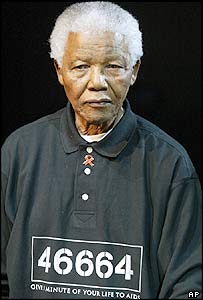
Nelson Madela image BBC
Nelson Madela image BBC
It’s only arithmetic!
The NSA has much room for improvement and probably needs to increase its budget by a factor of 10.
Number of records available to be spied on = 6 billion x 22 /2 = 66 billion.
Five billion records may seem like a big number but it is not as comprehensive as one would expect to see from anybody aspiring to be “Big Brother”. The NSA records only 7.58% of the world’s mobile communications.
If the NSA (and Obama) truly aspire to being the “Big Brother” of this Brave New World, they are going to have to step up their game. They need to increase their surveillance of mobile communications by at least a factor of 10. Moreover they need to start recording more of the content and not just the location of these devices.
Clearly the NSA needs a budget of about $500 billion per year just to come close to this goal!
After developing techniques for extracting and analysing DNA from ancient (c. 40,000 years ago) Neanderthal and Denisovan specimens the Max Planck team have now taken a giant leap backwards in time in extracting and analysing an almost complete mitochondrial genome sequence of a 400,000-year-hominin. The specimen is from Sima de los Huesos, a unique cave site in Northern Spain. The results show that it is related to the mitochondrial genome of Denisovans, extinct relatives of Neandertals in Asia. DNA this old has until recently been retrieved only from the permafrost.

The Sima de los Huesos hominins lived approximately 400,000 years ago during the Middle Pleistocene. © Kennis & Kennis, Madrid Scientific Films
The result itself is of great interest but it is the development of the techniques for extracting and analysing – without any contamination – and with sufficient confidence, the entire MtDNA sequence in such old specimens that is quite revolutionary. Archaeological evidence – and particularly of of such age – is subject to a great deal of subjective interpretation. But dating techniques and now DNA extraction techniques are removing much of this subjectivity and they are now providing the anchor points around which the evolutionary narrative must be built. And this narrative is now of a much more complex story of hominin expansions and admixture than has generally been thought. Ancient and presumed extinct hominin species are now showing themselves within us.
“Our results show that we can now study DNA from human ancestors that are hundreds of thousands of years old. This opens prospects to study the genes of the ancestors of Neandertals and Denisovans. It is tremendously exciting” says Svante Pääbo, director at the Max Planck Institute for Evolutionary Anthropology.
Matthias Meyer, Qiaomei Fu, Ayinuer Aximu-Petri, Isabelle Glocke, Birgit Nickel, Juan-Luis Arsuaga, Ignacio Martínez, Ana Gracia, José María Bermúdez de Castro, Eudald Carbonell, Svante Pääbo. A mitochondrial genome sequence of a hominin from Sima de los Huesos. Nature, 2013; DOI: 10.1038/nature12788
Read the whole post in 6,000 Generations
The “success” of a species is generally taken to be indicated by its population though it is of course possible to have quantity without much quality of life. In general however, an increasing population of any species does indicate the sufficiency of food, the ability of the species to withstand competition from other species and the ability to breed successfully in the prevailing conditions. And so it is for humans. Based on population, modern humans have never been as successful as they currently are. And in spite of all the doom-sayers and the alarmists, the fact remains that more humans are being fed and housed and are achieving some large part of their aspirations than ever before. They are living longer than ever before and their life expectancy is still increasing – currently by about 2 -3 months every year.
However just looking at the crude birth rate (number of births per 1000 of population) might lead one to a conclusion that there was a catastrophic decline in the human species.

Crude Birth Rate / 1000 of population
Birth rates have declined from about 37/1000 in 1950 to less than 15/1000 now and are projected to be around 10/1000 by 2100. For any other species that would be a catastrophic decline. But of course that conclusion would be quite wrong when applied to humans. The mortality rate of humans has also declined drastically as medical and public health advances have been made. And human ingenuity has maintained food and material supplies such that life expectancy has increased in spite of a booming population.

Birth and mortality rates
The fact that population and life expectancy have increased simultaneously is a clear indicator that the quality of life has not deteriorated. There may be problems of equitable distribution but there is no shortage of food or other resources – and no prospect of any catastrophic shortages occurring. All other indicators tell the same story. Infant mortality, poverty and malnourishment are all at all-time lows and declining even if these can be lower still. The real GDP per capita is increasing. Leisure time (time not spent on the requirements for survival) is increasing and for more people than ever before. The age of space exploration and the potential for access to new sources of raw materials and even real estate has already begun.
There are many who rail against the consumer society and materialism but generally do so from a position of some comfort. There are others who moan the loss of spirituality and yearn for a return to a simpler life but they too are not quite ready to return to the trees. There is no shortage of doom-mongers and alarmists who merely keep pushing their doomsdays into the future where they cannot be disproved.
It is a question of attitude. There are those who would prefer to be governed by fear (the precautionary principle) and there are others who would move forward in spite of their fears.
But the reality is that the human species – with all its warts and threats and self-inflicted problems – is thriving.

Population and life expectancy WPP2012
It is not a forecast or an objective but merely the inexorable arithmetic of demographics which leads to the inevitability of 10:10:10:100 around the year 2100.
10 billion population, 10 births per 1000 of population, 10 deaths per 1000 of population and a life expectancy at birth of 100 years.
I prefer to see the glass half-full rather than the glass half-empty.
I tend towards considering mathematics a language rather than a science. In fact mathematics is more like a family of languages each with a rigorous grammar. I like this quote:
R. L. E. Schwarzenberger, The Language of Geometry, in A Mathematical Spectrum Miscellany, Applied Probability Trust, 2000, p. 112:
My own attitude, which I share with many of my colleagues, is simply that mathematics is a language. Like English, or Latin, or Chinese, there are certain concepts for which mathematics is particularly well suited: it would be as foolish to attempt to write a love poem in the language of mathematics as to prove the Fundamental Theorem of Algebra using the English language.
Just as conventional languages enable culture and provide a tool for social communication, the various languages of mathematics, I think, enable science and provide a tool for scientific discourse. I take “science” here to be analaogous to a “culture”. To follow that thought then, just as science is embedded within a “larger” culture, so is mathematics embedded within conventional languages. This embedding shows up as the ability of a language to deal with numeracy and numerical concepts.
And that means then the value judgement of what is “primitive” when applied to language can depend upon the extent to which mathematics and therefore numeracy is embedded within that language.
GeoCurrents examines numeracy embedded within languages:
According to a recent article by Mike Vuolo in Slate.com, Pirahã is among “only a few documented cases” of languages that almost completely lack of numbers. Dan Everett, a renowned expert in the Pirahã language, further claims that the lack of numeracy is just one of many linguistic deficiencies of this language, which he relates to gaps in the Pirahã culture. …..
The various types of number systems are considered in the WALS.info article on Numeral Bases, written by Bernard Comrie. Of the 196 languages in the sample, 88% can handle an infinite set of numerals. To do so, languages use some arithmetic base to construct numeral expressions. According to Comrie, “we live in a decimal world”: two thirds of the world’s languages use base 10 and such languages are spoken “in nearly every part of the world”. English, Russian, and Mandarin are three examples of such languages. …..
Around 20% of the world’s languages use either purely vigesimal (or base 20) or a hybrid vigesimal-decimal system. In a purely vigesimal system, the base is consistently 20, yielding the general formula for constructing numerals as x20 + y. For example, in Diola-Fogny, a Niger-Congo language spoken in Senegal, 51 is expressed as bukan ku-gaba di uɲɛn di b-əkɔn ‘two twenties and eleven’. Other languages with a purely vigesimal system include Arawak spoken in Suriname, Chukchi spoken in the Russian Far East, Yimas in Papua New Guinea, and Tamang in Nepal. In a hybrid vigesimal-decimal system, numbers up to 99 use base 20, but the system then shifts to being decimal for the expression of the hundreds, so that one ends up with expressions of the type x100 + y20 + z. A good example of such a system is Basque, where 256 is expressed as berr-eun eta berr-ogei-ta-hama-sei ‘two hundred and two-twenty-and-ten-six’. Other hybrid vigesimal-decimal systems are found in Abkhaz in the Caucasus, Burushaski in northern Pakistan, Fulfulde in West Africa, Jakaltek in Guatemala, and Greenlandic. In a few mostly decimal languages, moreover, a small proportion of the overall numerical system is vigesimal. In French, for example, numerals in the range 80-99 have a vigesimal structure: 97 is thus expressed as quatre-vingt-dix-sept ‘four-twenty-ten-seven’. Only five languages in the WALS sample use a base that is neither 10 nor 20. For instance, Ekari, a Trans-New Guinean language spoken in Indonesian Papua uses base of 60, as did the ancient Near Eastern language Sumerian, which has bequeathed to us our system of counting seconds and minutes. Besides Ekari, non-10-non-20-base languages include Embera Chami in Colombia, Ngiti in Democratic Republic of Congo, Supyire in Mali, and Tommo So in Mali. ……
Going back to the various types of counting, some languages use a restricted system that does not effectively go above around 20, and some languages are even more limited, as is the case in Pirahã. The WALS sample contains 20 such languages, all but one of which are spoken in either Australia, highland New Guinea, or Amazonia. The one such language found outside these areas is !Xóõ, a Khoisan language spoken in Botswana. …….
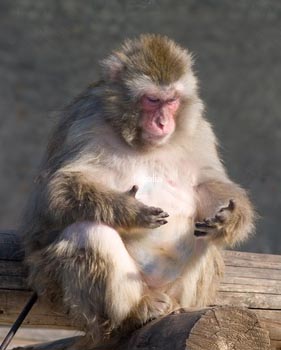
Counting monkey?
In some societies in the ancient past, numeracy did not contribute significantly to survival as probably with isolated tribes like the Pirahã. But in most human societies, numeracy was of significant benefit especially for cooperation between different bands of humans. I suspect that it was the need for social cooperation which fed the need for communication within a tribe and among tribes, which in turn was the spur to the development of language, perhaps over 100,000 years ago. What instigated the need to count is in the realm of speculation. The need for a calendar would only have developed with the development of agriculture. But the need for counting herds probably came earlier in a semi-nomadic phase. Even earlier than that would have come the need to trade with other hunter gatherer groups and that probably gave rise to counting 50,000 years ago or even earlier. The tribes who learned to trade and developed the ability and concepts of trading were probably the tribes that had the best prospects of surviving while moving from one territory to another. It could be that the ability to trade was an indicator of how far a group could move.
And so I am inclined to think that numeracy in language became a critical factor which 30,000 to 50,000 years ago determined the groups which survived and prospered. It may well be that it is these tribes which developed numbers, and learned to count, and learned to trade that eventually populated most of the globe. It may be a little far-fetched but not impossible that numeracy in language may have been one of the features distinguishing Anatomically Modern Humans from Neanderthals. Even though the Neanderthals had larger brains and that we are all Neanderthals to some extent!
It is only a matter of time. As I get older it gets easier to drive. As it is, I already rely heavily on the car’s sensors and cameras when parking or reversing and especially at night. For parking in tight spots and getting as close to a wall as possible the proximity sensors work exceedingly well. And I miss them badly in very cold icy weather when my sensors are iced over. In 2017, 100 self-driving (autonomous) cars will be let loose on selected highways around Gothenburg with ordinary individuals as a test driver .
And it will not be long before the cars talk to each other.
Swedish Radio: (free translation)
Claes Tingvall, the Swedish Transport Administration’s Traffic Safety Director says that self-driving cars cars are a prerequisite to achieving the “zero vision” of no fatalities due to traffic accidents. “One should be very careful with the word paradigm shift but for once, I think, it applies in the case of self-driving cars. If you look a little more into the long run, this is really like a fundamental solution to the problem of safety in a traffic system”, he says. To the question if this is what is needed to finally achieve zero fatalities he says, “Yes it is. And we are getting there”.
Self-driving cars thanks to cameras , GPS and various sensors detect the environment around the car . Therefore they can, all by themselves, can get around in traffic, so that the man behind the wheel can indulge in other things – read a book, for example. These robotic cars can virtually eliminate traffic accidents because computers are better at driving than humans and do not take unnecessary risks. “It is a fact that a machine, in most situations, is better able to deal with driving than a human”, says Claes Tingvall. “It will also be quite a careful driver. It is not going to take the risks that we as individuals are sometimes inclined to take. It will not be racing at 150 km/h at night with a drunken operator behind the wheel”.
Volvo’s autonomous car technology
Automakers around the world are right now intensively researching self-driving cars. Among others Japanese Nissan has announced its intention of having self-driving models on the roads before 2020. Now Volvo has also joined the party.
The project, called “Drive Me” kicks off next year, and is a collaboration between Volvo, the Swedish Transport Administration, the Swedish Transport Authority , the City of Gothenburg and Lindholmen science park . In 2017, 100 self-driving cars will be let loose on selected highways around Gothenburg with ordinary individuals as a test driver .
“That’s what this kind of self- driving car provides, where it works with and supports the driver. It has its ears and eyes open and can intervene in situations when necessary. The effects will be enormous”, says Claes Tingvall.
UPDATE!! 1st December 2013 2030 GMT
Xinhua: The probe’s carrier, an enhanced Long March-3B rocket, blasted off from the Xichang Satellite Launch Center in southwest China at 1:30 a.m. Chang’e-3 is expected to land on the moon in mid-December to become China’s first spacecraft to soft land on the surface of an extraterrestrial body.
It is also the first moon lander launched in the 21st century. The probe entered the earth-moon transfer orbit as scheduled, with a perigee of 200 kilometers and apogee of 380,000 kilometers. “The probe has already entered the designated orbit,” said Zhang Zhenzhong, director of the launch center in Xichang. “I now announce the launch was successful.”
========================
Various Xinhua reports
China will launch the Chang’e-3 lunar probe to the moon at 1:30 a.m. Monday from Xichang Satellite Launch Center, The Chang’e-3 programme encompasses a lander and a moon rover called “Yutu” (Jade Rabbit). The Chang’e-3 mission is the second phase of China’s lunar program, which includes orbiting, landing and returning to Earth. It follows the success of the Chang’e-1 and Chang’e-2 missions in 2007 and 2010.
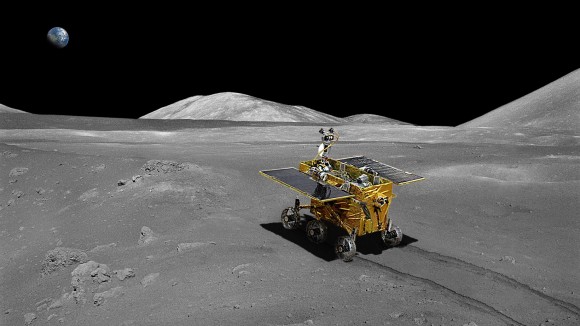
Artist’s conception of the Chinese moon rover, called Yutu. Credit: CNSA
The probe will be launched to orbit aboard an enhanced Long March-3B carrier which is more than three meters in diameter and 56.4 meters high. The mission will be the 25th launch of the Long March-3B, which is the most powerful launch vehicle in the Long March fleet.
After entering lunar orbit, Chang’e-3 will go through six stages of deceleration to descend from 15 km above to the lunar surface. The soft-landing processes of the U.S. and former Soviet Union’s unmanned spacecraft had no capacity to hover or avoid obstacles. Chang’e-3, on the other hand, can accurately survey landforms at the landing site and identify the safest spots on which to land.
In order to land quickly, the probe is equipped with high-precision, fast-response sensors to analyze its motion and surroundings. The variable thrust engine (completely designed and made by Chinese scientists) can generate up to 7,500 newtons of thrust.
But the real story I like of Chang’e and her Hou Yi and the reincarnation of Hou Yi as a Jade Bunny is this one from Over A Cuppa Tea. A Jade Bunny is much more evocative than a Jade Rabbit. Chang Er is perhaps a better phonetic rendition of Chang’e.
Once upon a time, there live two immortals in the Heaven, they are Hou Yi and Chang Er. Hou yi and Chang Er were lovers who goes through great obstacle before their love is approved by the Heaven.
The Heaven was ruled by the Jade Emperor and his Empress. One day, ten sons of Jade emperor accidentally transformed into the sun, and revolves around the earth playfully, causing great drought and suffering to the mortals below.
Worried and concern for the mortals, the Jade emperor summons the imperial archer, Hou Yi to help him solve the problem. Hou Yi then went to Earth and shot down nine of the Jade Emperor’s sons. The emperor had thought that Hou Yi would not harm any of his sons. Now that his sons are dead, the emperor was very furious. In anger, the emperor took away Hou Yi and his wife’s immortality and condemn them to live on Earth forever.

Chang*e and her jade bunny on the moon
Chang Er was grief stricken with her loss of immortality. Hou Yi could not bear to see his saddened wife, and so, he decided to steal the immortality pill from the heavenly medicine manufacturer so that both of their immortality could be restored. He manage to steal the pill from heaven, and brought it to Chang Er. He told her that they only need to take half of the pills to regain immortality.
In the meantime, the Jade Emperor found out about the stolen immortality pill, and command an imperial guard to retrieve the pills and catch both Hou Yi and Chang Er so that he could punish them for their misdeed.
And so, the imperial guard went down to earth in pursuit of the couple and the pill of immortality. But the guard himself was tempted by the idea of immortality. So he waited until Hou Yi is not at home, and attacked Chang Er who is defenseless at home. He demanded for the pill but Chang Er refused to hand it to him. Hou Yi, who seems to forget his arrows went back home to get it and discovered that his wife is in danger. He fought the imperial guard courageously.
Unfortunately, Hou Yi is an archer, not a fighter. He was stabbed right in his heart in front of Chang Er. Chang Er was grief stricken, and wishes to die with her husband too. However, Hou Yi’s dying wish was for Chang Er to regain her immortality and live happily for all eternity.
So, Chang Er took out the pill from her sleeves and swallowed the whole pill so that the guard would not be able to get it and obtain immortality. Right after swallowing the pill, Chang Er started to float towards the sky, and after flying for some time, she landed on the moon. She cried and grieve for her husband’s death.
Her cries was heard by a group of Jade Bunnies that lives on the moon. They went to her and listened to her story. These Jade Bunnies were captivated by Chang Er’s beauty and kindness towards them, so they built a palace for her to stay, knowing that she could never return to Heaven or Earth. They hailed her as their goddess and pledge allegiance to her. These bunnies can be seen pounding on the face of the moon on some cooking utensil.
It is believed that these Jade Bunnies are trying to make resurrection pills so that they could revive their Goddess’s love. It’s said that the resurrection pills is shaped like a mooncake. But it’s not dictate anywhere on whether Hou Yi was revived or not, but in many folklore, it’s told that Chang Er would bestow blessing of love and happiness to lovers who pray hard and sincere enough to the moon during mid-autumn.
According to my husband, however, there’s only one Jade Bunny on the moon, and it’s actually the reincarnation of Chang Er’s husband. He told me that the Jade Empress took pity on the couple, and so reincarnate Hou Yi as a Jade Bunny so that Chang Er will not be lonely on the moon. That explains why Chang Er can always be seen with a bunny everywhere she goes on the moon.
UPDATE!!
Trans-Mars injection has been completed successfully.
- Trans Mars Injection (TMI) operations completed successfully. The liquid engine burn time was 1328.89 sec and the imparted incremental velocity was 647.96 m/sec.
- Trans Mars Injection (TMI) operation began at 00:49 hrs (IST) on Sunday Dec 01, 2013.
- Forward rotation of spacecraft, to put it into the right orientation to perform Trans Mars Injection (TMI) operation has been completed successfully at 00:30 hrs IST on Dec 1, 2013
=================
A big night for ISRO and congratulations are due! And not least for ISRO’s coverage of the event – almost live – on their Facebook page. (I have not been too enamoured of the ISRO website but somebody did a great job on the live updates).
The Indian Mars Orbiter (Mangalyaan) successfully completed its final burn in earth orbit and has been inserted into a Trans Mars Trajectory (to be confirmed). It may just be one small step in Man’s exploration of space but it is a giant leap for ISRO. After spending a month in 6-ever increasing orbits around Earth the craft now has a 300 day journey to get to Mars with the possibility of 3 mid-course corrections before the liquid engine has to be fired up again to enter into orbit around Mars.
So far, so good!
A number of “firsts” for the Indian Space Research Organisation (ISRO) and, no matter what may now happen, a great many accomplishments already in the bag. The lack of a sufficiently powerful rocket necessitated that the craft first enter earth orbit and then the month-long, laborious compared to NASA, procedures where the space craft engine had to be used to first to increase the earth orbits and then – tonight – be fired for an extended time (23 minutes) to be inserted into a heliocentric Trans Mars Trajectory.

Mission Operations Complex ISTRAC Bangalore.

One hour before the final engine firing the craft was put under the control of its on-board computer which was to carry out the final burn. Forward rotation of the spacecraft to put it into the right orientation for the burn was carried out and completed about 20 minutes before firing. Engine firing started on schedule just before the craft reached perigee. The actual burn of the 440 N Liquid Engine lasted its planned 23 minute long firing entirely under local on-board computer control. The objective was to impart an incremental velocity of 648 m/s and the indications are that that was achieved. The engine firing manoeuver seems to have gone exactly to plan. The orbit determination team have now to confirm now confirmed the trajectory actually achieved.
The new heliocentric orbit is yet to be confirmed. confirmed
The ISRO chorus (with apologies to Walt Disney)
Heigh-ho, ISRO
It’s off to Mars we go
We keep on working all day long
Heigh-ho, ISRO

Liquid Engine propels MOM into Mars Transfer Trajectory and India into interplanetary space !Trans-Mars injection has been completed successfully. ISRO
Perception can be reality. And fake “likes” are being used to generate fake perceptions of popularity and goodness. Whether humans are dumb enough to be taken in by fake perceptions and whether perceptions can be converted into real voters and customers remains to be seen.
The assumption within the public relations and advertising industry is that buying “likes” on social media actually leads to some advantage for the person/thing/company being liked. Clearly some companies perceive “likes” as being an effective – if unproven -advertising form. There seems to be no shortage of people offering ways of buying and boosting “likes”. Offers are readily available to arrange “2000 Facebook likes for only $17, or 5000 for $35 or 100,000 for $500”. Carlo De Micheli and Andrea Stroppa have been looking at Twitter and the underground market

De Micheli and Stroppa
We estimated fake accounts make up for 4% of Twitter’s user base
Does this make sense?
- Facebook makes it harder to create fake accounts yet openly declares: “As of June 30, 2012, we estimate user-misclassified accounts may have represented approximately 2.4% of our worldwide MAUs and undesirable accounts may have represented approximately 1.5% of our worldwide MAUs.
- Every account can follow up to 2000 people.
- By statistically excluding overlapping fake accounts, just on the 12 main marketplaces (Fiverr, SeoClerks, InterTwitter, FanMeNow, LikedSocial, SocialPresence, SocializeUk, ViralMediaBoost), it turns out there are around 20M fake followers on sale right now.
- Followers are sold at an average price of $18/1000 followers (barracudalabs).
- Sellers can make between $2 and $36 per fake account
- Multiplying it out definitely shows a multi-million-dollar market
Apart from entertainment figures wanting to boost their apparent popularity, the buying of “likes” has now become a routine matter for politicians facing elections. They are relying on the herd mentality to lead to an increase of votes in their favour. The risk they take is that humans – when acting as a mob or a herd – don’t like acknowledging or being accused of acting like dumb animals. But the risk of this backlash is being taken as being small. Politicians in India are now all rushing to buy “likes” – as just another legitimate advertising ploy. They have been paying for favourable articles about themselves and negative articles about their opponents in the print media for many years. But even the most socially illiterate politicians – who wouldn’t know a tweet from a twit – are spending a great deal of money to be able to show huge numbers of “likes”!
What part fake likes and dislikes are going to have in the Delhi elections next week and the national elections next year, remains to be seen. It could be quite effective in a city like Delhi where the penetration of social media among the new urban population is high but among whom political awareness is still relatively new.
FirstPost: In a new sting operation, Cobrapost has revealed how certain IT companies in India are working to manipulate social media campaigns by buying fake FB likes and followers on Twitter, and running negative campaigns against rivals of their clients and also engaging in creating panic among minority groups. The report states that the most of these companies are working on the behest of BJP and Modi, but also work for Congress sometimes, and in addition manage campaigns for multinational firms, corporations etc as well. ……. In a statement to Firstpost, Facebook said that where fake likes and profiles are concerned, “It’s a violation of our policies to use a fake name or operate under a false identity, and we encourage people to report anyone they think is doing this.
Cobrapost: Operation Blue Virus also makes certain stunning revelations. If the claims of the companies exposed are to be believed, among political parties, BJP is at the forefront in social media campaign, so is its Prime Ministerial candidate Narendra Modi, with scores of companies working overtime for him. This puts a question mark on the claims of the BJP leadership that there is a wind blowing in favour of their party and Narendra Modi. The larger-than-life-image that Team Modi has assiduously carved out for Modi over the past one decade may not be that real, rather invented, and is reminiscent of the Goebbellian propaganda, to sway the opinion of gullible public. It is no surprise then that even a milder criticism of the BJP’s star campaigner invites scathing attacks from his followers on social media, claimed to be in millions in count.
Paul Joseph Goebbels would have been in his element.

 The k2p blog