Horse fighting still allowed in China

October 29, 2013

It may be the 21st century but what passes for civilised behaviour is still in the mind.

And this – in my mind – does not pass the test.

Barbarism is alive and well.

Of course, just banning such events is not a sustainable answer. That will only come when the behaviour of humans becomes civilised – and then any ban will no longer be necessary.

People watch horses fight during a traditional local event held by the Miao ethnic minority in Rongshui county, Liuzhou, Guangxi ethnic Zhuang autonomous region, China October 26, 2013. Horse fighting is a 500-year-old custom for the Miao people.  REUTERS-Stringer

People watch horses fight during a traditional local event held by the Miao ethnic minority in Rongshui county, Liuzhou, Guangxi ethnic Zhuang autonomous region, China October 26, 2013. Horse fighting is a 500-year-old custom for the Miao people.
REUTERS/Stringer

Horse fighting has now been outlawed almost worldwide. It still thrives, however, in countries like the Philippines, Indonesia, China and South Korea.

To start the competition, two stallions are brought in. A mare in heat is then presented to them and removed. The horses who do not immediately go into battle for the mare are whipped into a fury or gunshots are fired to incite them through fear.

Countries staging horse fights defend it as a cultural tradition that has gone on for hundreds of years, and resist any attempts to ban it.  Gambling appears to be the real and primary reason for its continued existence.

Power lines, the Army and arsonist kids helped ignite some NSW bushfires

October 29, 2013

The bushfires in New South Wales  seem – after great efforts by the fire services – to be under control. No doubt some rain has helped.

Of course some of the great unwashed immediately blamed “global warming”. The self proclaimed – and now self-employed – “Climate Council” was of course leading the charge. Tony Abbott called their claims “hogwash” but he was being rather polite. The bushfires are an annual event every spring and have occurred every year for at least the last 200 years. It may well be something that has ocurred annually for over 10,000 years.

It now transpires that in addition to natural causes, many of the fires were caused by accidents (the army’s exercises and power lines) and some were caused by juvenile delinquents – some as young as 8 years old! It could be that the power lines initiated this latest outbreak.

The Climate Council is drowning in its own self-importance and is indeed replete with hogwash –  and much of that is intentional.

  1. THE Department of Defence was last night found to have caused the State Mine Blaze near Lithgow, which has so far burnt out more than 46,000ha, led to one home being destroyed and three others damaged, and narrowly avoided turning into a “mega-fire”.

    The Rural Fire Service said an investigation had found a Department of Defence training exercise last week was responsible for the fire, west of the Blue Mountains, but the department said last night that there was still no definitive evidence that defence personnel had inadvertently started the blaze.

    “The investigation has concluded the fire started as a result of exploding ordnances on the range on (last) Wednesday,” a RFS spokesman said.

  2. POLICE detained two eight-year-old boys near East Maitland on the NSW North Coast last night after they were found trying to start a fire.Officers found the boys trying to use a lighter to set fire to dried leaves and grass on vacant land near Quarry St around 6:30pm AEST. A concerned resident called police to the scene and the lighter was later found to be “inoperable”, the law enforcement agency said in a statement.

    No charges were laid because of their age.

  3. AFTER one night in custody, the 11-year-old boy accused of lighting a 5000ha Hunter Valley bushfire walked free from court yesterday, flipping the bird to media waiting outside. …. The boy pleaded not guilty in Newcastle Children’s Court to two counts of starting a bushfire and recklessly causing its spread – a charge that carries a maximum sentence of two years’ detention for minors. But conviction records from the Bureau of Crime Statistics and Records show just one offender aged under 18 has ended up in detention for the offence in the past three years. The 11-year-old accused of lighting the October 13 Heatherbrae fire allegedly started another blaze earlier that day in the nearby suburb of Raymond Terrace.
  4. Bushfire risks posed by powerline failures are in the spotlight following last week’s crisis in New South Wales, …… In the wake of the NSW bushfire crisis, Four Corners has examined almost four decades worth of evidence into the cause and impact of major bushfires. Some of the most catastrophic bushfires in Australia’s history have been started by powerline failure. It is believed the most devastating fires in NSW last week began as a result of damaged powerlines.  In Victoria’s Murrindindi fire in 2009, which led to 40 deaths on Black Saturday, police initially focused their investigation on an alleged arsonist. However, after abandoning that line of inquiry, a case is now being made that a fallen powerline ignited the blaze. Law firm Maurice Blackburn is representing victims of the Murrindindi fire in a class action against power company SP Ausnet. The company rejects accusations its wire caused the fire. If proven, it means 93 per cent of the deaths on Black Saturday – Australia’s worst bushfire disaster – were caused by fires started by powerlines. ….. The issue of powerlines has not been at the centre of public debate. The program also found power companies have known since 1974 that their lines can cause fires. …… The Rural Fire Service, however, has said it believes fires in Salt Ash, Mount Victoria and Springwood were started by powerlines. Together, these fires destroyed 204 homes and damaged 110.

Obama’s leadership style is one of “Don’t ask, don’t be told”!

October 29, 2013

When one is President (or a CEO or a General), there are some “unacceptable” activities and behaviours that your organisation indulges in that it is better not to know.  This is a delicate skill that is not easily learned. To know, but not to be seen to know. To be informed but to avoid being told what you don’t wish to know. So that ignorance always remains as a defence if the “unacceptable” action or behaviour is ever revealed.

“Don’t ask, don’t be told”.

I don’t usually expect the Washington Post to be overly critical of a sitting Democratic President. But Obama’s apparent ignorance of what is done by his administration is getting embarrassing. A couple of articles in the Washington Post by Dana Millbank and Jennifer Rubin take Obama to task.

Jennifer Rubin: The list is growing every week: The IRS scandal, the deteriorating security situation in Libya, spying on German Chancellor Angela Merkel, spying on journalists and the Obamacare mess. Those are just a few of the things we have been told at one time or another that President Obama he didn’t know about before learning about them in the media. Note to media: You have a critical job in briefing the president, so err on side of over-inclusion.

Then there are the things he had wrong or knew better but said anyway: There is a fatwa in Iran against nuclear weapons, “You will get to keep your health-care plan,” the Benghazi attack was related to an anti- Muslim video, and no predecessor had been compelled to negotiate a budget deal in the context of a potential government shutdown.

This prompts several questions: Who is running the government? Why is the president content not to know so many things? At this point one has to conclude he is intentionally ignorant.  …….

….. The list goes on. You would think the president at some point would be embarrassed to be the least-informed man in Washington, D.C.

Dana Millbank: For a smart man, President Obama professes to know very little about a great number of things going on in his administration.

On Sunday night, the Wall Street Journal reported that he didn’t learn until this summer that the National Security Agency had been bugging the phones of German Chancellor Angela Merkel and other world leaders for nearly five years. 

That followed by a few days a claim by Health and Human Services Secretary Kathleen Sebelius that Obama didn’t know about problems with the HealthCare.gov Web site before the rest of the world learned of them after the Oct. 1 launch.

It stretches credulity to think that the United States was spying on world leaders without the president’s knowledge, or that he was blissfully unaware of huge technical problems that threatened to undermine his main legislative achievement. But on issues including the IRS targeting flap and the Justice Department’s use of subpoenas against reporters, White House officials have frequently given a variation on this theme.

Question: What did Obama know and when did he know it?

Answer: Not much, and about a minute ago…….

Some might argue that this is not a “leadership” style but an abdication of leadership.


No Woman, No Drive

October 28, 2013

No comment needed.


Probability of Maunder-like minimum increases

October 28, 2013

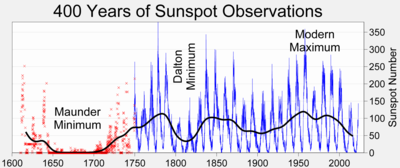
I have been of the opinion for some time now that the current Landscheidt Minimum that we are in has a reasonable probability of reaching Dalton Minimum conditions and even developing into a Maunder-like minimum. The Landscheidt Minimum has yet to be officially named. It seems increasingly probable that we are in for some 20 – 30 years of  global cooling. This has not been the view of the global warming enthusiasts who don’t  much believe in the Sun. But now some heavy-weight opinions are also giving more credence to the possibility of a Maunder-like Minimum. We have currently reached solar maximum in Solar Cycle 24 and SC24 and the coming SC25 are comparable to SC’s 4,5 and 6 which corresponded with the Dalton Minimum. Note that the numbering system for Solar Cycles only starts after the Maunder Minimum.

Paul Hudson has been talking to Professor Mike Lockwood:

It’s known by climatologists as the ‘Little Ice Age’, a period in the 1600s when harsh winters across the UK and Europe were often severe. The severe cold went hand in hand with an exceptionally inactive sun, and was called the Maunder solar minimum. 

Now a leading scientist from Reading University has told me that the current rate of decline in solar activity is such that there’s a real risk of seeing a return of such conditions. I’ve been to see Professor Mike Lockwood to take a look at the work he has been conducting into the possible link between solar activity and climate patterns. 

According to Professor Lockwood the late 20th century was a period when the sun was unusually active and a so called ‘grand maximum’ occurred around 1985. Since then the sun has been getting quieter. By looking back at certain isotopes in ice cores, he has been able to determine how active the sun has been over thousands of years. 

Following analysis of the data, Professor Lockwood believes solar activity is now falling more rapidly than at any time in the last 10,000 years. He found 24 different occasions in the last 10,000 years when the sun was in exactly the same state as it is now – and the present decline is faster than any of those 24. Based on his findings he’s raised the risk of a new Maunder minimum from less than 10% just a few years ago to 25-30%. And a repeat of the Dalton solar minimum which occurred in the early 1800s, which also had its fair share of cold winters and poor summers, is, according to him, ‘more likely than not’ to happen. He believes that we are already beginning to see a change in our climate – witness the colder winters and poor summers of recent years – and that over the next few decades there could be a slide to a new Maunder minimum. 

It’s worth stressing that not every winter would be severe; nor would every summer be poor. But harsh winters and unsettled summers would become more frequent. 

Professor Lockwood doesn’t hold back in his description of the potential impacts such a scenario would have in the UK. He says such a change to our climate could have profound implications for energy policy and our transport infrastructure. Although the biggest impact of such solar driven change would be regional, like here in the UK and across Europe, there would be global implications too. ……… 

Recent solar activity (Wikipedia) showing the Maunder and Dalton minima

UK maintains a stiff upper lip as the great St. Jude’s storm drizzles past

October 28, 2013

Well the St. Jude’s storm  came and it is going. It will be gone in about 3 hours.

Some people apparently noticed it.

There has been more disruption by precautionary measures than by the storm itself. “Precautionary” measures have included cancellation of trains and planes and buses. Some consumers had their electricity turned off in areas where damage was possible. It was going to be the greatest storm since 1987!

The reality is just sinking in. Leaves have been blown down. They have been blowing about chaotically. Waves have crashed on to land in several coastal areas. They could be seen reaching the shore in Brighton. In the worst hit areas some twigs were violently torn of the trees and blown several feet away. Flags flapped ominously outside Broadcasting House where the intrepid BBC Radio reporter braved the storm of the century. The wind was clearly audible. It may not have been raining but our reporter could only see a very few patches of blue sky.

The Met Office spokesman is on air just now explaining – defending – the alarmism. He admitted that this was not a hurricane but they never said it was going to be one. And in any event, even if the storm would pass the UK within about 3 hours it could cause great damage in Denmark and the Netherlands and northern Germany!

Ripples in a tea-cup. A listener has just complained that he does not really need the mighty BBC news machine to inform him that flags can flap in the wind.

This comment from a Guardian reader just about sums it up:

flaviaforbes

Looking outside my bedroom window here in Birmingham I can hardly believe the scale of the destruction. At least 5 wet, shattered, leaves, are lying haphazardly across my back garden, creating a biblical scene of leaf-chaos. At the front of the house, last nights gale has wrenched a Lidl plastic bag and a Twix wrapper from their usual resting places in the gutter, and they now lie, a full four feet away, against my door step. And dont get me started on the rain! There’s enough water on the windscreen of my car to necessitate me using the wipers at least once to clear it.

Its a sobering reminder what nature is capable of. Thank God we were warned.

Fear of nuclear radiation is much worse than the reality

October 27, 2013

The Fukushima Dai-Ichi nuclear accident which followed the Great Tohoku Earthquake and Tsunami of 2011, was about the worst accident that could have happened in a nuclear plant. Hydrogen explosions occurred in the outer containment casings of 2 of the 6 reactors and meltdown of 2 of the cores also took place. A nuclear plant is not a nuclear bomb and a chain reaction leading to an explosion is not a real possibility. It is meltdown of the cores which is the bottom line.

Yet there were no deaths. As the official report from May this year said:

 No radiation-related deaths or acute effects have been observed among nearly 25,000 workers (including TEPCO employees and contractors) involved at the accident site.

It was the earthquake and tsunami which did the damage, caused some 18,000 deaths  and which led to the nuclear accident. But radiation from the nuclear accident has caused no deaths. And the radiation will cause no deaths. The report goes on:

The additional exposures received by most Japanese people in the first year and subsequent years due to the radioactive releases from the accident are less than the doses received from natural background radiation (which is about 2.1 mSv per year). This is particularly the case for Japanese people living away from Fukushima, where annual doses of around 0.2 mSv from the accident are estimated, arising primarily through ingestion of radionuclides in food. …. 

Given the small number of highly exposed workers, it is unlikely that excess cases of thyroid cancer due to radiation exposure would be detectable. Special health examinations will be given to workers with exposures above 100 mSv including annual monitoring of the thyroid, stomach, large intestine and lung for cancer as a means to monitor for potential late radiation-related health effects at the individual level.

The assessment also concluded that although the rate of exposures may have exceeded the levels for the onset of effects on plants and animals several times in the first few months following the accident, any effects are expected to be transient in nature, given their short duration. In general, the exposures on both marine and terrestrial non-human biota were too low for observable acute effects.

The fears of radiation it would seem are completely out of proportion to the reality of damage actually done. The imagination gone wild of writers and movie scriptwriters, has fantasised about mutations and monsters but have had little basis in the history of both military and civil use of nuclear power. The psychological effects of the fears – apparently quite unfounded – have been orders of magnitude greater than the direct effects of any radiation. Japanese children in Fukushima have suffered more from obesity because they have been banned from playing outside than by any effects of radiation.

Perhaps the biggest disservice done by environmental groups is due to their propensity to exaggerate quite legitimate – but manageable – concerns to become Alarmism. Once the Alarmist phase is reached, rational behaviour is no longer possible.  But they have been calling “Wolf” for 3 decades and for far too long now. As catastrophe scenarios and doomsday predictions keep being pushed into the future, alarmist scenarios are increasingly being discounted. There is a beginning of a welcome  return to rationality.

David Ropeik writes in the New York Times:

It has been more than two and a half years since the Fukushima nuclear disaster began to unfold, and still the world watches events closely, fearfully. The drumbeat of danger seems never ending: Earlier this month, to take just one example, international news reports spread word that six workers at the plant had been accidentally doused with radioactive water.

Yet leading health scientists say the radiation from Fukushima has been relatively harmless, which is similar to results found after studying the health effects of Chernobyl. With all that evidence, why does our fear of all things nuclear persist? And what peril does that fear itself pose for society?

Our anxiety about nuclear radiation is rooted in our understandable fear of the terrible power of nuclear weapons. But in the 68 years since those weapons were first used in anger, we have learned, from the survivors of Hiroshima and Nagasaki themselves, that ionizing radiation — the type created by a nuclear reaction — is not nearly the powerful carcinogen or genetic mutagen that we thought it was.

Beginning shortly after World War II, epidemiologists and radiation biologists began tracking atomic bomb survivors. Researchers have followed roughly 112,600 Japanese: 86,611 who had been within 10 kilometers of the center of the explosions, and 26,000 who were not exposed.

The most current analysis estimates that, out of 10,929 people in the exposed population who have died of cancer, only 527 of those deaths were caused by radiation from the atomic bombs. For the entire population exposed, in many cases to extremely high levels of radiation, that’s an excess cancer mortality rate of about two-thirds of 1 percent.

These studies have also found that, more than two generations later, there have been no multigenerational genetic effects on humans, Godzilla and the mutant giant ants in the 1954 film “Them!” notwithstanding. Fetal exposure in utero produced horrible birth defects, but no permanent genetic damage.

Perhaps most importantly, research on the bomb survivors has found that at lower doses, below 100 millisieverts, radiation causes no detectable elevations in normal rates of illness and disease. (Among several measures of radiation exposure, sieverts reflect the biological effects of radiation.) The vast majority of the doses received by people living near Fukushima or Chernobyl were well below this 100 millisievert threshold.

The robust evidence that ionizing radiation is a relatively low health risk dramatically contradicts common fears.

….

The World Health Organization’s 20-year review of the Chernobyl disaster found that its psychological impacts did more health damage than radiation exposure did, and a principle cause of the population’s debilitating stress was “an exaggerated sense of the dangers to health of exposure to radiation.”

Epidemiologists are already seeing the same things in Fukushima, where radiation exposures were far lower than at Chernobyl. Radiation biologists say the increased cancer risk from Fukushima will be so low it won’t change general cancer rates for that area, or Japan generally. (The World Health Organization predicts minor increases in rates of some cancers, for some ages and genders, in small pockets of more highly contaminated areas near the plant.)

Nonetheless, thousands of people are refusing to return to their homes and businesses in evacuated areas, even where dose levels have fallen low enough to declare those areas safe. Levels of stress, anxiety and depression are significantly elevated. One survey found that stress among children in the Fukushima area is double the level of other children in Japan.

And the Japanese Education Ministry reports that the children in Fukushima Prefecture have become the most obese in Japan since the nuclear accident prompted schools to curtail outside exercise, in most cases in areas where the risk from radiation was infinitesimal.
Winter time is here again – but “cyclical isn’t a scientific term”!

October 27, 2013

We put the clocks back by an hour last night – as we did a year ago.

I shall change to winter tyres tomorrow  – as I did a year ago.

Tomorrow will be another day – as it is every 24 hours.

Christmas day will come again – whether it is scientific or not.

We are surrounded and dominated by cycles. Without periodicity and cycles we would have no concept of time.

Daily cycles, monthly cycles, annual cycles, solar cycles every 11 years, the earth’s precession cycle with a period of 26,000 years, the earth’s axial tilt cycle of about 41,000 years and the Milankovitch cycles of about 100,000 years, are just some of the cycles that surround us.

Whether everything derives from the vibrations within the most fundamental particles and then are manifested by the periodic motion of bodies in our cosmos or whether the motion in the cosmos is the origin of everything else, periodicity and cyclic behaviour is ingrained within us and our world.

There are many more cyclic effects that we are continuously discovering (from the eons of slow cosmic cycles to multi-decadal ocean cycles to multi -hour cycles within living cells to the periodicity of the incredibly fast vibrations of atoms).

The only man-made repeating period that seems to have no corresponding cycle in the natural world is the weekly 7-day cycle.

Almost every cycle we discover seems to impact our weather and our climate.

But Nebraska “climate scientists” don’t believe that natural cycles are worth studying. In fact only studies which start with the assumption that global warming is man-made get any funding.

For one thing, “cyclical” isn’t a scientific term, said Barbara Mayes, a meteorologist with the National Weather Service.

Oh Dear!

The only response to Barbara Mayes and climate scientists in Nebraska must be (with apologies to Lerner and Lowe)

There’ll be spring every year without you
England still will be here without you
There’ll be fruit on the tree
And a shore by the sea
There’ll be crumpets and tea without you

Without your pulling it the tide comes in
Without your twirling it, the Earth can spin
Without your pushing them, the clouds roll by
If they can do without you, ducky so can I

Genetic adaptation – not stagnating conservation – is the way to help threatened species

October 26, 2013

If the big cats, or elephants or giraffes or pandas want to survive into the distant future they need to evolve. The changes taking place in their environment and in their loss of habitat are happening too fast for natural selection to throw up the genetic changes needed for long term survival. As long as humans remain the dominant species in their environment they will need to come to terms with that – genetically. Conventional conservation efforts are fundamentally flawed. They are backwards looking. They try to preserve these species – as they are – in artificially protected habitats which are frozen in time, which remain unchanged while the world around them changes. Conservation attempts to freeze these species and thereby lock them into the non-viable position they have found themselves in. This is not going to help them to continue into the future, except as an unsuccessful species. It is paradoxical that unsuccessful species are subject to conservation efforts and successful species get labelled as pests.

Much of the rapid change to the environments for these species is a consequence of the success of humanity as a species. Trying to keep a species unchanged and stagnating in a changing world seems to me to be irresponsible. And creating  little protected bubbles of habitat – whether in a reserve or a zoo can only be a short term measure. Domesticated animals are at little risk of extinction as long as humans thrive. Their success is inextricably linked with the human species and they have been adapted genetically to be what they are today. They are not allowed to breed freely or indiscriminately and that is the genetic price they pay. But their survival is assured – at least as long as humans thrive and maybe even beyond.

‘There are many more “urbanised” species which have through a natural – but environmentally coerced or forced – selection adapted genetically to have the traits which allow them to be successful in  the human-dominated environments they find themselves in. Foxes, bears, wolves, badgers and even the polar bears of Churchill have evolved and adapted to survive in human dominated environments. But they generally live surreptitious lives in the shadow of man. They have not found a sustainable position  as yet. An increasing number of birds have adapted their behaviour (presumably also by genetic changes) to take advantage of human behaviour. They have learned to live in and around our cities, to take advantage of our agricultural and harvesting habits and to use our waste streams as their food source. Even in the water, there are fish species which succeed because of the changes brought about by man. Many insects – be they cockroaches or spiders or mosquitoes, or termites – now know how to take advantage of man-made environments. At the microbial or viral level, species are not much concerned by the changes wrought by humans and continue their merry way.

Now in this new age of DNA analysis and intentional selection of genes I think it is time for Conservation to move away from merely trying to “freeze” species in an artificially protected environment and to move into a pro-active phase where humans actually help threatened species to continue into the future. This does not mean that the neo-species that appear must necessarily be domesticated or in the service of humans but it does mean that they must share the same habitat and be able to co-exist. If they require a specialised habitat which is likely to disappear or change due to man or for any other reason, they are destined to eventually go extinct. Putting such species into zoos or other artificially maintained or otherwise protected habitats only preserves an obsolete species in a temporary environment. Conventional conservation as it is practiced today goes down that route. And while it may provide a short term method for preserving the genes of such species, it is in an unsustainable form. It is a method which does no real service to such species.

Instead of trying to recreate the woolly mammoth for an environment which is totally unsuitable or of making futile attempts to preserve habitats for elephants so that they continue “unchanged”, it would be better if we considered how elephants – or the big cats – could be assisted along the evolutionary path such that they could find a natural and sustainable place in the brave new world that they now inhabit. For example, if neo-elephants were helped to evolve genetically such that their propensity to wander over very large areas reduced, or if they preferred certain kinds of trees and bushes and left others alone, or where their wanderings were more discerning and not as damaging to human crops, then herds of neo-elephants could find a sustainable place by the side of humanity.

Perhaps Siberian neo-tigers could be evolved genetically to help herd reindeer and develop a mutually beneficial partnership with man. An occasional reindeer kill would then be quite acceptable. It would be so much more contructive if neo-wolves were helped not to stagnate genetically, but instead to evolve the behavioural characteristics that allowed them to find a way of co-existing with humans and human flocks of sheep. The idea of neo-dolphins who communicate with man and have a herding behaviour in the oceans which benefit both humans and themselves has long been a subject of science fiction. Our nearest primate cousins have to be helped to move on and not to stagnate into extinction. The pace of environmental change is much too fast for natural selection to throw up the individuals capable of survival. Instead a natural deselection of individuals incapable of surviving is taking place. Neo-gorillas and neo-chimpanzees will not appear without human intervention.

Conservation – as stagnation – is not sustainable.  Trying to prevent change is a futile exercise. It is change which is the fundamental characteristic of life. It is managing change and even designing change which is a particular strength of the human species. It is human ingenuity at work. It is time to give thought to how we can help the species around us evolve into the neo-species which can cope with the changes which are inevitable.

Greenpeace is just juvenile exhibitionism and hooliganism

October 26, 2013

Media stunts to get attention and cry-babies when their exhibitionistic stunts go wrong.

For some (the so-called volunteers) it is the chance for an “adventure” holiday.

Piracy, hooliganism and the success is measured by the exposure they can get in the media.  Sound and fury signifying nothing.

The Greenpeace 30 can therefore consider their exploits a great success judging by the media attention they have obtained. They will remain in prison in Murmansk at least until November 24th and i see no reason why they should not be forced to bear the cost of all their juvenile high-jinks. A public spanking would not be uncalled for either.

Reuters: A Greenpeace activist suspended himself from the Eiffel Tower on Saturday to call for the release of 30 people who have spent more than a month in a Russian jail over a protest against oil drilling in the Arctic

After lowering himself from the second tier of the Paris landmark, the man unfurled a large yellow sign saying: “Free the Arctic 30.” He was brought down about two hours later by firemen without incident.