The difference between a scientist and an engineer

July 15, 2011

I like this practical  (rather than philosophic) formulation:

A scientist observes and describes what is but which has not been observed before, or causal relationships between existing or new observations or – when necessary – creates the language to make such descriptions possible.

An engineer uses what is together with known causal relationships to create artefacts.

Where such artefacts are created for the first time he is also an inventor.

Mount Lokon erupts on Sulawesi island

July 15, 2011

The threat of an eruption of Mount Lokon has been increasing since June 9th. The alert level was raised 4 days ago that an eruption was imminent and more than 4,000 people have left or have been evacuated. The volcano finally erupted in the early hours of Friday morning with 55 separate eruptions over 6 hours but with the advance warnings and orderly evacuations there is no significant threat to human life. Mount Lokon last erupted in 1991.

Mount Lokon erupting

Mount Lokon erupting: image Reuters

Earthquake Report:

“In general people are not afraid as the volcano which follows a more or less regular ash burst interval of 10 to 15 minutes.  Some of them are living as close as 2 km from the crater which could be very dangerous if a strong explosive eruption would send a pyroclastic flow along the slopes of the volcano. People should have learned lessons from the eruption of Merapi volcano which killed hundreds of people last year.” 

The Jakarta Globe reports:

The National Disaster Mitigation Agency (BNPB) announced that Mountain Lokon in Tomohon, North Sulawesi erupted on Thursday. 

The eruption spewed ash, sand and other volcanic material as high as 1500 meters above the ground, causing forest fires around the volcano. “There was a big eruption around 10:31pm local time (1531 GMT), which saw ash, sand and rocks thrown 1,500 meters into the air,” government volcanologist Kristianto told AFP.

Another eruption took place at 12.30 a.m. Fifty-five eruptions took place in the six hours following the first eruption. More than 2,500 people were evacuated to four shelters. There were no reported deaths or injuries from the eruption.

There has been a significant rise in volcanic activity at Mount Lokon on Sulawesi island since June 9, prompting hundreds of people to evacuate the area. The volcano’s status was raised to its highest red alert level after it spewed ash 500 meters into the air over the weekend, leading to a 3.5-km evacuation zone being established in case of a bigger eruption.

“There is no mass panic because the community has already been warned of the situation and we are continuing to evacuate people,” added Kristianto, who like many Indonesians uses only one name.

Around 28,000 people live within the evacuation zone.

The 1,580-meter Mount Lokon is one of the most active volcanoes in Indonesia. It erupted in 1991, killing a Swiss tourist.

Related:

Mt. Merapi eruptions continue into second week

Is 3% the going rate for defence contract bribes?

July 14, 2011

The latest case of bribery and corruption in defence contracts where the numbers have been revealed suggests that the going rate for commissions is around 3% of the contract value for simple component contracts.

In this case as reported by Bloomberg:

Armor Holdings Inc., the military- truck maker now a subsidiary of BAE Systems Plc, agreed to pay $16 million to resolve U.S. claims it bribed a United Nations official to win contracts connected to peacekeeping missions.

The company will pay $10.3 million to resolve criminal allegations and $5.7 million to settle related civil claims, the Justice Department and Securities and Exchange Commission said in separate statements today. The violations of the Foreign Corrupt Practices Act, which began as early as 2001, took place before BAE bought the company in 2007, prosecutors said. …..

The criminal probe by the Justice Department was settled with a non-prosecution agreement that cited the company’s cooperation and internal investigation in the case. In settling the SEC claims, Armor didn’t admit or deny the allegations.

The Justice Department said Richard Bistrong, who worked in Armor’s international sales unit, and another unidentified executive arranged for the UN agent to receive more than $200,000 in commissions for the 2001 and 2003 contracts. Bistrong pleaded guilty last year to bribing UN and Dutch officials to win body armor and pepper-spray contracts.

It seems this particular contract for the UN was for $6 million, with a declared profit of about $1 million and with the value of the bribe (commission) at about $200,000. Of course the commissions would have been put down as a cost so the real margin would have been well over 20%. A $16 million penalty might appear to be reasonably and sufficiently painful, but I am quite sure that it is small relative to the profits on all the other contracts which could not be penetrated. The amount is probably considered good value by Armor and their new owners considering the immunity they have gained from further sanctions which would also presumably prevent all other prior contracts from being scrutinised very closely .

British Aerospace Systems, the new owners of Armor, are well versed in the payment of commissions for the winning of contracts. They could probably teach their new subsidiary a thing or two about how to hide commission / bribe payments as legitimate expenses.

Related:

BAE Settles Corruption Charges

Armor Holdings Resolves Enforcement Action / BAE Avoids Successor Liability

Rebekah in Murdoch’s wonderland: Hackers, blaggers, Clouseaus and dodgy geezers

July 13, 2011

For the last 10 days the Rupert Murdoch / Rebekah Brookes/ NoTW scandal (broken by The Guardian and their  intrepid reporter Nick Davies) has been raging in the UK. It is now a  full grown 3-ring circus.

The story has all the ingredients of a new TV mini-series – a media tycoon, spineless politicians, amoral journalists, a red-headed siren, a multi-billion take-over bid, some corrupt policemen, some Clouseau-like investigators and a bunch of small-time criminals.

Yesterdays hearings of policemen at a House of Commons select committee was fascinating not just for the ineptness of the  witnesses (with the exception of Sue Akers) but also for the smugness of the middle-aged, middle-class, self-righteous politicians putting the questions.

Making sense of the torrent of allegations now engulfing News Corp., its subsidiary News International and their newspapers is difficult. But Crikey has a good summary of events so far:

Closing down News of the World may have been James Murdoch’s second attempt at putting this problem “in a box”, but the allegations of phone hacking and criminal activity are now bleeding beyond the besmirched masthead, as British parliament calls for Rupert and James Murdoch and News International CEO Rebekah Brooks to front up to answer questions. 

As News International continues to try to staunch the blood, now upgraded to a full blown haemorrhage, here’s a guide to the allegations thus far — where they’ve come from, and the subsequent response …  

Read more 

The story moves on into the House of Commons today…..

Marc Hauser to resume at Harvard

July 12, 2011

Marc Hauser of Hausergate fame was found guilty of 8 instances of scientific misconduct and was sent on a “years leave” as his reward. His failings were connected with his research and but he had  (has) the reputation of being a good teacher.

Of course since he has tenure (based it would seem on rather dodgy results) it seems he cannot be fired.  The Harvard President made a vague suggestion last year that scientific misconduct could even lead to loss of tenure. An opinion piece in the Harvard Crimson called for his sacking earlier this year. In fact it may well be that getting tenure was one of the reasons that he apparently just made up some of his results. But now the Harvard Magazine reports that he will be returning to Harvard this fall after his year long sabbatical but will not be allowed to teach.

Presumably he will be continuing with his “research”!

It might have been more appropriate to rescind his tenure, put him on probation and bar him from any unsupervised research.

PROFESSOR OF PSYCHOLOGY Marc Hauser will be returning to Harvard this fall—but not to teaching. At a psychology department meeting this spring, “a large majority” of the faculty voted against allowing him to teach courses in the coming academic year, according to Faculty of Arts and Sciences (FAS) spokesman Jeff Neal.

Hauser, who studies animal cognition as a window into the evolution of the human mind, has been on a yearlong leave of absence after a faculty investigating committee found him “solely responsible” for eight instances of scientific misconduct. The University has never said whether Hauser’s leave was related to the questions about his research.

“for your own good” is the most arrogant phrase there is

July 10, 2011

The height of arrogance is when I am told by someone else that I should do something or not do something “for your own good”.

Be it a doctor or a lawyer or an environmental campaigner or a civil servant or a politician or a government,  the phrase raises my hackles.

It presumes too much.

It does not convince.

It is dictatorial.

It imposes one person’s values on someone else.

It is a denial of the subject’s most deep-seated and fundamental value of deciding what constitutes “good”.

I am inclined to think that the most fundamental human characteristic is that

any – and every – human can determine what is “good”

The needs of others and surrounding society and definitions of basic human rights can circumscribe this but cannot – by diktat – take away this fundamental value which is I think integral to being an individual. By corollary any entity which cannot decide what is good and then distinguish between “good” and “bad” does not then qualify for the label “human individual”.

This leads me to paraphrase Descartes’

“cogito ergo sum” (I thinktherefore I am)  

to be instead:

I decide what is “good” and can distinguish that which is “bad”.

Therefore I am.

Jatinder Ahluwalia tries to whitewash himself

July 8, 2011

Retraction Watch has an update on Jatinder Ahluwalia. Though reviews by Imperial College (where he scammed himself to a PhD) and the University of East London (where he is currently employed) have yet to be concluded, Ahluwalia is busy trying to whitewash himself.

RetractionWatch

If you’ve been wondering what’s happening in the case of Jatinder Ahluwalia, the University of East London researcher who has been found guilty of faking data as a graduate student at Cambridge and of misconduct at University College London, so have we.

We last reported, in February, that Imperial College London, where Ahluwalia earned his PhD, was repeating his key experiments “in light of new information received.” Today, an Imperial spokesperson tells Retraction Watch that those repeat experiments are complete, and “the results are currently being reviewed by the College.” We look forward to hearing the results of that review, of course.

A reminder that Ahluwalia’s current institution, the University of East London, is also reviewing his work. We’ve heard nothing from UEL, despite several requests. That’s consistent with the idea that the university has placed a gag order on its faculty and administration, although we haven’t confirmed that either.

In fact, we’re hearing a lot of rumors about this case, many of them left as anonymous comments, and while we appreciate any tips, we do our best to confirm verifiable facts before posting, even in comments. So if anyone has documentation of what’s going on, we’d welcome it.

We’ve also seen Ahluwalia apparently take a page out of the Anil Potti playbook, using social media and setting up a blog to extol his own virtues. Various sites discuss his papers and charitable donations, and he also has a Twitter feed that has a lot to say about the weather. Oddly, none of them mention the misconduct findings.

Colder winters to come and solar influence on climate beginning to get its due

July 7, 2011

The BBC reports on a new paper in Environmental Research Letters which actually brings solar influence back into the climate picture.

We show that some predictive skill may be obtained by including the solar effect” says this new paper.

Yes Indeed!

But how was the sun’s influence ever discarded in climate models??

Britain is set to face an increase in harsh winters, with up to one-in-seven gripping the UK with prolonged sub-zero temperatures, a study has suggested. The projection was based on research that identified how low solar activity affected winter weather patterns.

“We could get to the point where one-in-seven winters are very cold, such as we had at the start of last winter and all through the winter before,” said co-author Mike Lockwood, professor of space environment physics at the University of Reading.

Using the Central England Temperature (CET) record, the world’s longest instrumental data series that stretches back to 1659, the team said that average temperatures during recent winters had been markedly lower than the longer-term average.

“The mean CET for December, January and February for the recent relatively cold winters of 2008/09 and 2009/10 were 3.50°C and 2.53°C respectively,” they wrote.

“Whereas the mean value for the previous 20 winters had been 5.04°C.

“The cluster of lower winter temperatures in the UK during the last three years had raised questions about the probability of more similar, or even colder, winters occurring in the future.” 

Professor Lockwood was keen to point out that his team’s paper did not suggest that the UK and mainland Europe was about to be plunged into a “little ice age” as a result of low solar activity, as some media reports had suggested.

M Lockwood et al 2011 Environ. Res. Lett. 6 034004 doi: 10.1088/1748-9326/6/3/034004

The solar influence on the probability of relatively cold UK winters in the future

M Lockwood, R G Harrison, M J Owens, L Barnard, T Woollings and F Steinhilber

Abstract: Recent research has suggested that relatively cold UK winters are more common when solar activity is low (Lockwood et  al 2010 Environ Res Lett 5 024001). Solar activity during the current sunspot minimum has fallen to levels unknown since the start of the 20th century (Lockwood 2010 Proc. R. Soc. A 466 303–29) and records of past solar variations inferred from cosmogenic isotopes (Abreu et al 2008 Geophys Res Lett. 35 L20109) and geomagnetic activity data (Lockwood et al 2009 Astrophys. J. 700 937–44) suggest that the current grand solar maximum is coming to an end and hence that solar activity can be expected to continue to decline. Combining cosmogenic isotope data with the long record of temperatures measured in central England, we estimate how solar change could influence the probability in the future of further UK winters that are cold, relative to the hemispheric mean temperature, if all other factors remain constant. Global warming is taken into account only through the detrending using mean hemispheric temperatures. We show that some predictive skill may be obtained by including the solar effect.

The BBC report continues:

Depiction of the 1683 Thames' frost fair (Getty Images)

Depiction of the 1683 Thames' frost fair (Getty Images)

Professor Lockwood said it was a “pejorative name” because what happened during the Maunder Minimum “was actually nothing like an ice age at all”.

“There were colder winters in Europe. That almost certainly means, from what we understand about the blocking mechanisms that cause them, that there were warmer winters in Greenland,” he observed. “So it was a regional redistribution and not a global phenomenon like an ice age. It was nothing like as cold as a real ice age – either in its global extent or in the temperatures reached. “The summers were probably warmer if anything, rather than colder as they would be in an ice age.” He added that the Maunder Minimum period was not an uninterrupted series of cold, harsh winters.

Data from the CET showed that the coldest winter since records began was 1683/84 “yet just two year later, right in the middle of the Maunder Minimum, is the fifth warmest winter in the whole record, so this idea that Maunder Minimum winters were unrelentingly cold is wrong”.

He explained that a similar pattern could be observed in recent events: “Looking at satellite data, we found that when solar activity was low, there was an increase in the number of blocking events of the jetstream over the Atlantic. “That led to us getting colder weather in Europe. The same events brought warm air from the tropics to Greenland, so it was getting warmer. “These blocking events are definitely a regional redistribution, and not like a global ice age.  


Renewable Energy follies: Subsidies discourage maintenance

July 6, 2011

A key problem with subsidising “renewable energy” is that the economics become so distorted that developers/owners focus first on maximising the extraction of subsidies and not on the long-term operation of the plant or the production of power. As soon as payback is achieved the focus is on generating revenues while minimising  expenditure on operation and maintenance (O & M). Inevitably such plants are abandoned as soon as the O & M costs approach the level of revenues. Whereas conventional power plants (coal, gas, hydro and nuclear) have a design life of 30 – 40 years and often carry out maintenance to extend this lifetime, subsidised “renewable energy” plants have a lifetime of less than 10 years and often even less.

For example grants for construction and high tariffs were used for many years to encourage sugar producers in India and Brazil and other countries to build power plants burning bagasse (the waste matter left after crushing sugar-cane to extract juice). But the consequence was that sugar producers could generate more revenue by producing power rather than sugar – especially when the sugar price was low. Sugar producers built power plants which were larger than they needed themselves and based solely on the level of grant that could be extracted. Access to the grid was guaranteed. But again many of these plants were abandoned as soon as the O & M costs became too onerous. Effectively the developers had recovered all the investment (which was mainly grant money anyway) and more from the allowed 16 – 20% rate of return (which in practice was more like about 30-50% ) of the supposed investment. As plants were “cashed out” and abandoned, the grid just had to absorb the disturbances – which were not negligible.

The subsidies in Europe for wind and solar power are encouraging the same behaviour. In Germany the almost profligate subsidy regime has encouraged the implementation of less than serious power projects by less than serious developers. The game has been the extraction of subsidies not of generating power. In Germany wind turbine and photo-voltaic solar cell plants popped up everywhere. Farmers and shop-keepers and schools all have became power generators. Grid stability has been weakened to cope with the plethora of small plants cutting in and out of the grid. The obscenely high feed-in tariffs in Spain have encouraged solar plants to burn more gas than permitted and pass off the power generated as being “renewable power” at the high tariff. But as the subsidy regime weakens and tariffs reduce and grants are scaled down, the likelihood of these plants being abandoned is increasing. Certainly there is no incentive to spend any money on maintenance.

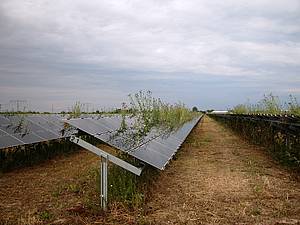
P. Gosselin at NoTricksZone has this about a pv solar plant (2.7 MW) after less than 2 years:

Weed-Covered, Neglected Solar Park: 20 Acres, $11 Million, Only One And Half Years Old! 

solar plant weeds

Over the next few years we shall see many more solar and wind power plants in Europe where money will not be spent on maintenance unless it is absolutely necessary for the generation of short-term (subsidised and inflated) revenues. Long-term maintenance will just not happen. And when the O & M costs become too onerous the plants will simply be abandoned. No doubt bankruptcies will be arranged when the plants are cashed-out such that there is no recourse to the developers/owners for any remaining liabilities.

Subsidies just don’t work for their intended purpose in power generation – but they are short-term gold mines for some developers.

Plagiarist with a recently rescinded PhD appointed EU Commissioner for Research

July 5, 2011

The number of German politicians who have plagiarised for their doctorates grows. After zu Guttenberg, the story of Sylvana Koch-Mehrin and Jorgo Chatzimarkakis is building up into another dirty little tale.

EU politicians are less than impressive. The level of corruption and scams along with the level of arrogance of the EU politicians in Brussels is almost legendary. From my experiences I am fairly certain that the level of political corruption in Europe is significantly higher than for example in India – but far more sophisticated and difficult to find.

The distinct impression is of pigs feeding in a trough.

Pigs feeding from the EU trough

From Professor Debora Weber-Wulff’s blog:

Sylvana Koch-Mehrin had her doctorate rescinded by the University of Heidelberg for containing over 30% plagiarism in May 2011, and now in June she has been named EU commissioner for research, Spiegel Online reports.

This means that she is in the committee that determines research policy for the EU. She had been an alternate for the committee, her fellow FDP politician, Jorgo Chatzimarkakis (his dissertation is currently at 71% plagiarism, but he is contesting the plans of the University in Bonn to rescind his doctorate as well) had the main seat. They have now changed places.

What does this say about research in Germany? What message does this give to the general populace about the importance of research? Plagiarists determining research policy? If today was April 1 I would have considered this an April Fool’s joke, but it is unfortunately true.

Poor Germany, all of your good researchers do not deserve this.

Update: A petition has been started requesting that she step down immediately.  It is online in English, German, and French. If you feel so inclined, please sign. There are already almost 2000 signatures – on day 1 of the petition.

I just signed this petition and I am signer #8325.