FIFA’s dirty little secrets

November 29, 2010

We have recently had the scandal of the corruption and bribery at the 2010 Commonwealth Games held in Delhi. Now that the games are over the police and other investigative agencies in India are digging deep, heads have rolled and prosecutions are imminent.

But the greed and corruption that was on display at the Commonwealth games is  “peanuts” and pales into insignificance in relation to the amounts dealt with by corrupt FIFA officials when handling the selection of countries to host the World cup, the TV and advertising rights and the black market sale of tickets. In fact it seems as if the black market is itself controlled by FIFA officials. A BBC Panorama program to be broadcast later this week and before Thursday’s vote by FIFA’s executive committee to decide who will host the 2018 and 2022 World Cups reveals that at least three FIFA officials took bribes between 1989 and 1999. All three are due to vote on Thursday and since they have had no criticism since then and are still in office, it is highly probably that they have all continued their practices for Thursday’s vote.

With the World Cup as big as it is , the amounts involved are in the billions. FIFA is beginning to stink.

Fifa executives Ricardo Teixeira (l), Issa Hayatou and Nicolas Leoz (r)

Fifa executives Ricardo Teixeira (l), Issa Hayatou and Nicolas Leoz (r): image BBC/ Getty

The BBC reports:

Three senior Fifa officials who will vote on the 2018 and 2022 World Cup bids took bribes in the 1990s, according to the BBC’s Panorama. Nicolas Leoz, Issa Hayatou and Ricardo Teixeira took the money from a sport marketing firm awarded lucrative World Cup rights, the programme alleges.

The alleged bribes are included in a confidential document listing 175 payments totalling about $100m (£64m). The three men did not respond to Panorama’s allegations. Fifa, world football’s governing body, also declined interview requests to address the allegations.

Panorama, to be broadcast later, also reports on evidence of a fourth senior Fifa executive’s continued involvement in the resale of World Cup tickets to touts. The BBC has received criticism over the timing of the programme, which comes ahead of Thursday’s vote by Fifa’s executive committee on who will host the 2018 and 2022 World Cup finals. England is competing with Russia, Spain/Portugal and Netherlands/Belgium to host the 2018 tournament.

The BBC has defended the timing of Panorama, saying the programme is in the public interest. The alleged bribes to the three members of Fifa’s executive committee were paid by sports marketing company International Sport and Leisure (ISL) and date from 1989 to 1999, Panorama reports. The company collapsed in 2001.

Fifa granted ISL exclusive rights to market World Cup tournaments to some of the world’s biggest brands and ISL received millions more from negotiating television broadcast rights. A former account manager at ISL, Roland Buechel, said staff had long suspected bribes were being paid for the lucrative Fifa contracts.

“It is huge money, billions, that can be earned and all the sports marketing companies they fight, they want it,” Mr Buechel said. Some details of the alleged bribes emerged in 2008, when six ISL managers were accused of misusing company money. One Fifa official – Nicolas Leoz, of Paraguay, the head of South America’s football confederation – was named in court papers in connection with payments totalling $130,000 (£83,000). But Panorama has obtained a confidential ISL document which lists 175 secret payments. It shows Mr Leoz was paid a further $600,000 (£384,000 using current conversions) in three instalments of $200,000.

Read source report: http://www.bbc.co.uk/news/uk-11841783

Diplomacy in action? Two nuclear scientists attacked in Teheran, one killed

November 29, 2010

In view of the latest Wikileaks revelations where the Saudi’s were aggressively pushing for the US to attack Iran, this story about two nuclear scientists being attacked by car bombs, killing one, becomes particularly interesting. Perhaps this is an example of modern diplomacy in action. Whether carried out by Saudi or US or Israeli agents, the use of car bombs – long associated with terrorism – smacks of hypocrisy. But then in modern “diplomacy”, hypocrisy is not – it seems – considered particularly unethical and it seems that in relationships between nations the end does in fact justify the means. Judging from the reaction of the US State Department to the publication of their confidential cables, it could be concluded that politicians and diplomats do not think it necessary to have  – and are not expected to have  –  any firm ethical standards.

The BBC carries the story:

An Iranian nuclear scientist has been killed and another wounded in two separate but similar attacks, according to Iranian media reports. The scientists were targeted in Tehran by attackers who attached bombs to each of their cars, reports said. The scientist killed has been named as Majid Shahriari of Shahid Beheshti University in Tehran, according to the official Irna news agency.

Another scientist was killed in a bomb blast at the beginning of the year.

The state television website says attackers riding on motorcycles attached bombs to the car windows of the scientists as they were driving to their workplaces on Monday morning. “In a criminal terrorist act, the agents of the Zionist regime attacked two prominent university professors who were on their way to work,” Iran’s state television’s website reported.

Dr Shahriari was a member of the nuclear engineering department of Shahid Beheshti University. His wife is said to have been injured in the attack. The nuclear scientist injured in the second attack was named as Fereydoon Abbasi. His wife was also wounded. According to the conservative news website Mashreghnews, Dr Abbasi is “one of the few specialists who can separate isotopes” and has been a member of the Revolutionary Guards since the 1979 revolution.

The Iranian scientist killed in January this year, Masoud Ali Mohammadi, was said to be a nuclear scientist assassinated by counter-revolutionaries, Zionists and agents of the “global arrogance”, Iranian media said at the time.

But I cannot help reflecting that as ethics and values become selective or are diluted as and when judged to be necessary, then decadence has set in and civilisation begins to crumble. As Einstein once said “Relativity applies to physics not to ethics”.

Reindeer grazing not global warming is shifting the tree line in Torneträsk

November 29, 2010
Strolling reindeer (Rangifer tarandus) in the ...

Strolling reindeer: iImage via Wikipedia

New research shows that the advance of the tree line upwards in the Swedish mountains was due to reduced reindeer grazing and not due to any global warming.

Swedish Radio P1 reports today: (freely translated)

It is not primarily a warmer climate which causes the tree line to crawl
up in many places in the Swedish mountains. A new study from the Torneträsk area shows that there are several other factors that affect tree spread rather than just higher temperatures. Climate change plays a very minor role. It is mainly grazing reindeer, insect infestation, and several other factors that affect mountain forest coverage, rather than changing temperature conditions.
“That the tree line can go up or down or remain stationary within the same climate period has not been shown before “, says Professor Terry Callaghan, one of the researchers who carried out the study.

The tree line advanced up the mountains most during the cold period at the end of the 1960s and 1970s. It was primarily because it was a time with fewer reindeer. A warmer climate may actually have an indirect effect (to reduce the advance northwards) by adding to the number of  insects and insect infestations that can damage trees.

Many climate models expect that the forest in the tundra and other Arctic areas will expand considerably northwards in the next one hundred years because of higher temperatures. But the new research suggests that these simple assumptions can be grossly inaccurate. One must reckon with how to account for the impact of insects and grazing reindeer and moose. “It now requires that much more detailed information be added into the models”, says Professor Terry Callaghan, director of the Abisko research station.

The article is published in the Journal of Biogeography

Prematurely induced ageing reversed in mice

November 29, 2010

It is not quite the reversal of the normal ageing process but fascinating nevertheless. Mice deprived of telomerase suffered premature ageing and the reintroduction of the enzyme reversed it. But mice lacking telomerase are not necessarily a valid stand-in for the normal ageing process. Increasing the level of telomerase in humans could potentially encourage the growth of tumours.

A new paper in Nature:

Telomerase reactivation reverses tissue degeneration in aged telomerase-deficient mice

Nature advance online publication 28 November 2010 | doi:10.1038/nature09603; Received 8 May 2010; Accepted 26 October 2010; Published online 28 November 2010

Mariela Jaskelioff, Florian L. Muller, Ji-Hye Paik, Emily Thomas, Shan Jiang, Andrew C. Adams, Ergun Sahin, Maria Kost-Alimova, Alexei Protopopov, Juan Cadiñanos, James W. Horner, Eleftheria Maratos-Flier & Ronald A. DePinho

Nature News:

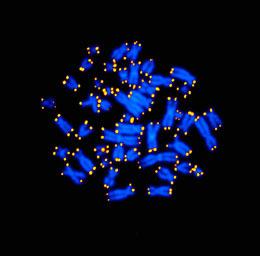
telomeres

Telomeres: Peter Lansdorp/Visuals Unlimited/Corbis

Premature ageing can be reversed by reactivating an enzyme that protects the tips of chromosomes, a study in mice suggests.

Mice engineered to lack the enzyme, called telomerase, become prematurely decrepit. But they bounced back to health when the enzyme was replaced. The finding, published online today in Nature, hints that some disorders characterized by early ageing could be treated by boosting telomerase activity.

It also offers the possibility that normal human ageing could be slowed by reawakening the enzyme in cells where it has stopped working, says Ronald DePinho, a cancer geneticist at the Dana-Farber Cancer Institute and Harvard Medical School in Boston, Massachusetts, who led the new study. “This has implications for thinking about telomerase as a serious anti-ageing intervention.”

After its discovery in the 1980s, telomerase gained a reputation as a fountain of youth. Chromosomes have caps of repetitive DNA called telomeres at their ends. Every time cells divide, their telomeres shorten, which eventually prompts them to stop dividing and die. Telomerase prevents this decline in some kinds of cells, including stem cells, by lengthening telomeres, and the hope was that activating the enzyme could slow cellular ageing.

Two decades on, researchers are realizing that telomerase’s role in ageing is far more nuanced than first thought. Some studies have uncovered an association between short telomeres and early death, whereas others have failed to back up this link. People with rare diseases characterized by shortened telomeres or telomerase mutations seem to age prematurely, although some tissues are more affected than others.

When mice are engineered to lack telomerase completely, their telomeres progressively shorten over several generations. These animals age much faster than normal mice — they are barely fertile and suffer from age-related conditions such as osteoporosis, diabetes and neurodegeneration. They also die young. “If you look at all those data together, you walk away with the idea that the loss of telomerase could be a very important instigator of the ageing process,” says DePinho.

To find out if these dramatic effects are reversible, DePinho’s team engineered mice such that the inactivated telomerase could be switched back on by feeding the mice a chemical called 4-OHT. The researchers allowed the mice to grow to adulthood without the enzyme, then reactivated it for a month. They assessed the health of the mice another month later.

Shrivelled testes grew back to normal and the animals regained their fertility. Other organs, such as the spleen, liver and intestines, recuperated from their degenerated state. The one-month pulse of telomerase also reversed effects of ageing in the brain. Mice with restored telomerase activity had noticeably larger brains than animals still lacking the enzyme, and neural progenitor cells, which produce new neurons and supporting brain cells, started working again.

The downside is that telomerase is often mutated in human cancers, and seems to help existing tumours grow faster. “Telomere rejuvenation is potentially very dangerous unless you make sure that it does not stimulate cancer,” says David Harrison, who researches ageing at the Jackson Laboratory in Bar Harbor, Maine.

Harrison also questions whether mice lacking telomerase are a good model for human ageing. “They are not studying normal ageing, but ageing in mice made grossly abnormal,” he says.

UN Elections in Haiti a shambles

November 28, 2010

The Los Angeles Times reports:

Amid allegations of stuffed ballot boxes and other fraud, 12 of 18 candidates for president (have) called for the elections to be cancelled, (and) accuse President René Préval of trying to fix the contest.

Elections on Sunday in a nation already racked by January’s earthquake and a cholera epidemic devolved into chaos, with thousands of voters unable to find their names on electoral rolls and a general outcry alleging widespread fraud. Twelve of the 18 presidential candidates issued a declaration saying the elections should be canceled and that the people should “mobilize” to prevent the government from accepting the results. They accused President René Préval of conspiring with the electoral council to install his party in Parliament and his pick to succeed him, Jude Celestin, in the National Palace. Celestin was second in recent polling, but a reporter talking to dozens of voters at the polls Sunday could not find a single one who was planning to vote for him. Allegations of fraud are a usual part of Haitian elections but not on the scale of the claims Sunday, coming from thousands of people and the majority of candidates, including at least two of the frontrunners, Manigat and Martelly, who signed the declaration.

But the electoral commission and UN officials seemed to be living in some other reality and declared that all was well. HaitiLibre also describes the status and the apparent fantasy the UN is living in.

Twelve of the 18 candidates in the Haitian presidential election, denounced at a press conference at the Karibe Convention Center, massive fraud and irregularities. They issued a unanimous call for the annulment of the election, following protests from voters who could not vote and many cases of fraud and irregularities observed since the official opening of polling stations.

Three candidates for the presidential election in Haiti, which are Mirlande Manigat, Yvon Neptune and Jacques Edouard Alexis have denounced the fraud and demanded the annulment of the elections, adding their voices to those of other candidates favorable to the end of this sham democratic election …

Patrice Dumond, spokesman for the candidate Manigat “It’s not just fraud, it’s a scandal, a real kidnapping of elections”. Mirlande Manigat during the press conference said “I request the formal CANCELLATION of all electoral activities throughout the territory, what is happening now it’s brigandage organized […] Some State institutions are complicit in this brigandage”. For his part Jacques Edouard Alexis, also requested the cancellation of the poll citing a series of irregularities and involving President René Préval “I do not want an election with him”.

As for Yvon Neptune, also in favor of a cancellation, asks “What can we do in the meantime for good elections? We need a solution between all candidates”.

At Acul-du-Nord and Trou du Nord elections were cancelled. Violent incidents also occurred at Acul du Nord and Trou du Nord, near Cap-Haitien.

Patrick Julien mayor of Acul-du-Nord, said that people were ready to vote, but supporters of the candidates have fired in the air, there have been wounded and he himself was not able to vote “men armed with machetes ransacked six polling stations, elections were canceled,” he said.

At Trou-du-Nord, Mayor Jacques Gustave said a crowd had entered the offices and ransacked polling stations, “the ballots were thrown everywhere, the president of the pooling station made an official report and canceled the election”

At Desdunes in the north, after incidents and gunfire that resulted in injuries, Minustah has sent Sunday morning a half-dozen of armored vehicles “to regain control of the situation.”

Recall that this morning the head of the UN mission in Haiti (Minustah ), Edmond Mulet stated “In general everything goes well, all is quiet. There have been some incidents at Desdunes, minor incidents.” Edmond Mulet said there is no reason to be afraid”. “It’s a electoral feast”… Une déclaration, qui devant les moyens utilisés pour rétablir l’ordre se passe de commentaire…

Former head of India’s counter-terrorism division expects next Wikileaks release to be about corruption

November 28, 2010

Update!

2030 hrs CET, 28th November,

The Wikileaks release has started and will likely continue through the night. The Guardian, Der Spiegel, The New York Times, El Pais and Le Monde have received the material in advance under embargo and have all started releasing the  US State Department cables.

Wikileaks has been subjected to a cyber-attack today and its site is currently inaccessible.

Link to Guardian ability to download all cables

=======================================

The BBC headline is

US warns Wikileaks’ Assange on possible leak

The US has stepped up its threats of legal action against Wikileaks while at the same time rushing to contact all “friendly” governments to try and defuse some of the expected fallout of such a release. The flurry of US government activity seems almost panicky and constant repetition of the claim that “countless lives could be put at risk” does not carry much credibility. Instead of taking responsibility for whatever might have been done or written in the past – and presumably they had good reason to believe it was the right and proper thing to do at the time – the strategy seems to be one of “shooting the messenger”.  But in the current paradigm of ease of information dissemination and increased covert operations by governments around the world, attacks on the messenger only reduce the credibility of the attacker and are counter-productive.

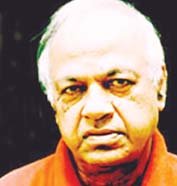
B. Raman: image intellibriefs.blogspot.com

B. Raman is a former Additional Secretary (retired), Cabinet Secretariat of the Government of India. He is the former head of the counter-terrorism division of India’s external intelligence agency Research and Analysis Wing (RAW). He has been applying his mind to the imminent release of confidential US State Department information by Wikileaks and he expects the main subject to be corruption in high places. His thoughts make fascinating reading.

B. Raman writes on his blog:

1. Wikileaks announced through Twitter on November 22,2010, that it will be shortly releasing its third instalment of classified US documents.

2. The first instalment of 77,000 documents related to Afghanistan. The second instalment of 400,000 documents related to Iraq. According to the Twiiter message, its third instalment will contain a much larger number of documents.

3. Wikileaks did not say in its message what will be the subject-matter of the third instalment. However, a Reuters despatch from Washington DC said that classified US diplomatic cables reporting corruption allegations against foreign governments and leaders are expected in the official documents that Wikileaks plans to release. It added: “Three sources familiar with the US State Department cables held by Wikileaks say the corruption allegations in them are major enough to cause serious embarrassment for foreign governments and politicians named in them. They said the release was expected next week, but it could come earlier. The detailed, candid reports by US diplomats also may create foreign policy complications for the administration of US President Barack Obama, the sources said. Among the countries whose politicians feature in the reports are Russia, Afghanistan and former Soviet republics in Central Asia. But other reports also detail potentially embarrassing allegations reported to Washington from US diplomats in other regions, including East Asia and Europe. State Department spokesman Philip J. Crowley said Washington was assessing the implications of what Wikileaks may reveal and was notifying foreign governments about the possible release. “We wish that this would not happen, but we are obviously prepared for the possibility that it will,” he said.

4.The media has reported that the US has warned India and other key governments across the world about the expected release. Crowley has been quoted as saying: “We have reached out to India to warn them about a possible release of documents.” Among other Governments reportedly cautioned are those of Israel, Russia, Turkey, Canada and the UK.

5. After October last year when Wikileaks reportedly developed electronic access to the data bases of the US State Department and the Pentagon and the US military formations in Afghanistan and Iraq, the US authorities were reported to have tightened document security to prevent further leaks. If this tightening has been effective, it is likely that the latest load of documents acquired by Wikileaks (is) related to the period before October last year.

6.While corruption allegations as collected by the US Embassis in these countries could form a part of these documents, it is likely that considering the large number of documents mentioned by Wikileaks, the documents also cover US Embassy reporting on other subjects. Previously, Pakistan’s relations with the US were the focus of Wikileaks. It now seems to be focusing on India’s relations with the US too. It is, therefore, possible that in addition to corruption involving Indian personalities, the documents about India which have reached Wikileaks also relate to India’s policies on Afghanistan, Iraq and Iran.

7. Among the various events relating to Afghanistan, Iraq and Iran in which India figured during this period, four could be sensitive from India’s point of view. Firstly, the pressure on the Atal Behari Vajpayee Government by the administration of George Bush to send a Division of the Indian Army to Iraq. By July,2003, the Vajpayee Government had decided to say no to Washington DC, but there was a lot of voices in Delhi in favour of accepting the US request. Secondly, the papers captured by the US intelligence after the occupation of Iraq from the Iraqi Government Departments showing or corroborating the alleged involvement of a leader or leaders of the Congress (I) in contacts with the Saddam Hussein Government for acquiring preferential quotas for the import of oil from Iraq (the oil for food scandal). Thirdly, the pressure exercised by the Bush Administration on the Manmohan Singh Government for voting against Iran in the International Atomic Energy Agency in Vienna. The Government of India succumbed to this pressure as a quid pro quo for the Indo-US civil nuclear co-operation agreement of July,2005. Fourthly, the analysis and assessment made in the State Department and the Pentagon regarding Pakistani allegations of Indian involvement in Balochistan.

8. Is it possible that Wikileaks might have also got hold of diplomatic cables between the US Embassy in New Delhi and Washinton DC on Indian political leaders, bureaucrats and policy-making? Has it also got hold of messages sent by the US Embassy in New Delhi to Washington DC about the escape of Major Rabinder Singh, the mole of the Central Intelligence Agency in the Research & Analysis Wing, to the US in 2004 and about the detection by the Indian counter-intelligence of a US mole in the sensitive National Security Council Secretariat in 2006? The documents to be released by Wikileaks need to be carefully scrutinised.. ( 28-11-10)

Cancún – Follow the money

November 28, 2010

Cancun Hotels & Resorts : image cancun-travelnet.com

While winter comes early to Europe and China with heavy November snow and temperatures down to minus 37 Celcius in N. Sweden, 15,000 of the faithful travel to the balmy, holiday resort of Cancún (min 21 deg C, max 29 deg C) for the UN / IPCC conference on climate change and to try and blow some life back into the carbon trading scheme.

That Cancún is just about money has become apparent especially since Copenhagen and Nagoya. But it is the unrestrained greed represented by the carbon-trading, money trail that is most telling.

A Global Investor Statement on Climate Change has been issued by:

259 investors – both asset owners and asset managers – that collectively represent assets of over US$15 trillion.

Reducing Risks, Seizing Opportunities & Closing the Climate Investment Gap

Investors are interested in the large potential economic opportunities that the transition to a low-carbon economy presents. In particular, investors are calling for:

  • Domestic policy frameworks to catalyze renewable energy, energy efficiency, and other low-carbon infrastructure, so as to provide investors with the certainty needed to invest with confidence in receiving long-term risk-adjusted returns.
  • International agreement on climate financial architecture, delivery of climate funding, reducing deforestation, robust measurement, reporting, and verification, and other areas necessary to set theglobal rules of the road, bolster investor confidence, and allow financing to flow.
  • International finance tools that help mitigate the high levels of risk private investors face inmaking climate-related investments in developing countries, enabling dramatic increases inprivate investment.

But Christopher Booker in The Telegraph gets it right:

These are the bodies (major banks, insurance companies and pension funds) calling most stridently for “government action on climate change”, because they are the ones who hope to make vast sums of money out of it. They are desperate for a treaty of the type they failed to get at Copenhagen – even more so since the collapse of the US cap and trade bill – because they see their chance of turning global warming into the most lucrative fruit machine in history dwindling by the month.

Top of their wish list is “a rapid time-frame” for implementing the UN’s REDD scheme, which would enable them to make hundreds of billions of dollars by selling the CO2 locked up in the world’s tropical rainforests as “carbon offsets”, thus allowing firms from the developed world to continue emitting CO2. Under this scheme, for instance, environmental bodies including the WWF hope to share in the $60 billion which they estimate as the “carbon value” of the Brazilian rainforest.

But nothing better betrays their gloom about any result from Cancún than that they at least want it to give “a clear mandate” for the adoption of “a legally binding agreement” at the UN’s next conference, due in South Africa next year.

(Seen first at http://climaterealists.com/index.php)

Why cannot a concept of tort or “product liability”apply to scientists?

November 28, 2010

Cases of scientific misconduct do not seem to lead to any significant sanctions. Scientists are not subject to the codes of ethics that other professions have (even if they are not always complied with). Lawyers and doctors and engineers can be “disbarred” or otherwise forbidden from practising their professions when found guilty of incompetence or fraud.  Why then can a physicist or a chemist or a biochemist not be subject to the same professional sanctions for misconduct? Learned Institutes of Physics or Chemistry or Mathematics rarely get involved in the ethics breaches of their members. Scientists also need to be held responsible (liable) for their work and in cases of fraudulent science or misconduct, the sanctions applied need to be seen to be in balance with the extent of the offence.

There have been many cases of scientific misconduct where the offender seems to get little more than a slap on the wrist or a mild reprimand. In some cases they leave one institution and merely move to another. Their degrees are rarely revoked and they usually continue “working” or faking work in some other institution.

Retraction Watch addresses the details of the case of the fraud committed by Dr Jatinder Ahluwalia at University College London which led to the retraction of a paper in Nature.

Earlier this month, we posted an item about the retraction of a 2004Nature paper, “The large-conductance Ca2+-activated K+ channel is essential for innate immunity.” (That post was followed up with provocative comments from a researcher not affiliated with the authors, about what should happen to papers whose results can’t be replicated.)

One of the paper’s authors, Jatinder Ahluwalia, hadn’t signed the retraction, and the notice referred to “Supplementary Information” that hadn’t yet been made available. Today, University College London (UCL) posted that supplementary information, which was the report of a panel that investigated charges of research misconduct against Ahluwalia. That report fills in a lot of details about what preceded the retraction.

UCL’s investigation found that Ahluwalia:

  • falsified the results of experiments conducted by him, on UCL premises, thereby committing research fraud, as defined by paragraph 1.1.iv of the UCL Procedure for Investigating and Resolving Allegations of Misconduct in Academic Research. It was alleged that Dr Ahluwalia altered the numbering of files of research results so as to misrepresent the results of experiments conducted by him;
  • further falsified and misrepresented the results of experiments conducted by him, on UCL premises, by the use of materials other than those specified in the reports of the results of those experiments, thereby committing research fraud, as defined by paragraph 1.1.iv of the UCL Procedure for Investigating and Resolving Allegations of Misconduct in Academic Research;
  • interfered with the experiments of others so as to distort their results, thus falsifying the results of research experiments conducted by others employed by UCL on UCL premises, thereby committing research fraud, as defined in paragraph 1.1.iv of the UCL Procedure for Investigating and Resolving Allegations of Misconduct in Academic Research. It was alleged that Dr Ahluwalia deliberately contaminated chemicals used by other researchers in their experiments so as to falsify the results of those experiments, in order to conceal the falsification by him of the results of his own experiments.

Dr Ahluwalia is currently employed as a Senior Lecturer & Programme leader in BSc & MSc Pharmacology at the School of Health and Biosciences, University of East London,  Stratford Campus, Romford Road, London E15 4LZ, United Kingdom. For having committed fraud and engaged in sabotage and even though he is no longer employed by UCL, it does not seem that his behaviour has led to any significant sanctions.

Recently a Harvard University investigation found its high-profile Professor Marc Hauser guilty of 8 counts of misconduct and sent him on a year’s “book leave” and he will resume his activities next year. He does not lose tenure and his degrees are not revoked and the sanction seems relatively mild in relation to his behaviour.

The product that researchers and scientists produce is publications – mainly as papers published in scientific journals and as books. Scientific misconduct (whether plagiarism or faking data or inventing data or cherry picking data) leads occasionally to dismissals (but not always) and generally very little else. It seems to me that the concept of tort or “product liability” should be applicable to the work of scientists and researchers where their work is the result of faking data, fraud or other misconduct since it would be work that “had not been done in good faith”. Tort would apply because the ramifications of their misconduct would extend far beyond their employment contracts with their employers.

Tort  (from Wikipedia) is a wrong:

that involves a breach of a civil duty owed to someone else. It is differentiated from criminal wrongdoing which involves a breach of a duty owed to society, and also does not include breach of contract. Tort cases may comprise such topics as auto accidents, false imprisonment, slander and libel, product liability (such as defectively designed consumer products), and environmental pollution (toxic torts).

Clearly a researcher has a civic duty to his co-workers, his department, his institution, his publishers and to the global community working in the same field. Scientific misconduct is a clear breach of these duties and any such researcher must then be both accountable and liable. Sanctions in such cases must be commensurate and seen to be commensurate with the offence. A year’s sabbatical from Harvard or merely moving across town to be employed at another university does not seem to be in balance with the weight of the misconduct.

The employment contract of a researcher with any institution no doubt has the appropriate language which allows sanctions (including dismissal) for breach of contract. However the liability of a fraudulent researcher – especially with published papers and books – goes beyond a simple breach of contract with his employer and extends to the entire community of workers in the field and even to all readers who may be influenced by the fraudulent work. For commensurate sanctions to be possible it becomes necessary for the concept of tort to be introduced and for  “product liability” to reside with the researcher whereby he can be held accountable by the entire audience his “product” is addressed to.

Authors of scientific papers and books need to be responsible and liable for their products.

A380 resumes flying but Qantas has another engine failure on a B747

November 27, 2010

http://www.news.com.au/travel/news/grounded-jet-mars-return-of-airbus-a380/story-e6frfq80-1225962092705#ixzz16VrjhJ7P

As Qantas staged a major PR exercise to mark the return of its A380 fleet to service, another plane from Sydney, a 747, was grounded last night with engine failure.

The flight, QF1 from Sydney to London, was due to leave at 6.05pm – but passengers were pulled off the plane after a loud noise emanated from the engine while they were taxiing towards the runway. The flight was later cancelled.

Earlier, passengers watched as Qantas CEO Alan Joyce staged a media conference to assure the public the company was now “100 per cent confident” A380 planes were safe. But while passengers on the A380 flight to London got away on time, passengers on board flight QF1 to London via Bangkok were pulled off their flight because of an engine fault.

The passengers disembarked about 7pm and were given meal vouchers, while engineers examined the engine. But at 9pm they were told the flight was cancelled. It was expected to leave at 9am today.A passenger on the plane told The Sunday Telegraph he could hear the engine die. “We were on the tarmac and then the captain said there was a mechanical problem; he said there was an electrical fault and that every time they tried to start the engine up it cut out,” he said. “We sat for 45 minutes and then they took us off the plane.”

The captain of yesterday’s flight, David Evans, who was part of the cockpit crew onboard flight QF32, said as “a precaution” Qantas had decided to use “reduced thrust” on the engines for the initial flights.

Heavy November snowfall in China as well

November 27, 2010

Scandinavia and the UK are not alone in seeing November snowfall and bitterly cold temperatures – the coldest November in 15 years.

China issued a “blue” alert as heavy snowfall battered most of the north east of the country for a second day.

People walk against strong wind in Jilin City, northeast China's Jilin Province, Nov. 27, 2010. Snowfall hit most parts of the province from Friday night. Local meteorologic authority has issued a blue alarm against cold wave Saturday morning. (Xinhua/Zhu Wanchang)

The National Meteorological Center issued the blue alert for snowstorms on a second consecutive day as heavy snowfalls hit southern and eastern Heilongjiang and neighboring Jilin Province in the east on Saturday reports Xinhua. China has a four-color snow warning system: red, orange, yellow and blue. Blue is the least serious level.

But of course this is weather – not climate.