Archive for the ‘Climate’ Category

Back from UK’s coldest spring for 50 years

May 31, 2013

It was a grand holiday for 15 days in the UK.

The warmth of meeting old friends more than compensated for the lack of warmth in the weather. Every day we were in England, the weather we had left behind in Sweden was warmer by a couple of degrees. We had two  reasonably warm and – relatively – dry weekends but it was wet and chilly for the rest of the time.

And now I find that it was the coldest Spring (March – May) in the UK for 50 years.

The average temperature over the period came in at 6.0C, which is 1.8C, or nearly 25 per cent, lower than is typical for the time of year, according to the Met Office.

This makes it the fifth coldest spring since records began in 1910 and the chilliest for 51 years.

A Met Office spokesman said: “The colder than average conditions have been caused by difference patterns at certain times, but generally this season has seen frequent easterly and northerly winds which have brought cold air to the UK from polar and northern European regions.”

Rainfall was lower than normal in March and April but May has been wetter than usual, the Met Office added. As a result, spring has been slightly drier than average, but not as dry as the springs of 2010 and 2011.

So much for global warming! And so much for the utterly negligible impact of  carbon dioxide increase over the last 50 years!!

We stayed with friends during our vacation and everywhere we went we found a current of discontent about energy prices and the manner in which utility bills had increased. Utility bills are never popular at whatever level they may be pitched but the cost of energy is fundamental to our economies. To have a cost of electricity which is some 50 – 70% higher than it needs to be is irresponsible. I reckon that in W Europe the subsidies provided for non-commercial energy production has provided windfalls for about 500,000 owners/developers of wind farms and solar plants but has cost the jobs of about 15 million.

There is little doubt in my mind that it has been the idiot pursuit of “low carbon dioxide emissions” which is now contributing to the lack of growth and lack of jobs in Europe. The common-sense goal of pursuing the most economic sources of energy has given way to the pursuit of the wrong thing for the wrong reasons. To be politically correct but impoverished seems a poor – and rather immature – bargain to settle for.

So much for the idiots who have wasted three generations chasing the mirage of green political correctness but have allowed common sense to wither.

It is time to go back to basics.

Carbon dioxide concentration was at 500+ ppm already in 1860

May 13, 2013

This has been around for some time, but I have only just come across it.

It could be that GS Callendar’s 1957 paper about Global warming  cherry picked supportive data points and ignored inconvenient data.

Reblogged from JunkScience

Did one of the fathers of manmade global warming cherry-pick his data for a 1957 study?

Here’s the original data.

Source: Slocum, G., Has the amount of carbon dioxide in the atmosphere changed significantly since the beginning of the twentieth century? Month. Weather Rev., 1955(October): p. 225-231.

Source: Slocum, G., Has the amount of carbon dioxide in the atmosphere changed significantly since the beginning of the twentieth century? Month. Weather Rev., 1955(October): p. 225-231. 

Here’s the cherry-picked version.

Callendar graph

Read the full story at Tallbloke’s blog.

Related:

slocum 1955 carbon dioxide Slocum, G., Has the amount of carbon dioxide in the atmosphere changed significantly since the beginning of the twentieth century? Month. Weather Rev., 1955(October): p. 225-231. 

Climate Change: Incorrect information on pre-industrial CO2

CO2: The Greatest Scientific Scandal of Our Time


Climate “science” reduced to “Retrospective Predictions”

May 13, 2013

Hindsight science

Wow!

Nature and Climate Science are now reduced to publishing “Retrospective Predictions”.  And Predicting the Past is apparently good enough to get published! At least you can never make a prediction which is wrong!

It used to be called  hindsight!


Retrospective prediction of the global warming slowdown in the past decade

by Virginie Guemas, Francisco J. Doblas-Reyes, Isabel Andreu-Burillo & Muhammad Asif

Nature Climate Change (2013) doi:10.1038/nclimate1863

Despite a sustained production of anthropogenic greenhouse gases, the Earth’s mean near-surface temperature paused its rise during the 2000–2010 period. To explain such a pause, an increase in ocean heat uptake below the superficial ocean layer has been proposed to overcompensate for the Earth’s heat storage. Contributions have also been suggested from the deep prolonged solar minimum, the stratospheric water vapour, the stratospheric and tropospheric aerosols. However, a robust attribution of this warming slowdown has not been achievable up to now. Here we show successful retrospective predictions of this warming slowdown up to 5 years ahead, the analysis of which allows us to attribute the onset of this slowdown to an increase in ocean heat uptake. Sensitivity experiments accounting only for the external radiative forcings do not reproduce the slowdown. The top-of-atmosphere net energy input remained in the [0.5–1] W m−2 interval during the past decade, which is successfully captured by our predictions. Most of this excess energy was absorbed in the top 700 m of the ocean at the onset of the warming pause, 65% of it in the tropical Pacific and Atlantic oceans. Our results hence point at the key role of the ocean heat uptake in the recent warming slowdown. The ability to predict retrospectively this slowdown not only strengthens our confidence in the robustness of our climate models, but also enhances the socio-economic relevance of operational decadal climate predictions.

And how many reviewers saw nothing wrong with “Retrospective Predictions”?

When the ice age starts…….

May 12, 2013

Probably the first indications that an ice age has begun will be with a series of long winters – not necessarily the coldest – together with late springs and cool summers. The key factor will be that snow from one winter remains and does not melt before the next winter brings more snow. It will therefore be successions of long winters and cool summers which will allow for the sufficient accumulation of snow and the growth of the area under snow cover. Cold winters and heavy snowfall can surely help but it it is the accumulation of snow from one year to the next which will determine. Old snow will become ice. For negative feedbacks to be triggered the surface area covered by snow and ice must be sufficient that – say – the albedo of the northern hemisphere is altered such that the amount of solar radiation being reflected is itself increased and the surface area under snow/ice cover increases.

Not that I am suggesting that this years long winter is the start of an ice age. Weather is not climate. But ice advancing into the gardens of lakeside homes from Lake Mille Lacs is just another reminder of the power in water (whether in the waters of the tsunami in Japan or as in this ice moving onto land from a lake).

This is reproduced from Watts Up With That

While ice fishing is still going on in some parts of Minnesota, other parts are having what looks like glacier advance in the back yards that is damaging some homes.

As for climate change worries, you can always figure out ways to keep cool, but getting out of the way of an advancing glacier is no easy task as this video shows. Watch this video of what happens in an “ice out” from the nearby lake Mille Lacs, you can actually watch the ice advance. In a matter of minutes the wind pushes the ice about 15 feet from the shore to the doors and windows of lakeside homes.

While this isn’t the same mechanism as ice-age type glaciation, it is fascinating to watch.

Solar Cycle 24 double peak now clearly evident

May 9, 2013

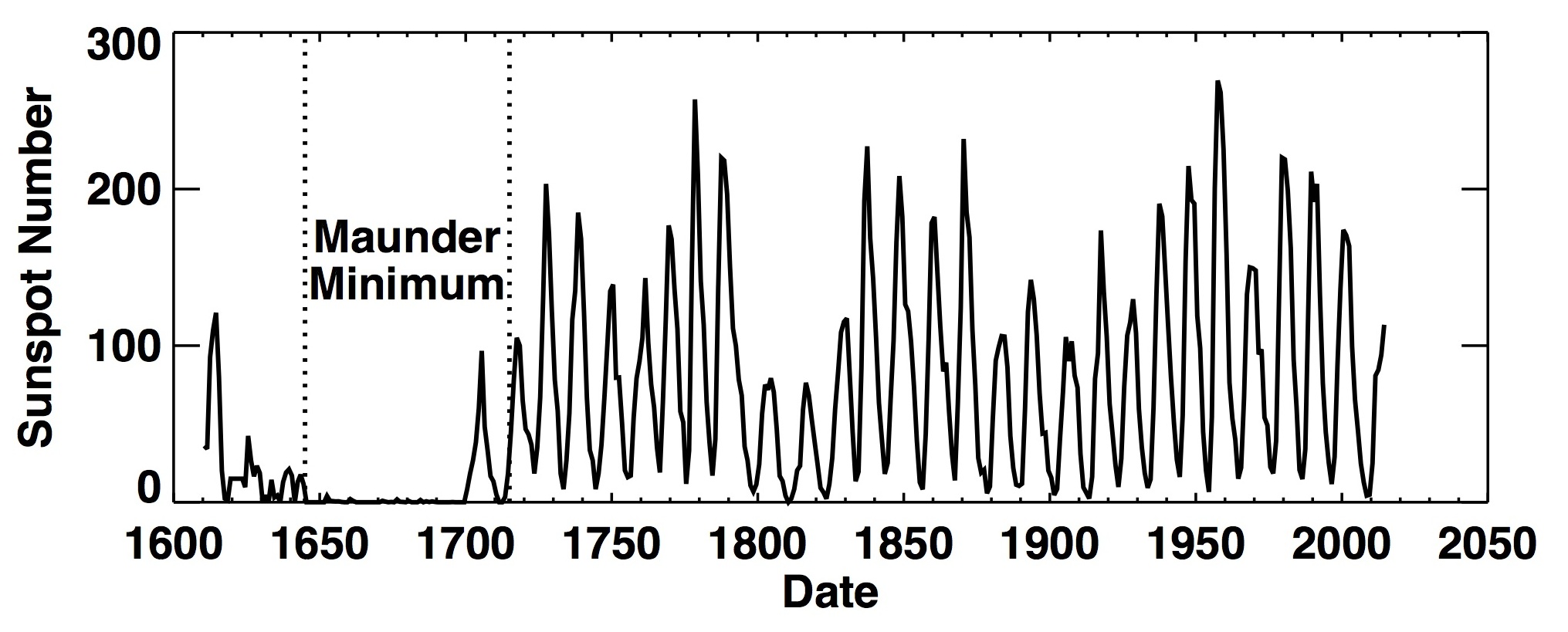
Already in March there were signs that this Solar Cycle 24 would exibit a double peak. NASA’s latest sunspot prediction for Solar Cycle 24 as of 1st May 2013 clearly shows that the sunspot activity is into its “double peak for this Cycle. A double peak was also evident in Cycles 22 and 23 and also in Cycles 5 and 14. The levels for SC24 are still going to be the lowest for 100 years and predictions for SC 25 are that they will be even lower still. Most second peaks have been somewhat smaller than the first – though not in SC5 – and seem to add around 6 months to the cycle time.

If this is indeed a double peak then I expect that solar maximum will perhaps be a few months delayed from the NASA prediction of Fall 2013. End 2013 now seems more likely.

SC24 may 2013

The Dalton minimum spanned Solar Cycles 5 and 6 from 1790 to 1820.  The Maunder Minimum from 1645 to 1715 preceded the numbering of Solar Cycles (Solar Cycle 1 started in 1755). The likelihood that SC 24 and 25 may be similar to SC 5 and 6 is growing and so is the likelihood that we will see 2  – 3 decades of global cooling. It is more likely that for the next 20- 30 years this Landscheidt Minimum will resemble the Dalton Minimum period, but if SC25 is a very small cycle then we may even approach the conditions of the Little Ice Age during the Maunder Minimum. Landscheidt’s prediction was that this minimum would last from 2000 to 2060 and the global temperature stand-still for the last 15 years gives greater credence to his forecasts.

NASA: The Sunspot Cycle —

The Maunder Minimum

Early records of sunspots indicate that the Sun went through a period of inactivity in the late 17th century. Very few sunspots were seen on the Sun from about 1645 to 1715 (38 kb JPEG image). Although the observations were not as extensive as in later years, the Sun was in fact well observed during this time and this lack of sunspots is well documented. This period of solar inactivity also corresponds to a climatic period called the “Little Ice Age” when rivers that are normally ice-free froze and snow fields remained year-round at lower altitudes. There is evidence that the Sun has had similar periods of inactivity in the more distant past. The connection between solar activity and terrestrial climate is an area of on-going research.

Reality bites as EU politicians slowly back away from costly energy policy

May 7, 2013

Reuters reports that EU politicians are to meet at a summit to reassess energy policy in the post-fracking world  (and  – but this is not to be admitted under pain of being shunned – a post-global-warming reality). I just note that politicians will be the most adept at changing direction aand taking credit for moving away from global warming orthodoxy. Many scientists will find their own exit strategies but many will find it difficult to find the rationale to move away from what has become their religion and their livelihood. The least adept at embracing the new reality will the “climate bureaucrats” whose comfortable existence depends upon the global warming religion continuing in force. And all those who have milked the EU subsidy regime for all its worth will not be pleased but they will just move on to the next scam.

(Reuters) EU heads of state and government will seek ways to limit the impact of energy costs on European competitiveness at a summit this month, a draft document seen by Reuters showed.

European industry says it is disadvantaged because of the price it pays for energy compared with the United States, where the shale gas revolution has drastically lowered costs.

The document ahead of the May 22 EU summit, which has energy and taxation on the agenda, calls for examination of the impact of energy prices and costs and action to limit the effects.

One option is developing the European Union’s own shale gas resources, although this is not mentioned directly. Instead, the draft refers to safe and sustainable development of “indigenous sources of energy”.

Europe’s very different geography and land ownership would make it hard for the European Union to rival the United States in shale gas, but the executive European Commission is working on a framework to guide prospectors.

The leaders are expected to urge the Commission to analyze energy prices and costs in member states “with a particular focus on the EU’s competitiveness” against global rivals.

The draft also points to massive investment costs in boosting power generation and networks as likely to drive up energy prices.

Arguments over energy costs have featured prominently in political debate ahead of German elections and played a part in blocking a Commission proposal to boost carbon prices on the EU market.

The Emissions Trading Scheme (ETS), where carbon prices have sunk to record lows, is not on the draft agenda, but it could be debated on the sidelines of the summit, EU sources have said.

Efforts to repair that market are also a focus of attention for the European Parliament.

“Climate science” now hunting for cooling effects – and finds the brightness of clouds

May 6, 2013

How is it that – for a settled science – all these new “cooling” mechanisms are suddenly being found? Could it have something to do with trying to rescue climate models which have failed to predict the slowdown in global warming? “Climate science” is now hunting for previously unidentified cooling effects to explain the warming that has not happened.

This time it is the brightness of clouds! Apparently manmade pollution in the form of organics can enhance the formation of clouds which happen to be brighter from above and which reflect more of the suns radiation. Voilà! An as yet unidentified cooling effect.

But this conclusion comes not from measurements but from yet another model!

From the University of Machester (via Alpha Galileo):

Organic vapours affect clouds leading to previously unidentified climate cooling

University of Manchester scientists, writing in the journal Nature Geoscience, have shown that natural emissions and manmade pollutants can both have an unexpected cooling effect on the world’s climate by making clouds brighter.

Clouds are made of water droplets, condensed on to tiny particles suspended in the air. When the air is humid enough, the particles swell into cloud droplets. It has been known for some decades that the number of these particles and their size control how bright the clouds appear from the top, controlling the efficiency with which clouds scatter sunlight back into space. A major challenge for climate science is to understand and quantify these effects which have a major impact in polluted regions.

The tiny seed particles can either be natural (for example, sea spray or dust) or manmade pollutants (from vehicle exhausts or industrial activity). These particles often contain a large amount of organic material and these compounds are quite volatile, so in warm conditions exist as a vapour (in much the same way as a perfume is liquid but gives off an aroma when it evaporates on warm skin).

The researchers found that the effect acts in reverse in the atmosphere as volatile organic compounds from pollution or from the biosphere evaporate and give off characteristic aromas, such as the pine smells from forest, but under moist cooler conditions where clouds form, the molecules prefer to be liquid and make larger particles that are more effective seeds for cloud droplets.

“We discovered that organic compounds such as those formed from forest emissions or from vehicle exhaust, affect the number of droplets in a cloud and hence its brightness, so affecting climate,” said study author Professor Gordon McFiggans, from the University of Manchester’s School of Earth, Atmospheric and Environmental Sciences.

“We developed a model and made predictions of a substantially enhanced number of cloud droplets from an atmospherically reasonable amount of organic gases.

“More cloud droplets lead to brighter cloud when viewed from above, reflecting more incoming sunlight. We did some calculations of the effects on climate and found that the cooling effect on global climate of the increase in cloud seed effectiveness is at least as great as the previously found entire uncertainty in the effect of pollution on clouds.”

  • ‘Cloud droplet number enhanced by co-condensation of organic papers,’ by Gordon McFiggans et al, will be published in Nature Geoscience on Sunday 5 May 2013.

Unchanged seasonal variation shows that Carbon dioxide concentration increase is probably not due to fossil fuel combustion

May 5, 2013

Carbon dioxide concentration in the atmosphere varies seasonally with the May peak being about 6 ppm higher than the October low. These are very regular and are a reflection of biogenic and chemical interactions from plants, the soil and the oceans

This concentration is the net result following all the mechanisms by which carbon dioxide is produced and absorbed. Since 1960 the mean concentration has risen about 25% from about 320 ppm to just under 400 ppm now (399 as of yesterday) but the seasonal variation has remained virtually unchanged during this time.

from wikipedia

from wikipedia

This is not new and analyses the 25 year period from 1997 but I have only just come across it.

SOURCES AND SINKS OF CARBON DIOXIDE

CO2 seasonal variation

CO2 seasonal variation

The constancy of seasonal variations in CO2 and the lack of time delays between the hemispheres suggest that fossil fuel derived CO2 is almost totally absorbed locally in the year it is emitted. This implies that natural variability of the climate is the prime cause of increasing CO2, not the emissions of CO2 from the use of fossil fuels.

The annual increase of CO2 in the atmosphere is in sharp contrast with the annual change in the seasonal variations (last 25 years)

The mean values are:
Annual CO2 increase = 1.572 ± 0.013 ppm per year
Seasonal CO2 increase = -0.001 ± 0.013 ppm per year

The general assumption is that about 40% of man-made carbon dioxide shows up as this increase with the remainder being absorbed by the enhanced action of sinks.

The justification for this conclusion is supported by measurements of the falling proportion of  13C  in the atmosphere which is taken to signal the appearance of CO2 from fossil fuel emissions. …… 

The correlation of changes in δ13C with ENSO events and the comparison with a simple model of a series of cascades suggest that the changes in δ13C in the atmosphere have little to do with the input of CO2 emissions from the continuous use of fossil fuels.

Even though the combustion of fossil fuels only contributes less than 4% of total carbon dioxide production (about 26Gt/year of 800+GT/year), it is usually assumed that the sinks available balance the natural sources and that the carbon dioxide concentration – without the effects of man – would be largely in equilibrium.  (Why carbon dioxide concentration should not vary naturally escapes me!). It seems rather illogical to me to claim that sinks can somehow distinguish the source of carbon dioxide in the atmosphere and preferentially choose to absorb natural emissions and reject anthropogenic emissions! Also, there is no sink where the absorption rate would not increase with concentration.

Carbon dioxide emission sources (GT CO2/year)

  • Transpiration 440
  • Release from oceans 330
  • Fossil fuel combustion 26
  • Changing land use 6
  • Volcanoes and weathering 1

Carbon dioxide is accumulating in the atmosphere by about 15 GT CO2/ year. The accuracy of the amounts of carbon dioxide emitted by transpiration and by the oceans is no better than about 2 – 3% and that error band (+/- 20GT/year)  is itself almost as large as the total amount of emissions from fossil fuels.

SOURCES AND SINKS OF CARBON DIOXIDE

Conclusions:

During the 1977 to 2001 time period analysed:
Changes in the isotope ratio are discontinuous. The temporal peaks in 13C appear to correlate with the CO2 concentration changes. Further the temporal peaks in 13C and the CO2 peaks correlate with ENSO events.
The yearly increases of atmospheric CO2 concentrations have been nearly two orders of magnitude greater than the change to seasonal variation which implies that the fossil fuel derived CO2 is almost totally absorbed locally in the year that it is emitted.
A time comparison of the SIO measurements of CO2 at Mauna Loa with the South Pole shows a lack of time delay for CO2 variations between the hemispheres that suggests a global or equatorial source of increasing CO2. The time comparison of 13C measurements suggest the Southern Hemisphere is the source. This does not favour the fossil fuel emissions of the Northern Hemisphere being responsible for ther observed increases.
All three approaches suggest that the increase of CO2 in the atmosphere may not be from the CO2 derived from fossil fuels. The 13C data is the most striking result and the other two approaches simply support the conclusion of the first approach.

Plants produce biogenic aerosols and provide a negative feedback to warming climate

April 30, 2013

Another study showing a negative feedback to a warming climate. Needless to say such a negative feeback finds no place in climate models. (The lead author points out that this previous statement is erroneus). Needless to say I doubt if such negative feedback is included in all climate models.

 Paasonen, P., et. al. 2013. Evidence for negative climate feedback: warming increases aerosol number concentrationsNature Geoscience doi: 10.1038/NGEO1800

The International Institute for Applied Systems Analysis (IIASA) reports:

© Veronika Markova | Dreamstime.com

As temperatures warm, plants release gases that help form clouds and cool the atmosphere, according to research from IIASA and the University of Helsinki. 

The new study, published in Nature Geoscience, identified a negative feedback loop in which higher temperatures lead to an increase in concentrations of natural aerosols that have a cooling effect on the atmosphere. “Plants, by reacting to changes in temperature, also moderate these changes,” says IIASA and University of Helsinki researcher Pauli Paasonen, who led the study. 

Scientists had known that some aerosols – particles that float in the atmosphere – cool the climate as they reflect sunlight and form cloud droplets, which reflect sunlight efficiently. Aerosol particles come from many sources, including human emissions. But the effect of so-called biogenic aerosol – particulate matter that originates from plants – had been less well understood. Plants release gases that, after atmospheric oxidation, tend to stick to aerosol particles, growing them into the larger-sized particles that reflect sunlight and also serve as the basis for cloud droplets. The new study showed that as temperatures warm and plants consequently release more of these gases, the concentrations of particles active in cloud formation increase. 

“Everyone knows the scent of the forest,” says Ari Asmi, University of Helsinki researcher who also worked on the study. “That scent is made up of these gases.” While previous research had predicted the feedback effect, until now nobody had been able to prove its existence except for case studies limited to single sites and short time periods. The new study showed that the effect occurs over the long-term in continental size scales. 

The effect of enhanced plant gas emissions on climate is small on a global scale – only countering approximately 1 percent of climate warming, the study suggested. “This does not save us from climate warming,” says Paasonen. However, he says, “Aerosol effects on climate are one of the main uncertainties in climate models. Understanding this mechanism could help us reduce those uncertainties and make the models better.”  

The study also showed that the effect was much larger on a regional scale, counteracting possibly up to 30% of warming in more rural, forested areas where anthropogenic emissions of aerosols were much lower in comparison to the natural aerosols. That means that especially in places like Finland, Siberia, and Canada this feedback loop may reduce warming substantially. ….. 

Disconnect between man-made CO2 and atmospheric levels of CO2

April 28, 2013

The evidence grows that

  1. Temperature drives carbon dioxide, and 
  2. man made carbon dioxide is a minor contributor to carbon dioxide concentration in the atmosphere

Atmospheric verification of anthropogenic CO2emission trendsRoger J. Francey et al, Nature Climate Change 3, 520–524 (2013) doi:10.1038/nclimate1817

The Hockey Schtick reports:

A recent paper published in Nature Climate Change finds a disconnect between man-made CO2 and atmospheric levels of CO2, demonstrating that despite a sharp 25% increase in man-made CO2 emissions since 2003, the growth rate in atmospheric CO2 has slowed sharply since 2002/2003. The data shows that while the growth rate of man-made emissions was relatively stable from 1990-2003, the growth rate of atmospheric CO2 surged up to the record El Nino of 1997-1998. Conversely, growth in man-made emissions surged ~25% from 2003-2011, but the growth rate of atmospheric CO2 has flatlined since 1999 along with global temperatures. The data demonstrates temperature drives CO2 levels due to ocean outgassing, man-made CO2 does not drive temperature, and that man is not the primary cause of the rise in CO2 levels.