A garbage disposal system for space junk

January 17, 2014

NASA keeps track of all the debris in orbit. About 13,000 known objects are bigger than 10 centimeters in diameter and there are more than 100,000 pieces of orbital debris between 1 cm and 10 cm. Pieces smaller than 1 cm number in the tens of millions. All pieces of debris larger than 10 cm are carefully tracked using radar and telescopes.

Many schemes have been proposed for trying to get rid of space debris orbiting the Earth. The schemes have ranged from space harpoons, clouds of of ballistic gas, housekeeping, robotic satellites and laser cannon. The Japanese have a plan for an electrodynamic tether to be attached to the debris by a robot arm. the tether then generates an electric field as it orbits around the Earth and the magnetic field then encourages the debris to drop into lower orbits and eventually burn up. A tether is going to be sent up into space at the end of February for a trial.

Electrodynamic tether

SpaceDaily: Researchers at The Japan Aerospace Exploration Agency (JAXA) have developed what they called an electrodynamic tether made from thin wires of stainless steel and aluminium.

The idea is that one end of the strip will be attached to one of the thousands of dead satellites or bits of rocket that are jamming up space and endangering working equipment.

The electricity generated by the tether as it swings through the Earth’s magnetic field is expected to have a slowing effect on the space junk, which should, scientists say, pull it into a lower and lower orbit.

Eventually the detritus will enter the Earth’s atmosphere, burning up harmlessly long before it has chance to crash to the planet’s surface.

“The experiment is specifically designed to contribute to developing a space debris cleaning method,” said Masahiro Nohmi, associate professor at Kagawa University, who is working with JAXA on the project, told AFP. Nohmi said a satellite developed by the university is expected to be launched into space on February 28, with the tether aboard.

“We have two main objectives in the trial next month,” he said. “First, to extend a 300-metre (1,000-foot) tether in orbit and secondly to observe the transfer of electricity.” The actual reeling in of orbiting rubbish will be the objective of future experiments, he said. A spokesman for JAXA said the agency also plans to conduct its own trial on a tether in 2015.

More than 20,000 bits of cast off equipment, including old satellites, pieces of rocket and other fragments are uselessly orbiting the Earth in a band 800-1,400 kilometres (500-900 miles) from the surface of the planet at terrific speed. 

JAXA write:

If we are able to calculate the motion of debris, we can attach a propulsion system for removal. As the propulsion system, we have envisioned an “electrodynamic tether”, which is extremely efficient because it does not require fuel. The end of an electrically conductive cord (tether) is attached to the debris, transferring it to a lower orbit through the Lorentz force generated by the interference between Earth’s magnetic field and the current flowing through the tether, causing it to re-enter the atmosphere. Two methods are being considered for attaching the tether. One is a method of using a robot arm, for example, to hook the end of the tether into a 1-meter-diameter hole in a payload attachment fitting used as a base for mounting the satellite onto the rocket.  Another is a method where the side of the rocket stage, which is extremely thin for reduced weight, is approached and harpooned by the tether end to attach it. This method is considered to be a safer operation since the tether can be attached from a distance of 10 to 20m.


Without immigration OECD populations will be in decline and in crisis

January 17, 2014

In times of high unemployment the anti-immigration voices are raised very high everywhere and especially in many European countries. Much of the sentiment is rooted in racist views whether against those of Asian or African or East European origin. In Japan it is seen as threatening the homogeneity of the country. But what every politician well knows – but which some will not dare to admit for fear of losing their populist base – is that  without net immigration in, OECD countries will face an increasing crisis of declining populations, declining labour force and an increase in the  proportion of the aged. They are all very well aware that expanding the working population to at least match the increase in the “aged” proportion is critical to maintaining the standard of welfare and health care that they have become accustomed to. Increasing the retirement age – which is already on the table as trial balloons – is unavoidable because even with immigration the proportion of the working population relative to the “aged” is in decline.

In OECD countries fertility rates are already well below the replacement level of 2.1 per woman. It is higher only in Israel, Iceland and New Zealand, and in India, South Africa and Indonesia. China is already down at 1.6 and India is down to 2.63 and declining fast.

The Local

France’s fertility rate has fallen below the symbolic level of two babies per woman and 2013 saw the slowest population growth in the country for well over a decade, new data revealed this week.

The 280,000 births in 2013 marked a 1.3 percent decline from 2012 with France’s fertility rate falling from 2.03 children per woman in 2010 to 1.99 children last year, according to the France’s national statistics agency INSEE. …… 

Despite the drop in the birth rate, France remains second only to Ireland when it comes to Europe’s most fertile nations. Women in Ireland, where the population is 4.6 million, had on average 2.01 children each in 2013.

These figures stand in stark contrast to Germany and Portugal, which had the lowest fertility rates on the continent. Germany recorded a rate of 1.38 per woman, followed by Portugal with 1.28 offspring per woman.

Korea, Hungary, Spain and Japan are the other countries where fertility rates are less than 1.4.

Fertility rates (2010 data) by country is here: OECD Total fertility rates 1970, 2010

Statistics are from the OECD Library:

Total fertility rates in OECD countries have declined dramatically over the past few decades, falling on average from 2.7 in 1970 to 1.7 children per woman of childbearing age in the 2000s. In all OECD countries, fertility rates declined for young women and increased at older ages. A modest recovery in total fertility rates started in the early 2000’s, to an average level of 1.7 in 2010. The total fertility rate is below its replacement level of 2.1 in most OECD countries except Israel, Iceland and New Zealand, and in India, South Africa and Indonesia.

The last few years have seen various trends emerge in fertility rates. A drop in fertility rates has occurred, for example in Australia, New Zealand, Spain and the United States, while rates have continued to rise in Iceland, Israel, Sweden, and Switzerland. The increase in fertility stopped in many other countries. The effect of the economic downturn is as yet unknown, but persistent economic uncertainties can impact downward the number of children women may have over their reproductive life.

OECD Fertility trends

OECD Fertility trends

OECD fertility table

The difference between the decline in fertility rates between India and China is of particular interest. While some of the difference is due to different rates of development, most of the difference can be attributed to the draconian one-child policy in China. But that is now being relaxed as the coming decline in the Chinese population becomes obvious..

The shortages of the proportion of working population – unless immigration is used to mitigate the shortfall – is inevitable and will really begin to bite over the next twenty years or so.

China to industrialise desalination of sea-ice

January 16, 2014

During an ice age as water gets trapped in expanding ice, the entire water cycle stabilises at much lower rates of flux than during an inter-glacial period. Evaporation (due to absorption of solar energy) is the primary force which drives the water cycle. During an ice age, rates of evaporation will decrease sharply, precipitation will reduce and the flow of fresh water through rivers and streams back into the seas will reduce as a consequence. Sea levels would drop by up to 150 m from current levels and while currently submerged land will be exposed, desertification of many regions will also take place.

One of the technologies that will be necessary at such a time will be for the extraction of fresh water from sea ice.

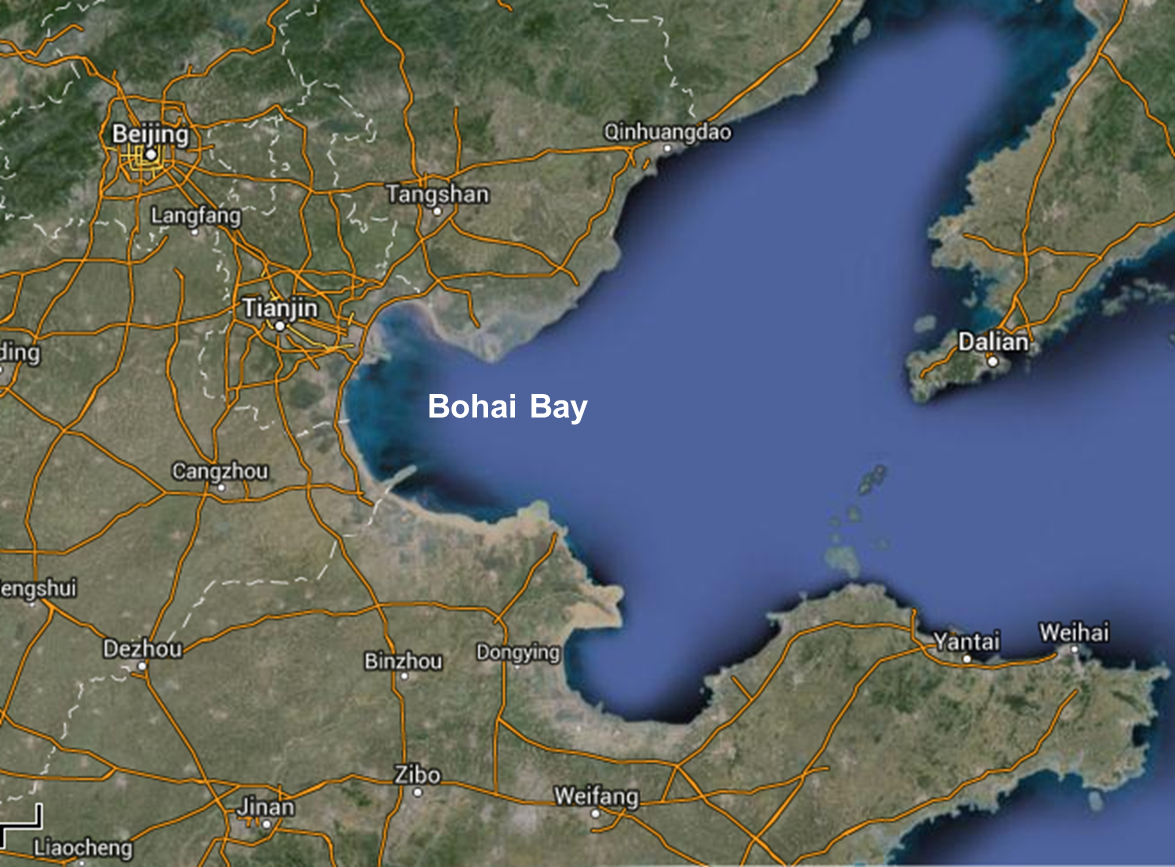
Bohai Bay China

Bohai Bay China

The Bohai Rim is one of the water-scarce regions in China. But every winter, more than 1 billion m3 of sea ice formed in the sea, about 40% of which distributes within 10 km offshore and is expected to be exploited and utilized as source of freshwater.

They may not be expecting a return to full glacial conditions anytime soon, but perhaps the Chinese are already preparing for another Little Ice Age and the fresh water availability reduction that will undoubtedly cause.

Xinhua reports:

China will soon begin production of large amounts of fresh water through the desalination of sea ice, according university research team and a Chinese company on Tuesday. A research team from Beijing Normal University signed a sea ice desalination technology transfer agreement with Beijing Huahaideyuan Technology Co. Ltd on Tuesday.

The company is expected to be able to produce at least 1 billion cubic meters of fresh water annually by 2023, said Yu Jian, executive president of the company. The salinity of sea ice is between 0.4 percent to 0.8 percent, much lower than that of sea water, which stands at about 2.8 percent to 3.1 percent, said Professor Gu Wei, head of the research team.

The research team has mastered the basic principles and technology of sea ice desalination and developed the equipment to be used in the process, including an ice-breaking platform and an ice-gatherer, he said. The salinity of sea ice water after desalination is 0.1 percent, which meets the national standard. The water can be used in agriculture, by industry and for drinking, he said.

The cost of desalination is expected to fall to 4 yuan per tonne, he said.

China’s sea ice desalination program started in 1996 when Shi Peijun, a professor from Beijing Normal University, realized that low saline ice could ease the water shortage around the Pan-Bohai Bay area in north China, after desalination. The program has received a total of 29.72 million yuan (4.88 million U.S. dollars) from various government departments in the past 18 years.

In winter in high-latitude oceans, there is a great amount of sea ice, which is being recognized as a new resource of fresh water by scientists.

Climate “scientists” begin to acknowledge the obvious

January 16, 2014

It is obvious that the source of all heat is the Sun and that nuclear reactions in the earth’s interiror producing heat – if any – are negligible in comparison.

It seems equally obvious, considering the relative heat capacities of air with that of water, that the primary vehicle for the storage and distribution of the heat emanating from the sun, around the earth, is first by the oceans and only second via the atmosphere. The heat absorbed is attenuated by clouds. The heat lost from the earth is also primarily attenuated by clouds and only marginally by other constituents of the atmosphere.

But climate models have generally minimised solar insolation effects and largely ignored the oceans. Heat losses have been predicated primarily on carbon dioxide and other trace constituents of the atmosphere and have ended up treating the net effects of clouds as causing warming rather than cooling. Whither common sense!!

But the current “hiatus” in global warming – which may well become 2 or 3 decades of cooling  – is beginning to bring a whiff of reality into the “science”. They don’t acknowledge the possibility of cooling, of course, and don’t give up on their carbon dioxide fantasies but they are beginning to pay some attention to the oceans and the Sun.

But now they reckon models must be judged on a timescale of 50 – 100 years!

But note the phrase “sceptics and some scientists”! I thought scientists were supposed to be sceptical. Science based on belief leaves a little to be desired.

The heat is actually non-existent but the euphemism for that is “missing heat”.

Climate change: The case of the missing heat

Nature 505, 276–278 (16 January 2014),  doi:10.1038/505276a

… Average global temperatures hit a record high in 1998 — and then the warming stalled.

For several years, scientists wrote off the stall as noise in the climate system: the natural variations in the atmosphere, oceans and biosphere that drive warm or cool spells around the globe. But the pause has persisted, sparking a minor crisis of confidence in the field. Although there have been jumps and dips, average atmospheric temperatures have risen little since 1998, in seeming defiance of projections of climate models and the ever-increasing emissions of greenhouse gases. Climate sceptics have seized on the temperature trends as evidence that global warming has ground to a halt. Climate scientists, meanwhile, know that heat must still be building up somewhere in the climate system, but they have struggled to explain where it is going, if not into the atmosphere. Some have begun to wonder whether there is something amiss in their models.

Now, as the global-warming hiatus enters its sixteenth year, scientists are at last making headway in the case of the missing heat. Some have pointed to the Sun, volcanoes and even pollution from China as potential culprits, but recent studies suggest that the oceans are key to explaining the anomaly. The latest suspect is the El Niño of 1997–98, which pumped prodigious quantities of heat out of the oceans and into the atmosphere — perhaps enough to tip the equatorial Pacific into a prolonged cold state that has suppressed global temperatures ever since. …… 

….. But none of the climate simulations carried out for the IPCC produced this particular hiatus at this particular time. That has led sceptics — and some scientists — to the controversial conclusion that the models might be overestimating the effect of greenhouse gases, and that future warming might not be as strong as is feared. Others say that this conclusion goes against the long-term temperature trends, as well as palaeoclimate data that are used to extend the temperature record far into the past. And many researchers caution against evaluating models on the basis of a relatively short-term blip in the climate. “If you are interested in global climate change, your main focus ought to be on timescales of 50 to 100 years,” says Susan Solomon, a climate scientist at the Massachusetts Institute of Technology in Cambridge. …….

….

Turney faces the wrath of the Global Warming Inquisition

January 16, 2014

The fallout from the Ship of Fools continues and the Global Warming Establishment is turning on Chris Turney and his tourists.

Last week National Geographic distanced themselves from the Ship of Fools. Now even Nature is turning. They first published an article by Turney defending his jaunt into the Antarctic. But they quickly realised that supporting Turney was untenable. Now, not just one but two articles in Nature (here and here): 

Turney's tourists

Turney’s tourists

Turney again

Turney again

The Australian Antarctic Division (AAD) has added its voice to the growing criticism of a stricken private polar expedition by challenging claims that it approved the research element of the trip.

On page 291 of this issue, Nick Gales, chief scientist of the AAD, which is based in Kingston, Tasmania, responds to an earlier Nature column by expedition head Chris Turney of the University of New South Wales (see Nature 505, 133; 2014). Turney’s Australasian Antarctic Expedition aimed to retrace the steps of explorer Douglas Mawson, who led an outing a century ago. But members of Turney’s expedition had to be rescued from their ship, the MV Akademik Shokalskiy, after it became trapped in ice at Christmas, adding fuel to a debate about the merits of such privately funded trips. 

Gales challenges Turney’s implicit suggestion that the AAD had approved the expedition’s science plan. The AAD did not formally review the research strategy, Gales notes, but had issued the permits required for Turney’s group to visit the region in which it got stuck. “It’s an important distinction for us,” says Gales. He adds that the expedition’s rescue has delayed several projects in Australia’s national Antarctic programme that have been many years in the planning. ……

There can be few things worse for a scientist than being accused that “science was not well served” by his efforts!! And that too by his own faction.

Climate Audit has a good account of the follies of the Ship of Fools.

I get the impression that Turney is going to face the full rigour of the Global Warming Inquisition. He may not be burnt at the stake but he may be thrown under a bus or two!

Herring fast frozen in the Norwegian Sea

January 15, 2014

Fast freezing at its natural best.

A shoal of herring was chased towards shore off the island of Lovund, Norway by cormorants. But the air temperature was – 7.8°C with a fresh Easterly wind and the sea froze so fast that the fish were trapped in “mid-swim” (or mid-flight)! Apparently the cormorants have not been able to get to them as yet. They will have to wait till the thaw — and that could be some time.

frozen herring lovund (image Norwegian Radio)

frozen herring lovund (image Norwegian Radio)

Norwegian Radio reports:

It was minus 7.8 degrees and the east wind made ​​the bay freeze in a short time. The shoal of herring had been chased to the shore by cormorants, and apparently had not been able to get out into the open sea again, says Ingolf Kristiansen.

He was on a Sunday outing with his miniature schnauzer Anton when he came across the unusual sight. “I’ve never seen anything like it. It has not happened before here as far as I know”, he said to NRK.no.

Aril Slotte, Head of Pelagic fish at the Sea Research Institute, says it was not uncommon for herring being chased ashore by predators. We know that whales scares herring at various locations in Tromso, so it is not inconceivable that this could happen with small herring and other fish being pushed up against the land”, he said to NRK.no.

In summer the bay is a popular swimming cove. A concrete wall has been built under water so that when the tide comes there is only seepage of seawater in from the open sea. …. 

Frossen sei på Lovund - Foto: Hermann Mindrum /

Frossen sei på Lovund – Foto: Hermann Mindrum

Lovund - Norway

Related: Moose frozen in the ice

Kerry’s “messianic fervour” – Israeli Defence Minister doesn’t quite apologise

January 15, 2014

The John Kerry – Moshe Yaalon spat has become a US – Israeli spat and provides some light amusement.

Israeli Defence Minister Moshe Yaalon had criticised John Kerry for acting out of “misplaced obsession and messianic fervour”.

The instant backlash from the US and Israel was fairly predictable but the Israeli concern was more about not upsetting the US rather than not upsetting Kerry.

And this shows in the apology that Moshe Yaalon has now issued.  “The defence minister… apologises if the secretary was offended by words attributed to the minister.” It is a classic case of apologising for the result but not for the cause. It is saying, “I am sorry that you took offense but definitely not for my actions which caused you to take offense”.

But I have some sympathy for Moshe Yaalon. Messianic fervour, especially from a do-gooder who always knows best – is profoundly irritating. It arouses opposition for the sake of opposing the fervour. It shifts the focus from the message to the messenger. It arouses resentment first of the messenger and then of the message. It is generally counter-productive. It is only effective when applied to an unsophisticated crowd especially if they are lacking in knowledge or intelligence.

John Kerry seems to believe that showing such fervour is helpful to his cause whether in winning nomination, in relations between nations or his delusions about global warming. Messianic fervour may be admirable in a messiah (though even that is doubtful) but it is not an attribute of much value to a Secretary of State. Messianic fervour is the consequence of delusion – a delusion of moral superiority or of nobility or of divinity or of grandeur or of noblesse oblige. It goes far beyond passion and always indicates two obsessions; first that the opinion being proposed is fact and second that the all-knowing messiah knows best what the unwashed masses must do.

Messianic fervour should have no place in determining human behaviour whether in politics or in science. It is the stuff of false priests and charlatans.

Dreamliner battery fix fails as Tesla recalls 29,000 cars for battery charger fault

January 14, 2014

The overheating problems of lithium-ion batteries and their chargers seem to more serious than just teething problems. Boeing and Tesla continue to have issues with thermal runaway and permanent fixes are proving elusive.

Boeing’s problems with the Dreamliner batteries are not yet over. The fix for its battery problem in March  does not seem to have worked for yet another Japan Airlines aircraft. The lithium-ion batteries are now having issues even with Tesla who have recalled “29,000 Model S vehicle 240-volt charging adapters that could overheat and cause a fire. The company will update software in the electric vehicles and send owners replacement adapters.”

The Telegraph: 

Japan Airlines has temporarily grounded one of its 787 Dreamliners after white smoke was spotted outside the plane, warning lights in the cockpit indicated possible faults with the main battery and charger, and one battery cell appeared to be leaking.

Boeing said it was “aware of the 787 issue that occurred Tuesday afternoon at Narita, which appears to have involved the venting of a single battery cell”.

The incident comes nearly a year to the day after Japan Airlines and All Nippon Airways grounded their 787 fleets after two 787 batteries overheated on two different planes in less than two weeks.

Global regulators grounded the worldwide fleet on January 16, 2013. The planes remained grounded for more than three months while Boeing redesigned the battery, charger and containment system to ensure battery fires would not put the airplane at risk. The cause of the battery problems has not been determined.

On Tuesday, Japan Airlines said maintenance engineers who were in the cockpit saw white smoke from the cockpit. When they went outside the aircraft the smoke had dispersed.

Detroit News:

…. The Palo Alto, Calif., automaker told the National Highway Traffic Safety Administration that its review found that defective or improperly installed wall receptacles that the adapter plugged into could cause problems, including melted adapters and or a fire. While the number of incidents remains small, and Tesla’s review to date points to the building or wiring as the primary cause of failed adapters, “the company has determined that a voluntary recall is appropriate as a precautionary measure,” Tesla said.

Since late 2012, Tesla said 2.7 percent of universal mobile connector adapters have been returned and “showed signs of internal damage only and that stopped vehicle charging.” …

….. In November, NHTSA opened a formal investigation into 13,100 Tesla Motors Model S electric cars after three reports of battery fires that occurred after accidents. ……. The announcement of the investigation came after NHTSA had said in October it would not open a formal investigation after a fire in Kent, Wash., occurred when debris struck the underside of a Model S and caused the battery to catch fire. After a fire in Mexico and a fire earlier this month near Smyrna, Tenn., NHTSA decided to open an investigation.

NHTSA said in both of the incidents in the U.S., fires occurred after the undercarriage of the cars hit metal debris on the road, which damaged the battery tray and caused “thermal runaway.” “In each incident, the vehicle’s battery monitoring system provided escalating visible and audible warnings, allowing the driver to execute a controlled stop and exit the vehicle before the battery emitted smoke and fire,” NHTSA said.

Bottle of wine uncorked

January 14, 2014

Now this is useful.

Climate – the second derivative

January 14, 2014

Change changes.

We take global temperature (which exists nowhere and is merely a numerical construct) as climate. When global temperature is not constant we call it climate change. When “climate change” starts to change (as now from warming to cooling) we are into the second derivative. The turbulence at the time of the change of climate change we call “extreme events”.

Changing climate change

Changing climate change

These articles do not say very much new but they are quite extraordinary in that they are carried by the Sydney Morning Herald and Real Clear Politics, who have been staunch supporters of global warming orthodoxy.

The Ship of Fools in the Antarctic seems to have been a “tipping point” – not for climate or for climate change or for the change in climate change – but maybe for bringing some reality back into how climate is reported. (Incidentally, the Akademik Shokalskiy managed to get free of the ice and reached New Zealand but Turney’s tourists who were so dramatically rescued are still stuck at Casey station in the Antarctic and are not due back home for another 10 days!!!!!)

Sydney Morning HeraldGame finally up for carboncrats

It was promoted as the voyage to study the melting of ice sheets in the South Pole as well as to retrace Douglas Mawson’s perilous expedition a century ago. Yet the Australasian Antarctic Expedition, led by UNSW climatologist Chris Turney, has become a comedy goldmine. …..

Real Clear PoliticsShip of Fools in the Antarctic

In the mega-bestseller of the 15th century, “Das Narrenschiff,” Swiss lawyer Sebastian Brant satirized the pretensions, delusions and follies of his day through descriptions of passengers on a ship bound for “Narragonia.” Brant’s depiction of humanity as a ship of fools sailing without rudder or compass captured the imagination, inspiring a painting by Hieronymous Bosch, a song by the Grateful Dead.

So when the research ship Akademik Shokalskiy got stuck in the ice about 40 miles from Antarctica, some who knew the purpose of its voyage dubbed it the “Ship of Fools.” ……

Real Clear PoliticsFreezing Is the New Warming

This is looking like another bad year for global warming.

The year began with the news that an Australian “climate researcher” leading a tourist expedition to Antarctica got his ship trapped in the sea ice. Which is embarrassing, because the purpose of his expedition was to study the melting of sea ice supposedly caused by 20th-century global warming. The current expedition was meant to retrace the route Douglas Mawson took in 1912—but they were stopped 70 kilometers short of where Mawson landed. So they needed to have an icebreaker ship sent to rescue them. Then the icebreaker got caught in the ice, and someone had to rescue the rescuers. You can’t make this stuff up. …… 

The New York Times and Der Spiegel have started backing away from the orthodoxy towards reality – but very slowly. The Guardian, Washington Post and the BBC are among those who are still stuck in a fantasy world.