We learn about climate only when the models are wrong!

March 29, 2013

When a forecast based on a mathematical model is correct, we learn nothing.

A mathematical model is merely a theory, a simplification of reality or an approximation to the real world. By definition a mathematical model is a hypothesis.  When forecasts are incorrect, we can return to our model and improve it and make a new hypothesis. A forecast is then a test of the model but in just one particular set of circumstances. Being correct does not prove the theory behind the model. It does of course add to the body of evidence that the model may be a satisfactory representation of reality and it does allow further forecasts to be made without tweaking the model. For learning to take place the mathematical model must be the falsifiable hypothesis of the scientific method.

It seems to me that Solar Science has a much healthier (scientifically) attitude to models and forecasts than “Climate Science”. When observations don’t match a climate forecast, the observations are impugned rather than the models being improved. This is, I think, because the forecast climate results have been used to establish huge revenue flows in the political arena (whether as taxes or carbon credits or just as research funding). There has been a vested interest in denying the observations and calling the science “settled”. Once the science is “settled”  the climate forecast and its underlying model become sacrosanct and take on the certainty of prophecy. Instead of being falsifiable hypotheses, climate model forecasts have taken on the character of unfalsifiable prophecies!

No scientist would presume to claim that we know or understand all solar effects. Or that we know and understand the role of the oceans or of the water vapour and dust and aerosols in the atmosphere. “Climate” is contained in the thin, chaotic layer of atmosphere which surrounds us. Yet “Climate Science” makes the arrogant assumption that the effect of trace amounts of carbon dioxide on climate is known definitively. Filling a real greenhouse with higher concentrations of carbon dioxide does not make that greenhouse any warmer than one filled with normal air – but the plants do grow faster with access to the additional CO2!! But – claim the climate priesthood –  in the real atmosphere, carbon dioxide causes other forcings (clouds? aerosols? precipitation effects?) which maximise warming which means that our model is still valid. Why not just admit that we don’t know what we don’t know?

The behavioural issue of course is whether it is worth trying to control something as poorly understood as climate rather than ensuring that we have the wherewithal to adapt to whatever changes may come. Another ice age will surely come whether in 10 years or a 100 years or 2,000. It will then be our ability to harness all available energy sources around us which will determine our capacity to adapt.

Learning from forecasts when they are wrong – not just in science but also in business and project management and technology development – has long been a hobby-horse of mine and is why forecasts need to be wrong.

When there is no difference there is no learning.

  • I take prophecies to be a promise about the future  based primarily on faith and made by prophets , witchdoctors, soothsayers and politicians such as ”You will be doomed to eternal damnation if you don’t do as I say”,
  • I take “forecasts” to be an estimate of future conditions based on known data with the use of calculations, logic, judgement, some intuition and even some faith. They are extrapolations of historical conditions to anticipate – and thereby plan for -future conditions.

……. Over the last 30 years I have spent of a lot of time conducting and participating in reviews. Reviews of research projects, of construction projects, of organisations and processes, of designs, of strategies and action plans, of businesses and of companies. The common features  in all these different reviews, that I have found the most penetrating, have been the comparisons not only between forecast values  and actual values, (which may be any values indicating performance and capable of being extrapolated), but also between past forecasts and current forecasts.

Whether considering construction progress or costs or sales figures or cash flow or profit or number of patents applied for, it is the differences between forecast and actual values, or values forecast before and values forecast later which have led to learning. In all these fields we are in the area of the behaviour of complex systems; and where people and their behaviour is involved any system is inevitably a complex system.

When a forecast is fulfilled there is usually an air of congratulation, satisfaction and self-adulation and this leads to a deadly complacency that everything is “settled science” and well understood. In any enterprise of any kind, that kind of complacency is the kiss of death. It is the differences which lead to questioning, to proper scientific scepticism, to further investigation and ultimately to an increase of understanding and – perhaps – a better forecast. (Of course, ignoring all such differences  and to merely “continue as before” can be equally fatal).

Which brings me to climate (which is not a science by any stretch of the imagination) and solar cycles. They are both in the realm not only of where “what we know is a great deal less than what we don’t know” but they are also both in the region where “we don’t even know what we don’t know”. We do not even know all the questions to be asked. They are both complex systems where – by definition – the complexity lies in the multitude of the processes involved and their interactions.

When climate – which is contained in the 100 m of ocean and 20 or so km thick, turbulent and chaotic atmospheric layer (and which is dimensionally miniscule in relation to the 140 million km of the earth-to-sun system) – is so complacently considered to be “settled science” then we have shifted into the area of faith and soothsaying and prophecies. When climate modellers are smug enough to believe they have understood the climate system and believe that their models are complete, then the models produce outputs which are not forecasts but prophecies. (No doubt soothsayers and shamans have sometimes made accurate prophecies but I still would not buy a used car from one of them)! Weather is in the realm of forecast (though you could argue that the most accurate forecast is still that “the weather tomorrow will be like today”) but climate is not yet there.

This kind of “arrogance” which pervades some of the climate “scientists” is not so prevalent when it comes to the study of Solar Cycles. There is a clear understanding that “we don’t know what we don’t know”. In addition to the 11 year and 22 year cycles, other cycles are hypothesised for 87 years, 210 years, 2300 years (or maybe 2241 or 2500 years) and 6000 years. We have no idea what causes these cycles. Even the 11 year cycle which has been most studied produces  surprises every day but is properly in the area of “forecast” (and hopefully never again will be in the area of prophecy). ….

…… We seem to be in a solar minimum. We may be seeing a 210 year cycle – or maybe not. There are changes to the forecasts not only regarding the maximum level of sunspot activity but also about when it will occur and what the length of cycle 24 might be. There is speculation as to what effect the length of the solar cycle may have on climate – but we haven’t a clue as to what mechanisms may be involved.  This is not to say that there isn’t much speculation and hypothesising. There is a great deal of comment about the effect these changing forecasts may have on global warming or cooling or climate disruption.  In some quarters there is much glee that the forecasts have been “wrong”. Some comments question the intelligence of the forecasters.

But of course the forecasts themselves say nothing about how the behaviour of the sun may impact our climate. They do not pretend to be prophecies or to be statements of inevitable outcomes. All they do say is that we don’t know very much – yet – about the sun. But we do know enough to make some tentative forecasts.

But I am very glad that people continue to be brave enough to make forecasts and I am quite relieved that the forecasts are not spot on. That at least ensures we will continue learning.

Lift-off today for 6 hour fast-track journey to the ISS

March 28, 2013

The International Space Station‘s orbit varies between altitudes of 330 – 410 km and it orbits the Earth about 15 times a day. So a journey taking 6 hours to scale about 70 km of altitude per hour may not seem so impressive compared to the speeds on a German autobahn. But a trip which used to be completed on the 3rd day and 34 orbits after lift-off is going to be covered in 5hrs 49 mins and 4 orbits after launch later today. For its 3-man crew, the Soyuz craft can only carry enough fuel and supplies for at most a 4 day journey, so this fast-track approach will represent a major saving of fuel and supplies.

Soyuz is the longest serving manned spacecraft...

Soyuz is the longest serving manned spacecraft design in history (1967– ) , upgraded regularly (Photo credit: Wikipedia)

From Space.com

(Following three unmanned, cargo-only test flights, the Expedition 35/36 crew is the first to try the technique. For the Soyuz crew of three, the fast track rendezvous is much the same as before, except that tasks are compressed.)

NASA astronaut Chris Cassidy and Russian cosmonauts Alexander Misurkin and Pavel Vinogradov are due to arrive at the orbiting laboratory just six hours after they launch at 4:43 p.m. EDT (2043 GMT). The liftoff will begin a months-long mission in orbit for the three men.

The trio will blast off from the Central Asian spaceport of Baikonur Cosmodrome in Kazakhstan aboard a Russian Soyuz spacecraft. The mission’s Soyuz rocket rolled out to the launch pad on Tuesday (March 26) to prepare for today’s liftoff.

In the nearly 13 years since crews first began launching to the International Space Station, it has taken Russian Soyuz capsules and U.S. space shuttles about two days to reach the orbiting lab after liftoff. Now, NASA and Russia’s Federal Space Agency are testing out a new, accelerated schedule. The quick journey, which takes just four orbits of Earth, has been carried out by recent unmanned cargo spacecraft visiting the space station, but never by a crew.

Cassidy, Misurkin and Vinogradov are planning to join the station’s Expedition 35 mission for a roughly six-month stay. The current residents of the outpost are commander Chris Hadfield of Canada, Russian cosmonaut Roman Romanenko, and NASA astronaut Tom Marshburn.

Infographic: How astronauts are traveling to the International Space Station in hours instead of days.

Are global warmists preparing exit strategies?

March 28, 2013

Are global warmists preparing their arguments so that they can have exit strategies ready for when they have to abandon the global warming religion?

The purpose of an exit strategy is – as a minimum – to save face and minimise losses. In the best case it ends an engagement while realising potential benefits and protecting past gains. This is common enough in – and a necessary part of  – business and military planning. Politicians – at least the skilled ones – always have exit strategies in place when they choose to follow a particular “path of principle”. It is less likely that ideologues or religious leaders have prepared exits from dogmatic positions. However even they do have to change their colours from time to time. (Fanatics of course are not permitted exit strategies. They are expected to fall on their swords and die for their cause).

To escape from a discredited or outdated or bankrupt “faith-based” dogma usually requires some strong, visible reason for leaving a dogmatic position. A divine “revelation” is best though “new data” or  just “seeing the light” are also acceptable. This provides both a new faith as a destination and a reason for leaving the current position. A good exit strategy will also include a high profile “conversion” from one faith to another such that much credit can accrue, first for an”honourable” mea culpa for having followed the wrong path and then for the “principled and difficult” shift to the new path! Damage control may also require that the new converts repudiate their former “brothers of the faith”. In fact it is often “converts” who become the most fanatical about their new “religion”. The success of an exit strategy can be judged by how much baggage or stigma the ideologue or politician can avoid after the conversion.

James Hansen has been one of the most vocal and active proponents of the global warming hypothesis that it is caused by man-made emissions of carbon dioxide. He has been seen as one of the high priests of the global warming religion and qualifies as an ideologue:

Hansen is best known for his research in the field of climatology, his testimony on climate change to congressional committees in 1988 that helped raise broad awareness of global warming, and his advocacy of action to avoid dangerous climate change. In recent years, Hansen has become an activist for action to mitigate the effects of climate change, which on a few occasions has led to his arrest.

But he has a new (open access)  paper which makes me wonder whether he is preparing a position for the execution of an exit strategy when it becomes necessary.  He now admits that less of human made CO2 is entering the atmosphere than it should but that it is due to the increased use of coal which has increased aerosol particulates. He argues that this short term masking by aerosols of global warming will eventually have to appear and his doomsday messages have not changed. But he is adjusting his arguments quite fundamentally to account for the real life observations which he can no longer ignore. The “fertlisation of the biosphere” to account for man-made carbon dioxide not entering the atmosphere sounds a lot like back-pedalling to me. That the biosphere feeds on and relishes carbon dioxide is obvious. It does not much care  where it comes from.

James Hansen et al 2013 Environ. Res. Lett. 8 011006 doi:10.1088/1748-9326/8/1/011006

Climate forcing growth rates: doubling down on our Faustian bargain

As The Hockey Schtick reports some of the contents are startling – coming from Hansen:

  • the effect [forcing] of man-made greenhouse gas emissions has fallen below IPCC projections, despite an increase in man-made CO2 emissions exceeding IPCC projections
  • the growth rate of the greenhouse gas forcing has “remained below the peak values reached in the 1970s and early 1980s, has been relatively stable for about 20 years, and is falling below IPCC (2001) scenarios (figure 5).”
  • the airborne fraction of CO2 [the ratio of observed atmospheric CO2 increase to fossil fuel CO2 emissions] has decreased over the past 50 years [figure 3], especially after the year 2000
  • Hansen believes the explanation for this conundrum is CO2 fertilization of the biosphere from “the surge of fossil fuel use, mainly coal.”
  • “the surge of fossil fuel emissions, especially from coal burning, along with the increasing atmospheric CO2 level is ‘fertilizing’ the biosphere, and thus limiting the growth of atmospheric CO2.”
  • “the rate of global warming seems to be less this decade than it has been during the prior quarter century”

From the paper:

The simple Keeling airborne fraction, clearly, is not increasing (figure 3). Thus the net ocean plus terrestrial sink for carbon emissions has increased by a factor of 3–4 since 1958, accommodating the emissions increase by that factor.

Figure 3.

Figure 3. Fossil fuel CO2 emissions (left scale) and airborne fraction, i.e., the ratio of observed atmospheric CO2 increase to fossil fuel CO2 emissions. Final three points are 5-, 3- and 1-year means.

Remarkably, and we will argue importantly, the airborne fraction has declined since 2000 (figure 3) during a period without any large volcanic eruptions. The 7-year running mean of the airborne fraction had remained close to 60% up to 2000, except for the period affected by Pinatubo. The airborne fraction is affected by factors other than the efficiency of carbon sinks, most notably by changes in the rate of fossil fuel emissions (Gloor et al 2010). However, it is the dependence of the airborne fraction on fossil fuel emission rate that makes the post-2000 downturn of the airborne fraction particularly striking. The change of emission rate in 2000 from 1.5% yr-1 to 3.1% yr-1 (figure 1), other things being equal, would have caused a sharp increase of the airborne fraction (the simple reason being that a rapid source increase provides less time for carbon to be moved downward out of the ocean’s upper layers). ……

…… We suggest that the surge of fossil fuel use, mainly coal, since 2000 is a basic cause of the large increase of carbon uptake by the combined terrestrial and ocean carbon sinks. One mechanism by which fossil fuel emissions increase carbon uptake is by fertilizing the biosphere via provision of nutrients essential for tissue building, especially nitrogen, which plays a critical role in controlling net primary productivity and is limited in many ecosystems (Gruber and Galloway 2008). Modeling (e.g., Thornton et al 2009) and field studies (Magnani et al 2007) confirm a major role of nitrogen deposition, working in concert with CO2 fertilization, in causing a large increase in net primary productivity of temperate and boreal forests. Sulfate aerosols from coal burning also might increase carbon uptake by increasing the proportion of diffuse insolation, as noted above for Pinatubo aerosols, even though the total solar radiation reaching the surface is reduced.

The paper concludes

The principal implication of our present analysis probably relates to the Faustian bargain. Increased short-term masking of greenhouse gas warming by fossil fuel particulate and nitrogen pollution represents a ‘doubling down’ of the Faustian bargain, an increase in the stakes. The more we allow the Faustian debt to build, the more unmanageable the eventual consequences will be. Yet globally there are plans to build more than 1000 coal-fired power plants (Yang and Cui 2012) and plans to develop some of the dirtiest oil sources on the planet (EIA 2011). These plans should be vigorously resisted. We are already in a deep hole—it is time to stop digging.

Climate sensitivities are not what they have been made out to be

March 27, 2013

A far from settled science! In fact – Climate Science may well be a discipline but it is a long, long way from being a science.

But the bottom line is that when “the observed trends are pushing down, whereas the models are pushing up” and “the mismatch between rising greenhouse-gas emissions and not-rising temperatures is among the biggest puzzles in climate science just now. it is time to stop fudging the models and to start examining the assumptions in the models again.

An important article and a “Must Read” even if I would take exception to their uncritical and naive acceptance of the effect of  carbon dioxide in the atmosphere.

The Economist:

OVER the past 15 years air temperatures at the Earth’s surface have been flat while greenhouse-gas emissions have continued to soar. The world added roughly 100 billion tonnes of carbon to the atmosphere between 2000 and 2010. That is about a quarter of all the CO₂ put there by humanity since 1750. And yet, as James Hansen, the head of NASA’s Goddard Institute for Space Studies, observes, “the five-year mean global temperature has been flat for a decade.”

Temperatures fluctuate over short periods, but this lack of new warming is a surprise. Ed Hawkins, of the University of Reading, in Britain, points out that surface temperatures since 2005 are already at the low end of the range of projections derived from 20 climate models (see chart 1). If they remain flat, they will fall outside the models’ range within a few years.

The mismatch between rising greenhouse-gas emissions and not-rising temperatures is among the biggest puzzles in climate science just now. It does not mean global warming is a delusion. Flat though they are, temperatures in the first decade of the 21st century remain almost 1°C above their level in the first decade of the 20th. But the puzzle does need explaining.

The mismatch might mean that—for some unexplained reason—there has been a temporary lag between more carbon dioxide and higher temperatures in 2000-10. Or it might be that the 1990s, when temperatures were rising fast, was the anomalous period. Or, as an increasing body of research is suggesting, it may be that the climate is responding to higher concentrations of carbon dioxide in ways that had not been properly understood before. This possibility, if true, could have profound significance both for climate science and for environmental and social policy. ……..

………… So what does all this amount to? The scientists are cautious about interpreting their findings. As Dr Knutti puts it, “the bottom line is that there are several lines of evidence, where the observed trends are pushing down, whereas the models are pushing up, so my personal view is that the overall assessment hasn’t changed much.”

Economist article

Icleand lifts Hekla alert to yellow

March 26, 2013

For the first time in two years the Iceland Meteorological Office has raised the aviation warning code for Mount Hekla from green to yellow due to unusual seismic activity around the volcano. Seven minor seismic events have occurred since 10th March and these are considered abnormal around Hekla. Hekla has erupted 20 times since 874 CE and erupted last in 2000 and previously – in recent times – in 1991, 1981,1980, 1970 and 1947.

The Icelandic Meteorological Officehas changed the aviation colour-code of Hekla volcano from green to yellow, signifying elevated unrest above a known background level during the last weeks. The Icelandic Civil Defence together with the Police in Hvolsvöllur have declared a level of uncertainty for Hekla. The change from green to yellow is a precautionary step due to increased earthquake activity. To date, there are no observable signs that an eruption of Hekla is imminent.

location of iceland volcanos (from decadevolcano.net)

Cyprus could be the straw that breaks the Euro’s back

March 26, 2013

The wunderkind of the EU have just established a two-currency Europe and have undermined the trust any depositor can have in a Eurozone bank. The Cyprus solution has effectively created a Cypriot Euro which is – in practice – worth a lot less than a normal Euro. And every depositor holding more than €100,000 will be taking a very large risk if he puts his money in a weak Eurozone bank or in a weak Eurozone country. The depositor will need to demand a risk premium to cover the risk that his money could be stolen by the bank or by the State.

A Cypriot Euro (Κ€) is now worth less than a “normal” Euro (€). What that value is is a little difficult to judge but it lies somewhere between 60% and 90% of a normal Euro. All K€ which are outside of the deposit guarantee are now only worth 80% of a normal €. Moreover currency restrictions apply which are not so different to exchange control regulations for movement outside the country but which apply – in addition – to movement of money within Cyprus. A K€ still has the same buying power as a normal Euro but, on the other hand, it will no longer be possible to get any “outside Euros” to move into Cyprus and risk confiscation!

Jeroen Dijsselbloem, the Dutch chairman of the Eurozone announced (rather idiotically) yesterday that the Cyprus solution was the template to be used in the future.  Cyprus itself does not have an economy large enought to be so significant. But effectively  he was confirming that “Savings accounts in Spain, Italy and other European countries will be raided if needed to preserve Europe’s single currency by propping up failing banks”. But the resulting, ostensibly “single currency” will , de facto, have to distinguish between the currency held in different countries and just calling it a “single” currency will not hide the reality.  Mr. Dijsselbloem later tried to back-pedal on his statement but the truth was out by then. No amount of denials will change the fact that the Cyprus solution now sets the precedent and every weak bank will now be required to try and protect its shareholders by attacking its depositors.

I think the damage has been done and it is already too late for the EU to try and soften the message. I heard today that financial advisers in India and China were already suggesting to clients with Euro holdings to make sure it was in a strong country. This eliminates Greece, Italy, Spain, Ireland and even Hollande’s France. This only leaves Germany. The Russians are probably already shifting their legitimate Euro funds to Germany or the Netherlands and their not-so-legitimate money to the Bahamas or Mauritius or the Seychelles. In the short term Germany is the main beneficiary. Not only are their exports being helped by a weak Euro (kept weak because of the weak countries persisting within the Euro) but their banks are likely to see Euro deposits from the weak countries moving their way. But in the long term a flight from the Euro will not help anyone in Europe. The ideological – and almost dogmatic – attachment to the single Euro is now damaging all of Europe and delaying the recovery. Every single one of the bailed-out countries would recover faster if only they had a currency which could have been devalued.

The Cyprus solution is also a more general attack on Europe’s middle class (admittedly the richer part of the middle class). The population of the EU is about 500 million. With an average of about 2.5 individuals per household this represents about 200 million households. Probably 15-20 million households have a net worth exceeding  €200,000 which implies financial assets (as opposed to property and other non-liquid assets) of about €100,000. So an attack on European deposits of greater than €100,000 could affect some 40 – 50 million individuals.

Cyprus could be the straw that breaks the Euro’s back.

Mammoth tusks are — mammoth!

March 26, 2013

Woolly mammoths are thought to have finally become extinct about 4,000 years ago but their bones are being recovered in increasing numbers from under the Siberian permafrost.

They have been recovered for thousands of years whenever they have been found. But now with the use of aerial surveys and with the high demand for ivory, mammoth ivory is beginning to be recovered in large quantities and used instead of illegal ivory. It is promoted as “ethical” ivory and the prices are high enough for Russian entrepreneurs to expand their digging.

National Geographic carries a story about a modern-day Siberian mammoth hunter.

The shaggy giants that roamed northern Siberia during the late Pleistocene epoch died off about 10,000 years ago, though isolated populations lingered on islands to the north and east, the last dying out some 3,700 years ago. The mammoths’ tusks, which could spiral to more than 13 feet, are reemerging from the permafrost—and fueling a trade that benefits the people of Arctic Siberia, including the native Yakuts, an Asiatic ethnic group that speaks a language of Turkic origin. …..

…. The specimen that emerges is as thick as a tree trunk—150 pounds—and in near-pristine condition. Before hauling the tusk away, Gorokhov tosses a silver earring into the hole he has dug, as an offering to the local spirits. If he gets the ancient relic safely home, it could fetch more than $60,000.

Stunning photographs by Evgenia Arbugaeva in National Geographic of mammoth tusks recovered in Arctic Siberia.

Photograph by Evgenia Arbugaeva (via National Geographic)

Photograph by Evgenia Arbugaeva (via National Geographic)

http://www.evgeniaarbugaeva.com/

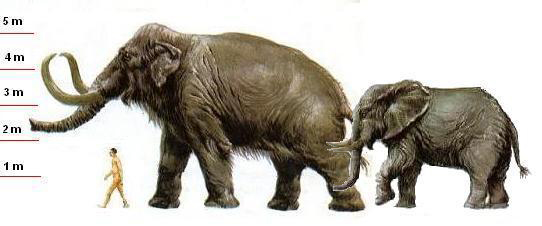
It is not always easy to imagine quite how big the mammoths were and what would have been involved in hunting them 4,000 years ago. That humans did actually manage to successfully hunt these massive beasts cannot be put down to their stature or their weapons or their prowess with spears and can only have been a result of co-operation and strategy.

mammoth hunting

Size comparison animalpicturesarchive.com

Apartheid is still alive and well – in Sweden

March 25, 2013

The days of segregating bus passengers by skin colour and their appearance are not just something from the bad old days of the American South or from the days of apartheid in S. Africa. It would seem to be alive and well and practised in Sweden even today. For some it brings back memories of  Bosnia where those with the “wrong” names were selected to be put on the “death-buses”.

Sweden has a population of 9.55 million and around 19.6% or 1.858.000 inhabitants who have a foreign background, defined as being born abroad or being born in Sweden of two parents born abroad. Many sectors of industry and public services are totally dependent upon the “immigrants” as in the rest of Europe. The welfare states of Europe are more and more dependent upon the immigrants of working age who help support the ageing demographics. Overt discrimination in Sweden is probably much less than in many other parts of Europe but it would be quite wring to think that it is absent. The latent dislike of “others” will always be present under the surface but it is the political “respectability” provided by the new fascist or neo-Nazi parties which encourages this “latent” behaviour to openly manifest itself .

Another Kristallnacht somewhere in Europe within the next decade is not unthinkable. And if it happens it may well be in Greece or Germany or Austria but it could also happen further North.

Dagens Nyheter reports (my free translation):

The segregation of people having a different appearance which DN revealed on Saturday is not unique. When Viking Line buses would depart from Örebro, bus drivers  used name-lists to place the “immigrants” on one  bus and “Swedes” on another. “There was absolutely no way that this was random,” said Faruk Smailhodzic.

DN’s articles on how Eckerö Line buses, run by the People Travel Group owned by Veolia, on at least two occasions segregated passengers  according to their skin colour has aroused strong reactions. And now it turns out that Wednesday’s and Thursday’s events are not unique.

On two occasions in December Viking Line drivers had been provided with lists of passengers in order to divide them onto different buses. One list contained the names that appeared to be “Swedish” and other names that appeared to be “foreign”. ….

For one couple it brought back memories of Bosnia. Memories of how some people were selected  while others escaped. “We have experienced of when people are separated and put on a bus and it is not a good feeling. And there was always a feeling that maybe we were not going on any cruise, but maybe somewhere else”, says Faruk Smailhodzic.

Border-Gavaskar trophy: Australia win 4 in a row but get white-washed

March 24, 2013

The first time ever that India has managed a white-wash on their opponents in a test series. They won 4 tests of the 4 test series at home against Australia. (They already know how to be white washed!)

But the Australian team can take comfort in the fact that practice paid-off and they won the toss 4 times in a row – and elected to bat each time and lost each time. 

And they all learned how to use PowerPoint.

Cricket by PowerPoint

Cricket by PowerPoint

Cricinfo: 

  • This is the first time India have won four Tests in a series. They’ve won three in a series on three occasions, two of which were clean sweeps at home – against England in 1992-93, and against Sri Lanka the following season.
  • For Australia, this is only their second clean-sweep defeat in a series, after their 4-0 rout in South Africa in 1969-70. This is the sixth time they’ve lost four or more Tests in a series, and the first such instance since the Ashes at home in 1978-79, when an Australian team depleted by the Kerry Packer exodus lost 5-1.

  • This is only the second time in Test history that a team has won four or more tosses in a series, and lost four or more Tests in the same series. The only previous such instance was in the Ashes series of 1978-79 mentioned above, when Australia won the toss in five out of six Tests, but lost the series 5-1.
  • India have won 12 Tests at the Feroz Shah Kotla, which is next only to the MA Chidambaram Stadium in Chennai, where they’ve won 13. Of their last ten Tests here, India have won nine and drawn one. Their last defeat at this venue was in 1987, against West Indies.
  • Cheteshwar Pujara was not only one of the Indian heroes for the match and the series, but also for the entire season: he scored 857 runs in eight Tests 85.70, which puts him in 15th place in the all-time list forruns scored in a season for India. With a 600-run cut-off for a season, Pujara’s average of 85.70 puts him inseventh place.
  • Pujara’s unbeaten 82 in the fourth innings came off only 92 balls. His strike rate of 89.13 is the third-best for India in fourth-innings knocks of 75 or more.
  • The 104-run stand between Pujara and Virat Kohli is the tenth century stand for India for the second wicket in the fourth innings of a Test match.
  • R Ashwin’s series haul of 29 wickets is the seventh-best for India in a Test series, and the best since Harbhajan Singh’s 32 against Australia in 2001. The only Indian bowlers who’ve taken more wickets in a series are BS Chandrasekhar, Vinoo Mankad, Subhash Gupte, Kapil Dev, Harbhajan and Bishan Singh Bedi.
  • There were five five-fors for India in the series; only three times have there been more five-fors in a series for India.
  • Peter Siddle became the first batsman in Test history to score at least a half-century in each innings of a Test. He scored 51 in the first innings and 50 in the second, top-scoring for Australia in each innings.
  • Glenn Maxwell became the first Australian to open the batting and bowling in the same Test since Percy Hornibrook in 1929. Hornibrook, a left-arm bowler who bowled some medium-pace and spin, opened the batting and bowling at the MCG Test against England.
  • For only the third time in their entire Test history, Australia opened the attack with two spinners. The last such instance for Australia was in Georgetown in 2003 against West Indies, when Stuart MacGill and Brad Hogg opened the bowling in West Indies’ second innings.

Reality Check – Climate does not much care for Acts of Parliament

March 24, 2013

Two interesting articles today and perhaps they presage the return of some sanity to the ludicrous, Canute-like attempts to try and control climate. The first is in Die Welt (which is usually a most politically correct adherent of global warming dogma) about the nonsense that the Greens have wrought in German policy (by Sebastian Lüning and Fritz Vahrenholt reported by P. Gosselin). The second is a leader in the Telegraph calling for the repeal of the Climate Change Act in the UK.

NoTricksZone: Germany’s Energiewende [energy transition over to renewables] is being watched closely in foreign countries. Already bets are being made on whether the expensive experiment is going to work. Meanwhile increasing numbers of international experts are expressing serious doubts. In the March 20th print edition of German national daily Die Welt, Daniel Wetzel reports on a survey by the World Energy Council in an article titled “The Energiewende is an international flop”. An online version of the report is now available and bears the watered down title: “Other countries disdaining the Energiewende”:

Worldwide doubt about the success of the German Energiewende is growing. International experts are sure that the German economy is weakening. This is the finding of a survey from the World Energy Council. […] A rapid short-term shutdown of nuclear power plants along with unlimited subsidies for renewable energies: In Germany this has been viewed as the silver bullet for energy policy since the Fukushima accident. However in Europe and globally, there’s hardly a nation that views the German ‘Energiewende”’ as worth copying. These are the findings of the German section of the World Energy Council in 23 member countries, made exclusively available to Die Welt. […] The rising doubt is possibly related to the unexpectedly rapidly rising electricity prices in Germany, which are having a dissuasive effect. Stotz believes: ‘Obviously one has to be able to afford an energy transition.’ (Read more at Welt Online).

In a commentary appearing at Die Welt titled, “Germany, the odd one out”, Daniel Wetzel pleads for more prudence, and rejects climate alarmism as the most important argument for an Energiewende:

Also the necessity to rapidly end the use of fossil fuels no longer appears as urgent as it was just a few years ago. Indeed, in the meantime, fear of climate change appears to have evaporated worldwide. Global warming has been taking a break for over 10 years, and politicians in many countries appear as if they would rather await a good explanation for this phenomenon before again making the fight against climate change a high priority. Quite apart from this: one other large industrial country has just succeeded in reducing its per capita CO2 emissions to levels of the early 1960s. The best in the class when it comes to climate politics is the USA. Thanks to fracking technology in natural gas drilling, they have been able to switch off dirty coal power plants.”

“The Tory part of the Coalition is beginning to recognise some painful truths, but it is time for the Coalition to tear up its energy policy before the lights go out” says The Telegraph:

……  Because of a misguided faith in green energy, we have left ourselves far too dependent on foreign gas supplies, largely provided by Russian and Middle Eastern producers. Only 45 per cent of our gas consumption comes from domestic sources. All it takes is a spell of bad weather, and the closure of a gas pipeline from Belgium, to leave us dangerously exposed, and to send gas prices soaring. Talk of rationing may be exaggerated, but our energy policy is failing to deal with Britain’s fundamental incapacity to produce our own power.

…… It is time for the Coalition to tear up its energy policy before the lights really do go out. The first priority must be to repeal the Climate Change Act of 2008, with its brutal, punishing targets: ………  But green technology – in its current incarnation, anyway – is just too inefficient and expensive to meet our energy needs. In some of the worst weather for more than 30 years, green power still only provides a tiny fraction of our energy needs. Solar power is of limited use in our cold, dark, northern climate. And wind power isn’t much better – cold weather doesn’t necessarily mean windy weather. 

…….. He will know that American gas prices have plummeted, thanks to the US embracing the shale gas revolution. ………. Our energy problems have been deepened by the greener-than-green Liberal Democrats, with their seeming stranglehold on the Cabinet post of Energy Secretary. ………….

There is some good news, however. As we report today, government sources have said that wind power subsidies are to be cut again. This is a move in the right direction and we very much welcome it. It is to be hoped that there will be more such announcements, and concrete actions, from a government that has neglected a fundamental duty – to keep the lights on, energy affordable and our houses warm.